There are many ways to travel, and one of them is to follow in the footsteps of an aspiring writer whom everyone knew as a musician, through his Impresiones y paisajes. This is Federico García Lorca’s first book, published in 1918, and the only one written in prose. His vocation was always poetry and theater. These notes and memories come from his study trips with professor Martín Domínguez Berrueta as a student at the Faculty of Philosophy and Letters. The group visited Baeza, Úbeda, Córdoba and Ronda, with its vertigo-inducing bridge, in June 1916. In Baeza they met Antonio Machado, who was teaching at his institute there. Lorca played the piano.
Between October and November of the same year, the second journey. This time through Madrid, El Escorial, Ávila, Medina del Campo, Salamanca, Zamora, Santiago de Compostela, A Coruña, Lugo, León, Burgos and Segovia. The third trip is in 1917 and marks the return to the monumental Baeza and the reunion with Machado. The Sevillian poet reads his long rhymed poem Las tierras de Alvargonzález, which over time would become part of the repertoire of the university traveling theater company La Barraca, directed by Federico. Now he returns to playing the piano.
This year he writes his first poem, and the fourth and last of these journeys takes place. He takes them to Medina del Campo (Valladolid), where they visit the Castle of la Mota, forever linked to a queen; to Palencia and to Burgos, with Lorca’s stops in Covarrubias, San Pedro de Cardeña, Santa María la Real de las Huelgas, or Santo Domingo de Silos. Granada is not missing.
Traveling with Lorca
In the prologue of the book, where the Lorca who would be is already glimpsed, he offers poet’s advice to the traveler: “It is necessary to observe, in deserted squares, the old souls who passed through them; it is essential to be one and to be many in order to feel things in all their nuances.” Or he proposes “to be religious and profane. To reunite the mysticism of a stern Gothic cathedral with the wonder of pagan Greece.” In short, “to see everything, to feel everything”, for “in eternity we will have the reward of having had no horizons.”
Lorca writes about the solitary battlements of Ávila in his Impressions and Landscapes.
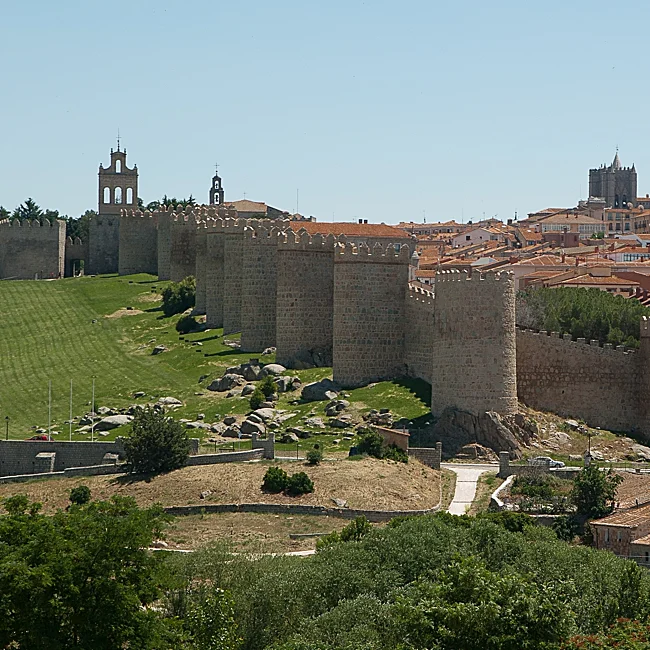
With him we enter Ávila through its evocative walls, with “its solitary battlements, crowned with nests of storks, like the reality of a children’s tale.” He defines it as “the most Castilian and most colossal city.” He finds “a shadow of dead grandeur everywhere!” and a “silence in which the river’s water sounds like the constant clash of swords.” Of the interior of the cathedral he writes that “it is overwhelming for its past shadow embedded in its walls and for its tranquil obscurity, which invites contemplation of the supreme.”
From El Cid to Doña Urraca
In the Monastery of San Pedro de Cardeña, founded by the Benedictines in the year 899 and closely tied to the growth of Burgos’ medieval city, Lorca echoes the story of El Cid Campeador, Doña Jimena and their daughters, Doña Sol and Doña Elvira, as they are named in the Cantar de mio Cid. He gives poetry to his prose: “The entire monastery, already loved by ivy and swallows, shows eyes empty of a consoling sadness, and crumbling slowly allows the ivy to cover it and the willows in bloom.”
A Covarrubias también viajó Lorca en su época de estudiante en Granada.
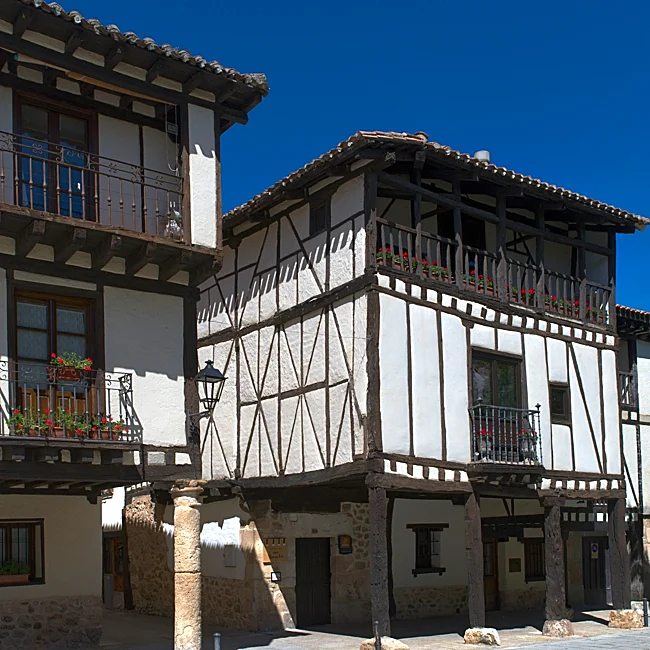
Only 39 kilometers separate this monastery from Covarrubias, the village with fairy-tale houses and Doña Urraca’s tower. He says it is golden and aristocratic, of a marvelous Renaissance. That “on the ground there is a brutal paving.” And that “the main square has the harmony of a warrior legend,” and the Palace of Count Fernán González in the background, “with its great ogival doorway, with its knightly balconies.” He does not miss the Collegiate Church of San Cosme and San Damián. In its cloister, “full of withered herbs, the sun speaks in a golden tone.” It is Federico García Lorca; let us not forget it.
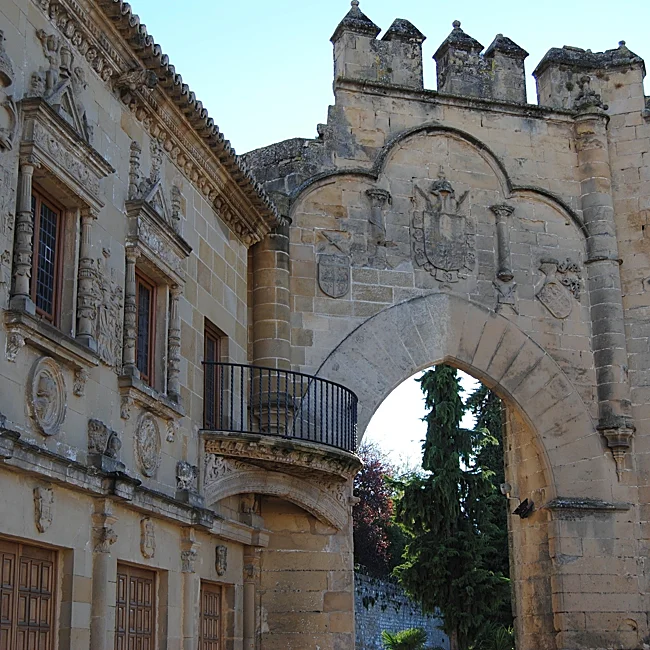
Regarding Baeza, the Jaén city that today is a World Heritage site, Machado-esque and divinely preserved, he notes that “no one crosses the streets, and if they do, they walk very slowly as if afraid of waking someone who slept delicately…”. He has words for the cathedral and for the square, where “the Mayor had proposed to the council urbanize it (a tremendous word), tearing out the divine greenery, fencing off the fountain with English garden lawns…”. Lorca complained.
From Baeza to his Granada
He was even harsher about it: “They will tear down the old charm, and put in its place buildings with Catalan cement. It is truly distressing what is happening in Spain with these architectural relics.” He recalled “the outraged Salamanca, with the Monterrey Palace full of electric posts, the House of the Dead with broken balconies, the House of the Salt Works turned into the Diputación, and the same in Zamora, in Granada and in León….” He steadies the description of the landscape: “The Guadalquivir traces its enormous scribble over the flat land. There are strong and gentle undulations in the earth. The wheat fields tremble at the touch of the winds.”
En Baeza se encontró Lorca con Antonio Machado, que daba aquí clases.
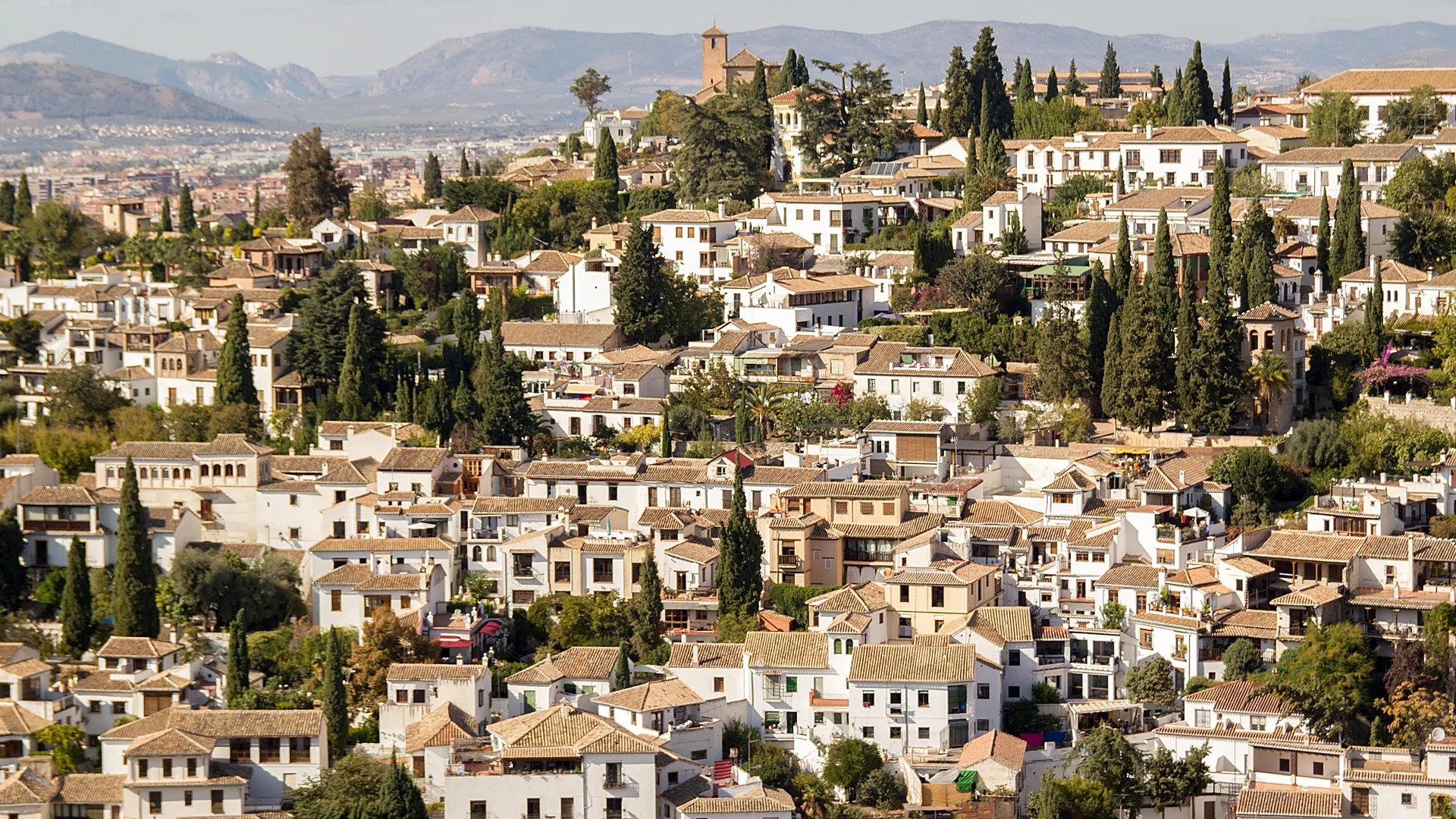
When describing the Albaicín, in his Granada, he stops to note that “the white houses rise with fantastic echoes on the hill. Opposite, the golden towers of the Alhambra outline against the sky a dream of the East.” A few lines later he almost recites a litany: “Albayzín wonderfully romantic and distinguished. Albayzín of Santa Isabel’s cadence and the entrances to the carmenes. The Albayzín of fountains, of the roundabouts, of the cypresses….” And he goes on, and does not stop quoting the full moon, the ancient musical romance, the Arab courtyards, the tabletop piano—always the piano—, “the wide damp rooms with the scent of alhucema” and, of course, the carnation.