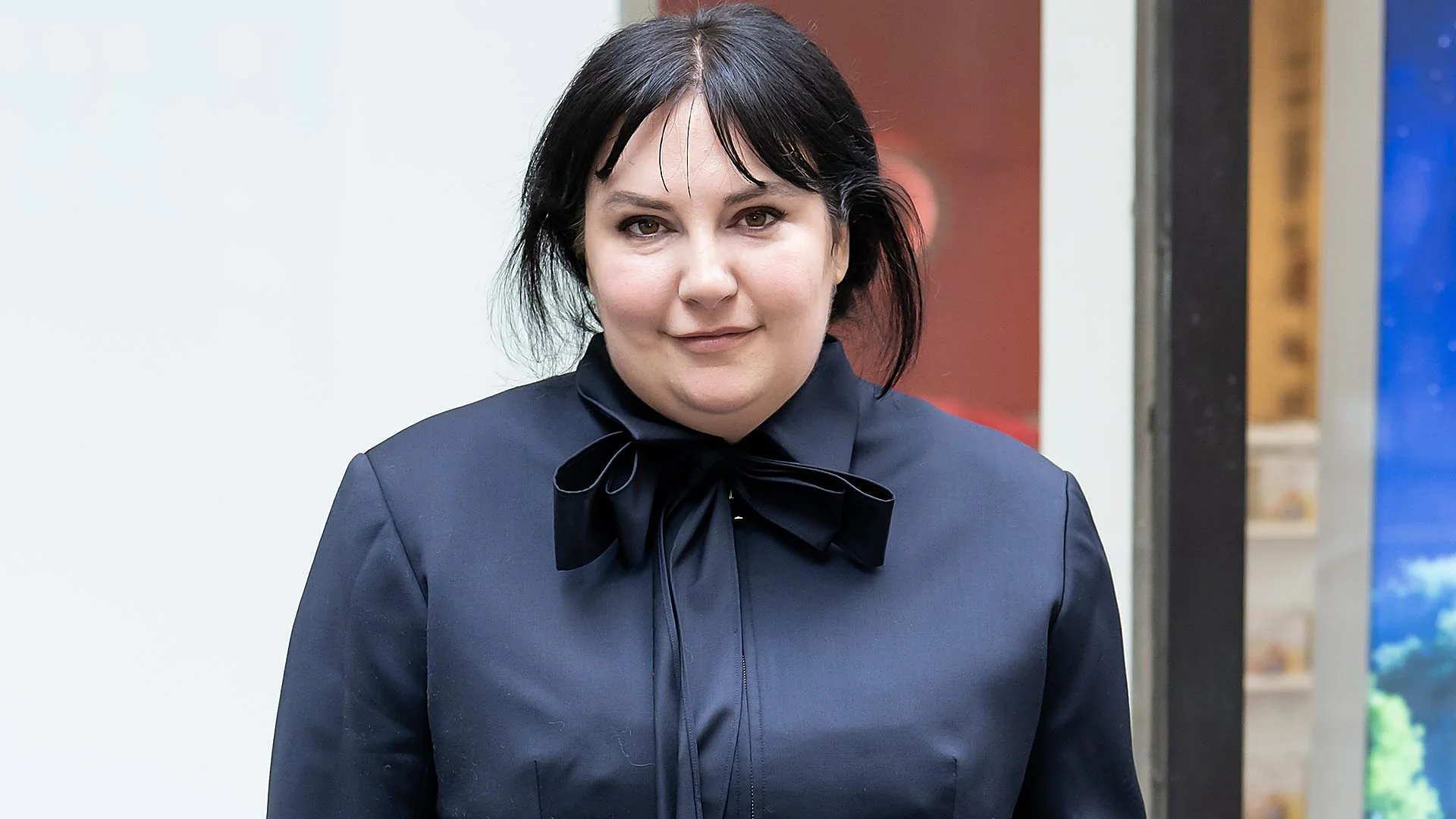
Those of us who have been following Lena Dunham’s career for years cannot say that her decision to resort to surrogacy surprised us too much. The creator of Girls has long shown that her relationship with feminism and with some of the issues she has publicly defended is full of contradictions. It already happened in 2017, when she decided to come to Murray Miller’s defense, the Girls writer accused of sexual assault by Aurora Perrineau, who was 17 at the time. Miller denied the allegations and, after the barrage of criticisms she received for her intervention, Dunham publicly apologized. A year later she went so far as to call that decision a “terrible mistake”.
In Famesick, the memoir book that arrives today in Spain, Dunham revisits that episode and dedicates several chapters to reviewing some of the most controversial moments of her career. The writer recognizes that publicly defending Miller was a mistake and that she had no right to intervene in that way in a sexual assault accusation. It is, in fact, one of the passages in which Famesick seems to offer a more conscious version of the Lena Dunham who became one of the most recognizable feminist voices of her generation. A woman who looks back, acknowledges her mistakes and tries to explain —not necessarily justify— why she committed them.
When I read the book this summer I reconciled with Lena Dunham. I truly believed her apologies that that woman who in 2017 decided to publicly defend a man accused of sexual assault has understood, years later, why that decision was so problematic. That she had learned something from the contradictions between the feminist discourse that made her a reference for so many women and some of her public actions.
The news of her motherhood, however, again showed me that she remains the same and that, clearly, the world was wrong to make her a reference. Now the book is read from a completely different perspective, especially the part in which she talks about motherhood, her struggle with endometriosis and all that this entailed in her life.
The Lena Dunham account of motherhood
Endometriosis occupies a large part of the account in this book -in which she also recounts the era of Girls, the strange relationship she had with Adam Driver, and her love story with Jack Antonoff- . Dunham writes about the years of pain, the surgeries and the deterioration of her health until she underwent a hysterectomy, a procedure that ended the possibility of gestating. Motherhood then appears as one of the great questions in her life.
At one point in the book, when she talks about the decision to have her uterus removed, she states that she is not worried about not being biologically a mother because she can adopt. It is a possibility that, at first, seems to accept with a certain naturalness: if her body can no longer gestate, there can always be another way to become a mother. But this idea does not last long. Later Dunham explains that she goes through different states and that her desire to have children does not disappear simply because she can no longer gestate.
“It was unpredictable and dependent: one day I was obsessed with adoption and the next I was dying to find a surrogate mother; one day I was sure I would be fine even if I never had children and the next I was convinced that my life had been a waste,” she writes. The idea of resorting to a surrogate always lingered there.
There is another passage especially revealing: “The irony is that the fact of knowing I can’t have a child — my ability to accept it and move on — may be the only reason I deserve to be someone’s mother. I think I finally have something to teach someone.” Lena Dunham sees motherhood as a right that must be granted to her, no matter the form.
The Lena Dunham who remains after ‘Famesick’
I am glad I read Famesick before learning the news that Lena Dunham had resorted to a surrogate. Girls changed my life and I still think it is one of the best series ever made. Perhaps that’s why I could read these memoirs without the filter that is now inevitable. For much of the book I wanted to believe in Dunham’s redemption: that the woman who had made mistakes and who was now capable of recognizing them had learned from them. But it’s also impossible not to encounter Lena Dunham’s most recognizable trait: her tendency to turn everything into the center of her own narrative.
But now that we know the decision she made regarding motherhood, a large part of the book reads differently. Because one thing is wanting to be a mother and another very different thing to consider that this desire justifies another woman putting her body at the service of that project. That’s where Dunham’s decision clashes head-on with the feminism she has defended for years and with the idea that the bodies of women should not become a tool to satisfy the desires of others. What does it mean to resort to surrogacy when for years you have built your public discourse around a feminism that speaks precisely about the limits that should not be crossed with the bodies of other women?