Rosemary oil to stimulate growth, scalp massages, overnight masks, double cleansing, or the idea of spacing shampoo days further apart to make hair produce less oil. Hair routines have become one of the most repeated beauty topics on social media, and with them numerous rules have appeared that do not always have scientific backing.
For dermatologist and trichologist Cristina de Hoyos, one of the problems is precisely assuming that a complicated routine is necessarily a better routine. “The most common mistake is confusing a complex routine with an effective one and not taking into account the individual needs of the hair and scalp,” she explains.
On social media, she notes, protocols with numerous products, oils, and techniques are popularized and presented almost as universal, when the hair’s response depends on factors such as hair type, oil production, scalp sensitivity, or the presence of some pathology.
Moreover, many of these routines mix three goals that are not exactly the same: improving the cosmetic appearance of the hair, treating a scalp problem, and stimulating growth. “A routine can improve shine and smoothness without treating alopecia,” the specialist warns.
Washing hair every day does not cause alopecia
It is one of the hair myths that has circulated the longest: the more we wash our hair, the more it falls and the more oil the scalp produces. However, Cristina de Hoyos debunks this.
“Washing hair daily does not cause alopecia by itself, nor does it directly stimulate greater oil production,” she says. The frequency of washing should be adapted to each person’s needs, taking into account sebum production, hair type, and factors such as physical activity.
And why does it seem that more hair falls out in the shower? The explanation is simple. “Washing can make us notice hairs that were already in the shedding phase. It does not mean that washing made them fall out.” Hair shedding depends mainly on the hair cycle and the causes acting on it.
Rosemary oil is not a substitute for alopecia treatments
Few ingredients have reached the popularity of rosemary oil in recent years. It is applied to the scalp, left to act for hours, and is featured in numerous videos as one of the secrets to achieving longer and denser hair.
The specialist recalls that there is a small clinical trial comparing rosemary oil with 2% minoxidil in people with androgenetic alopecia over six months. Although results were observed in both groups, the study’s limitations prevent considering rosemary oil an equivalent treatment to minoxidil or assuming that it will work the same way in every person.
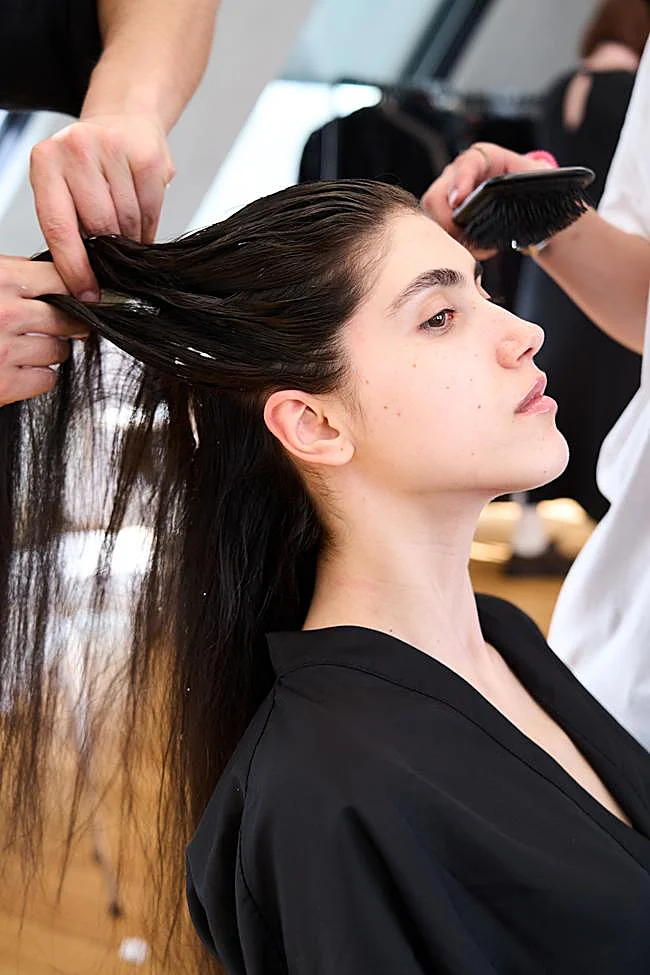
Does rosemary oil help stimulate hair growth?
Additionally, applying it without caution is not risk-free. «Essential oils can cause contact dermatitis, especially when applied directly and without proper formulation».
Therefore, the dermatologist does not recommend using pure rosemary essential oil directly on the scalp as a general strategy against hair loss. When alopecia exists, she explains, the priority is to identify the cause and resort to treatments with sufficient evidence for that pathology.
Massages do not make hair grow faster
Massage brushes for the scalp have become another staple of the so-called hair growth routines. They are used during washing or when applying oils and serums with the idea of stimulating circulation and, with it, growth.
Although they can be pleasant and help distribute some products, Cristina de Hoyos notes that “we do not have solid clinical evidence showing that massages or scalp massage brushes significantly increase the rate of hair growth or treat alopecia.”
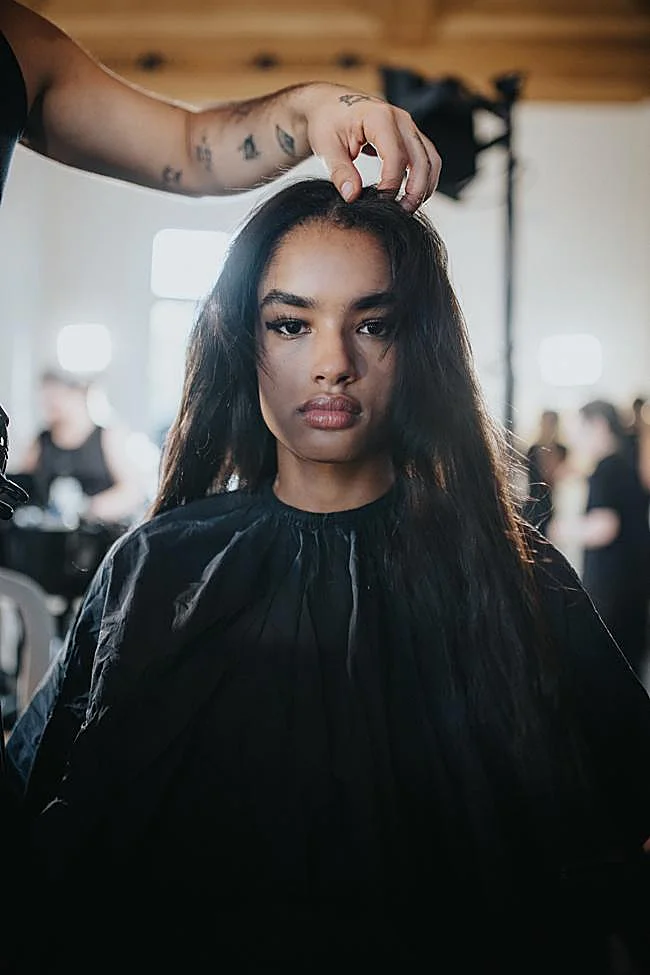
An expert reveals whether scalp massages help improve hair growth.
Moreover, it is not wise to go to excess. An overly intense massage, applying too much pressure with a brush, or repeatedly scratching the scalp can promote irritation, inflammation, or even hair breakage in susceptible individuals.
Sleeping overnight with oils or masks does not make them work better
In beauty, we continue to tend to associate exposure time with effectiveness: if ten minutes work, leaving it on overnight should work even better. But that does not have to be the case. “Leaving a product on longer than recommended does not mean it will be more effective,” says Cristina de Hoyos.
In the case of oils, excessive application can produce a feeling of heaviness and make residue removal more difficult. And if applied directly to the scalp—especially when they contain essential oils or fragrances—there is also the risk of irritation or sensitization.
Masks, for their part, should be used following the manufacturer’s instructions. “It is not necessary to leave them on all night to achieve a better result.”
So, what would a healthy hair routine look like?
The first is a scalp-adapted cleansing, using an appropriate shampoo and washing as often as we actually need. The second is conditioning the strand, especially in long, dry, curly, dyed, or chemically treated hair.
The third point consists in protecting the hair against damage: limiting excessive heat, avoiding too-high temperatures, and reducing pulling during styling. Thermal protectants can help minimize damage, though they do not eliminate it completely.
And the fourth is perhaps the most important: when there is a specific problem, that problem must be treated. Dandruff, seborrheic dermatitis, persistent itching, or hair loss require identifying the cause first.
Because, as Cristina de Hoyos sums up, “the best routine is not the one that accumulates the most steps, but the one that responds to the real needs of the scalp and hair, is well tolerated, and can be maintained in the long term.”