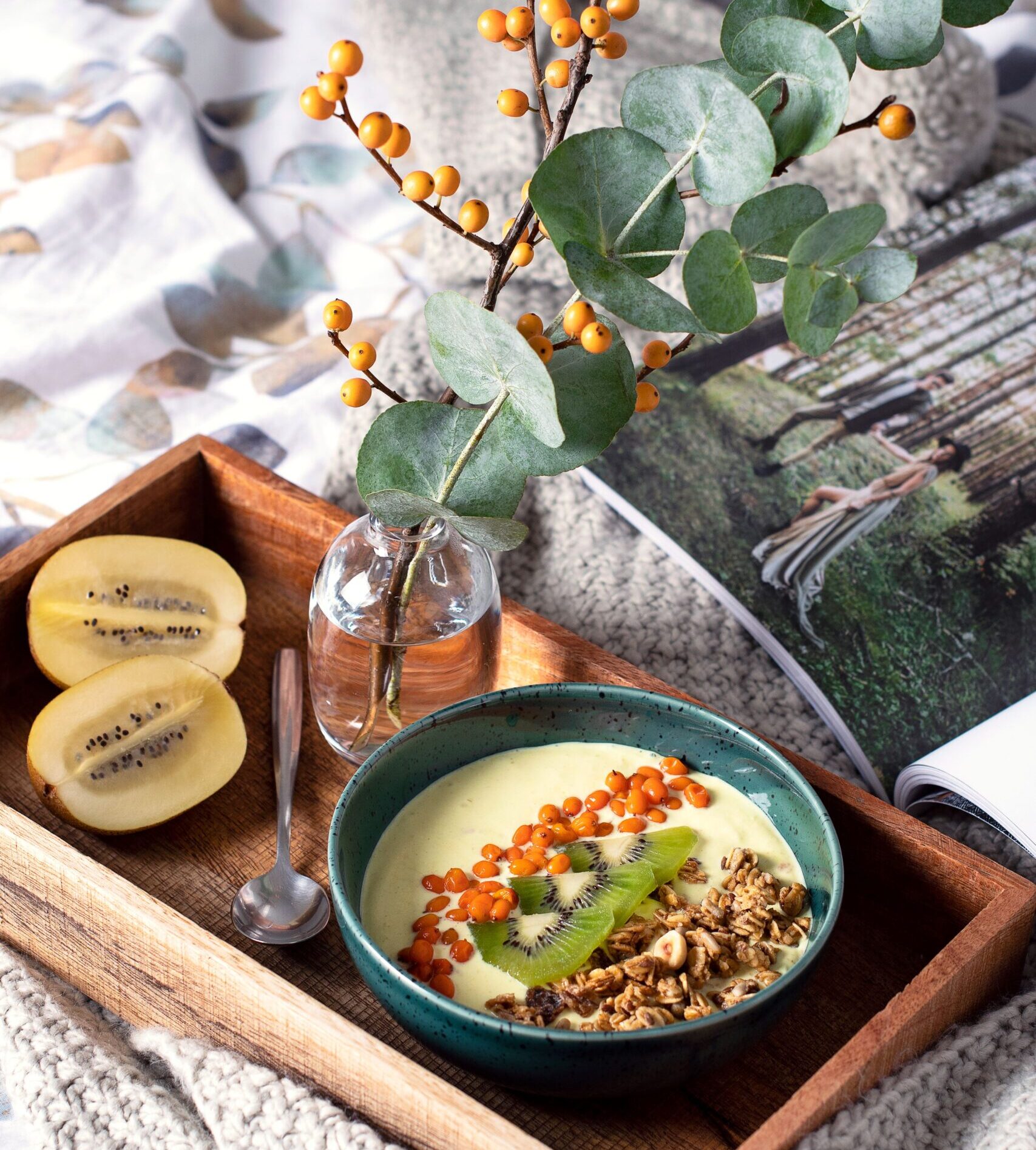
Be honest, you hadn’t eaten goji berries in your life until they became popular on Instagram. Then you realized the beneficial properties they possessed and you adopted it as a habit. The phenomenon of Foodporn or aesthetically pleasing food on social networks is the subject of study by psychologists and experts in nutritional marketing. And the conclusions are clear: the pretty fruit photos on Instagram can lead you to consume more, because they change our notion of what is normal and desirable.
In other words, if we constantly see a bowl of yogurt with strawberries and banana chunks in our scroll infinity, it is much more likely that when we go to a restaurant for breakfast, we will order that instead of toast with butter. And already, if we want to upload a pretty photo to our own profile, switch it off and go.
Eating with the Eyes
Food has to be tasty and, ideally, visually pleasing. In an Oxford University study (Crossmodal Research Laboratory), psychologist Charles Spence demonstrated that we eat first with our eyes and that visually appealing dishes (vibrant colors, symmetry and textures) activate the orbitofrontal cortex, the brain region linked to pleasure and reward.
“I uploaded a photo wearing a green dress a couple of days ago and I want there to be color coherence in my feed. I’m going to post a breakfast with kiwi.” It doesn’t seem the most ideal reason to consume healthy foods, but if in the end it helps us eat better, all the better. The WHO recommends consuming 5 portions of fruit and vegetables per day, but says nothing about the motivational factor behind it.
The Green Algorithm
With the rise of plant-based eating, the color green flooded Instagram profiles. It happened with avocados, with the acai fever, kiwi…
Do fruits also work by fashion trends? “Yes, absolutely. Fruits can also respond to trends, although that does not mean a fruit becomes healthier because it appears continually on Instagram,” says Anto Martínez, dietitian-nutritionist.
Healthy Posturing
The expert explains that in recent years we have seen how certain foods go from being virtually unknown to many people to becoming protagonists of breakfasts, smoothies, bowls and recipes shared on social networks. “I think trendy fruits tend to bring together several ingredients: they are visually appealing, have a story or an exotic origin, are associated with a healthy lifestyle and, furthermore, are highly photographable”.
But she clarifies: “That a fruit goes viral does not mean it is nutritionally superior to an apple, an orange, a pear or strawberries. Fashion can help us discover new foods, but it should not make us forget the importance of variety. The WHO recommends consuming at least 400 grams daily of fruits and vegetables for people over 10 years old. The true healthy trend would simply be to eat more fruit and vegetables and do so in a varied way”.
Avocado: the leading star of the healthy boom
The avocado became one of the great symbols of healthy eating. It went from being an occasional food for many people to part of daily life on toast, salads, guacamole or bowls. “Nutritionally, it is a very interesting fruit, as it stands out for its content of monounsaturated fats and fiber,” it is highlighted.
Açaí: when a fruit becomes a format
The açaí, native to Brazil, represents very well how a fruit can become a trend when it is joined to a visually attractive format: the famous açaí bowl. Its purple color is due to phenolic compounds, among them anthocyanins, which have been widely studied in relation to various cardiovascular and metabolic markers.
“That said, you have to look at the whole. It is not the same the fruit or an açaí preparation as a bowl loaded with syrups, granola and added sugars. The nutritional quality will depend on all the ingredients,” she adds.
Kiwi: the tradition that never fails
A classic? The kiwi, the one that never fails, the one that has always been there. Even Aitana Sánchez-Gijón fell for this fruit (well, and the charm of Richard Gere). “The kiwi seems especially interesting to me because it shows that not all trends have to come from exotic fruits,” says the nutritionist.
It is a clear example that tradition does not clash with the new consumption trends and it is the objective of awareness campaigns such as the one carried out by Zespri, with NutriTour By Zespri, an immersive experience to bring nutrition closer in a simple, tangible, and appealing way.

Through this proposal, Zespri, the kiwi marketer, shed light on the key nutrients of this fruit, such as vitamin C, folate, potassium and fiber. An easy way to add nutritional quality without complications, with flavor and freshness.
“We want to create a space where people can discover in a close and experiential way everything behind a fruit like kiwI Zespri. Through these campaigns we aim to bring clearer and more accessible messages, helping the consumer understand in a simple way how to introduce nutritious options into their day to day”, explains María Castells, Marketing Manager Iberia of Zespri.
“We live in a context where we constantly receive information, often contradictory. That is why it is important to return to clear and simple messages that help people choose better. Incorporating fruits with high nutritional content into daily life can be a practical and real way to add essential nutrients”, explains the expert nutritionist Aitor Sánchez.
In recent years it has gained prominence in the context of digestive health and healthy breakfasts. “It is a fruit rich in vitamin C and fiber and there is specific evidence about its possible usefulness in people with constipation and with intestinal function. It also contains actinidin, an enzyme that can participate in protein digestion,” adds Anto.
Pitaya or dragon fruit: one of the most Instagrammable
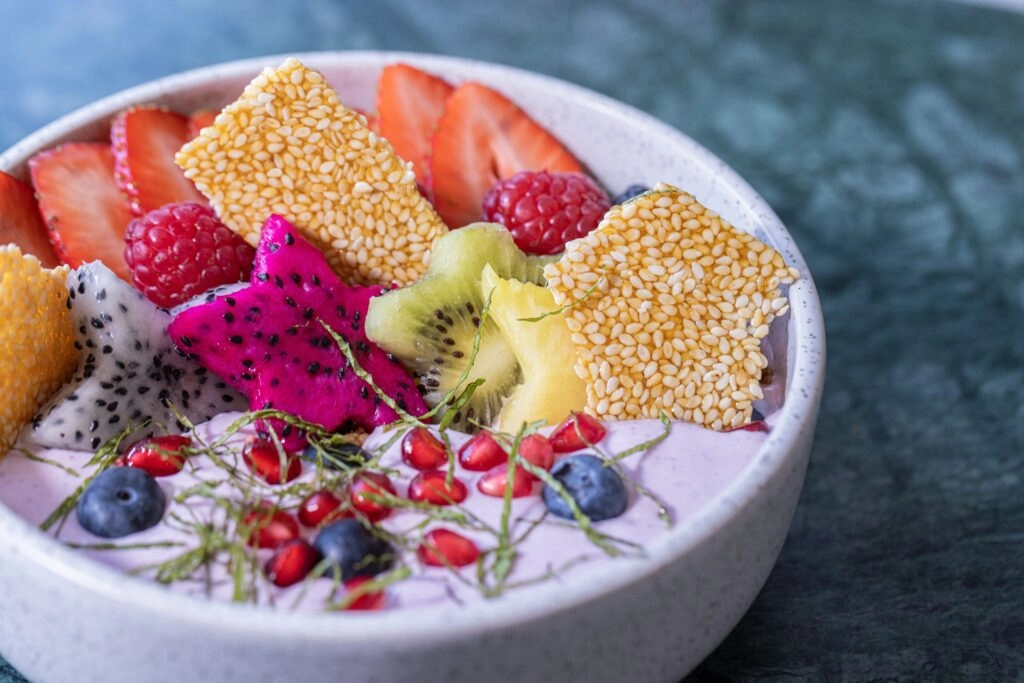
Pitaya, a Central American origin fruit, is a clear example of how aesthetics can boost the popularity of a food. Its appearance and colors make it a highly photogenic fruit. Nutritionally, it provides fiber, vitamin C and other bioactive compounds.
Some red-pulp varieties contain betalains, pigments that have been studied for their antioxidant properties. However, as the expert notes, “it is important not to turn pitaya into a ‘superior’ fruit to the others; its interest may also lie in helping us broaden the variety of fruits we consume and encourage people who usually eat little fruit to try something different.”
Red Fruits: small, colorful and very present on networks
Another major trend, red fruits: strawberries, raspberries, blueberries, currants and blackberries have gained enormous prominence in breakfasts, yogurts, smoothies, bowls, desserts and visually very appealing recipes.
Their color is related to bioactive compounds such as anthocyanins (antioxidants), which have been studied for their possible effects on various cardiovascular and metabolic markers, combat oxidative stress and free radicals. “They are very versatile and, when frozen, can be a very practical option to incorporate into the diet year-round,” she assures.
Mango: from tropical fruit to a staple ingredient
The expert explains that mango has gained much presence in salads, smoothies and recipes with international inspiration: “It provides vitamin C, carotenoids, fiber and other bioactive compounds. It is also a very versatile fruit: it works in both sweet and savory preparations. I think it is a good example that the popularity of a food does not depend solely on its nutrients. Flavor, versatility and how it fits into new ways of cooking also influence.”
From motivation to misstep…
Preparing more colorful dishes is a very simple strategy to increase variety, but be careful, because it does not have to be healthy. Presentation can influence attention, expectations and the perceived tastiness of a food, but, as nutritionist Anto Martínez notes, “we must avoid simplifying it to ‘if we make it pretty, we will eat healthily’.”
The image interacts with many other factors: hunger, availability, price, habits, culture, time available and personal preferences. An attractive presentation can be a tool, but it is not enough to claim that it is balanced. The most important idea is another: the more varied our plant-based and fruit intake is, the more chances we have to incorporate different nutrients and bioactive compounds.
“Instagram can serve to teach simple recipes, give ideas for cooking, normalize the consumption of fruits and vegetables, support positive eating behaviors, habit-change strategies and demonstrate that a healthy diet does not have to be boring. But it also has a downside,” she notes.
Not Everything Goes
Undoubtedly, the desire to share an attractive photo of a meal can motivate you to cook more and enjoy the process more: finding a recipe, buying ingredients, cooking, taking care of the presentation and sharing the result.
The photograph can function as an extra motivational boost. But we must also be realistic, the expert notes: “Not every meal has to be perfect or magazine-worthy: healthy eating must also be practical, flexible and compatible with real life.”
“In consultations I usually prioritize whole fruit, variety and that the choice fits the tastes, routine and possibilities of each person. I don’t think anyone needs to buy a specific fruit, from a particular part of the world, to improve their diet,” the expert notes.
A Clear Message
Trendy fruits can have a positive effect if they spark curiosity and encourage us to try new foods. “The problem arises when we confuse popularity with nutritional superiority. That a fruit is viral does not mean it is better than a traditional fruit,” states the nutritionist.
She suggests that the best approach is to eat more fruit and vegetables in all their shapes, colors and varieties. And above all, to understand that a healthy diet is not built from isolated foods, but from the sum of our habits.