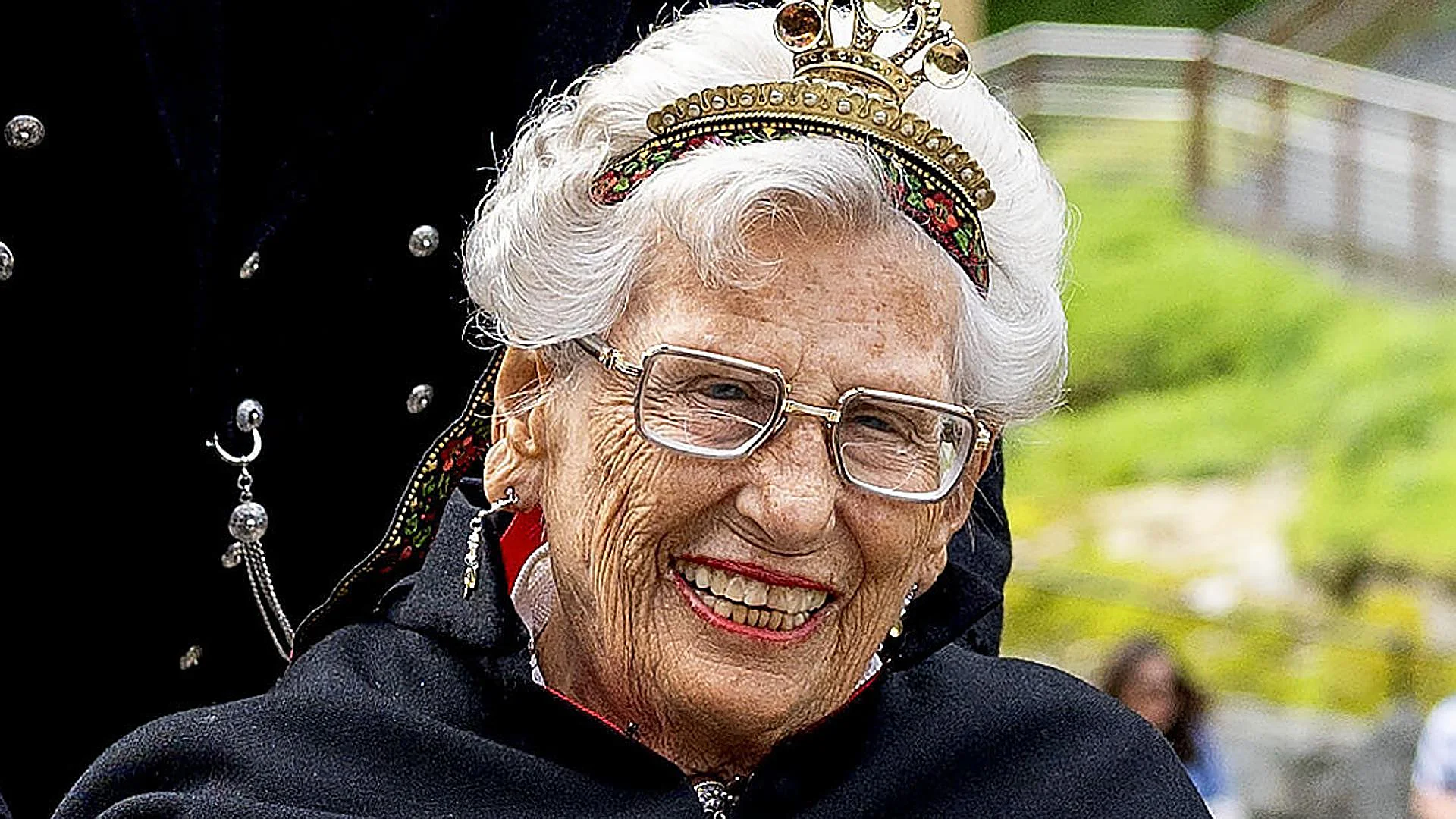
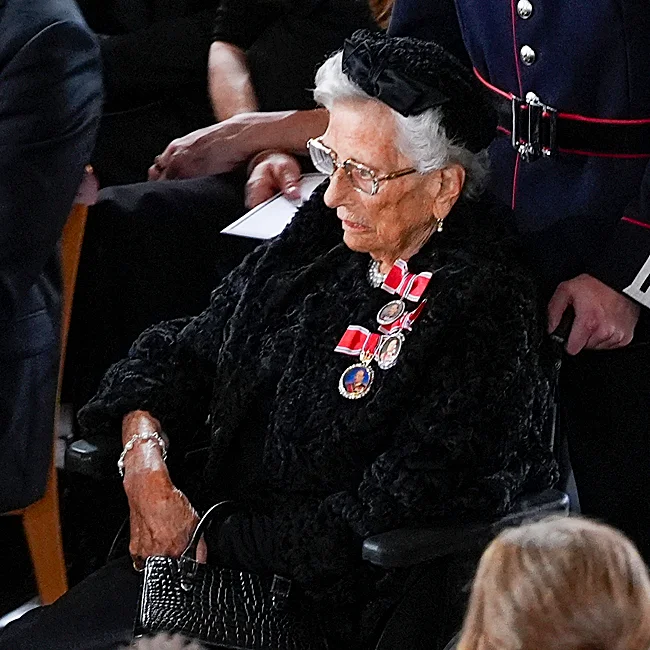
Norway remains in mourning. Princess Astrid died on September 11 at the age of 94, barely two days after her brother Harald was buried at Akershus Fortress. Her death came after several months marked by significant health problems. She had been hospitalized in March for pneumonia and again in May for heart failure, which required the implantation of a temporary pacemaker, before being discharged during the summer. Her last public appearance took place at the state funeral of King Harald.
With images of that solemn event still present, the royal house of the Scandinavian country has now announced details for her second funeral in less than two weeks. The Royal Palace has announced that the funeral service for Princess Astrid will take place on Wednesday, September 23 at 1:00 p.m. It will not be at Oslo Cathedral, as King Harald’s was, but at the more modest Ris Church. This was the parish of the deceased royal and is located not far from the luxurious Vindern neighborhood, where Astrid and her late husband, the businessman Johan Martin Ferner, lived with their five children.
The ceremony will be considerably shorter than the state funeral of King Harald, which brought together royal families and heads of state from around the world. Although not an active monarch, the Royal Palace has confirmed that the ceremony in honor of Princess Astrid will be public and will be broadcast live on television.
The Norwegian government had already announced previously that Princess Astrid would be granted a state-financed funeral. And that, moreover, the flags would be flown at half-mast in her honor. Prime Minister Jonas Gahr Støre paid tribute to the long life of the aunt of King Haakon, stating that Norway would remember her “with sadness and gratitude”.
Astrid of Norway: the glue of the family
Following the death of the long-lived royal, King Haakon VIII expressed his condolences for the death of his aunt, stating: “Throughout her long life, Princess Astrid represented the Royal House in a warm and dutiful manner.” Very beloved within the House of Glücksburg, she was always described as “the glue of the family,” the person whose sense of humor balanced the more stoic temperament of her brother Harald.
Astrid of Norway, during the funeral for her brother Harald.
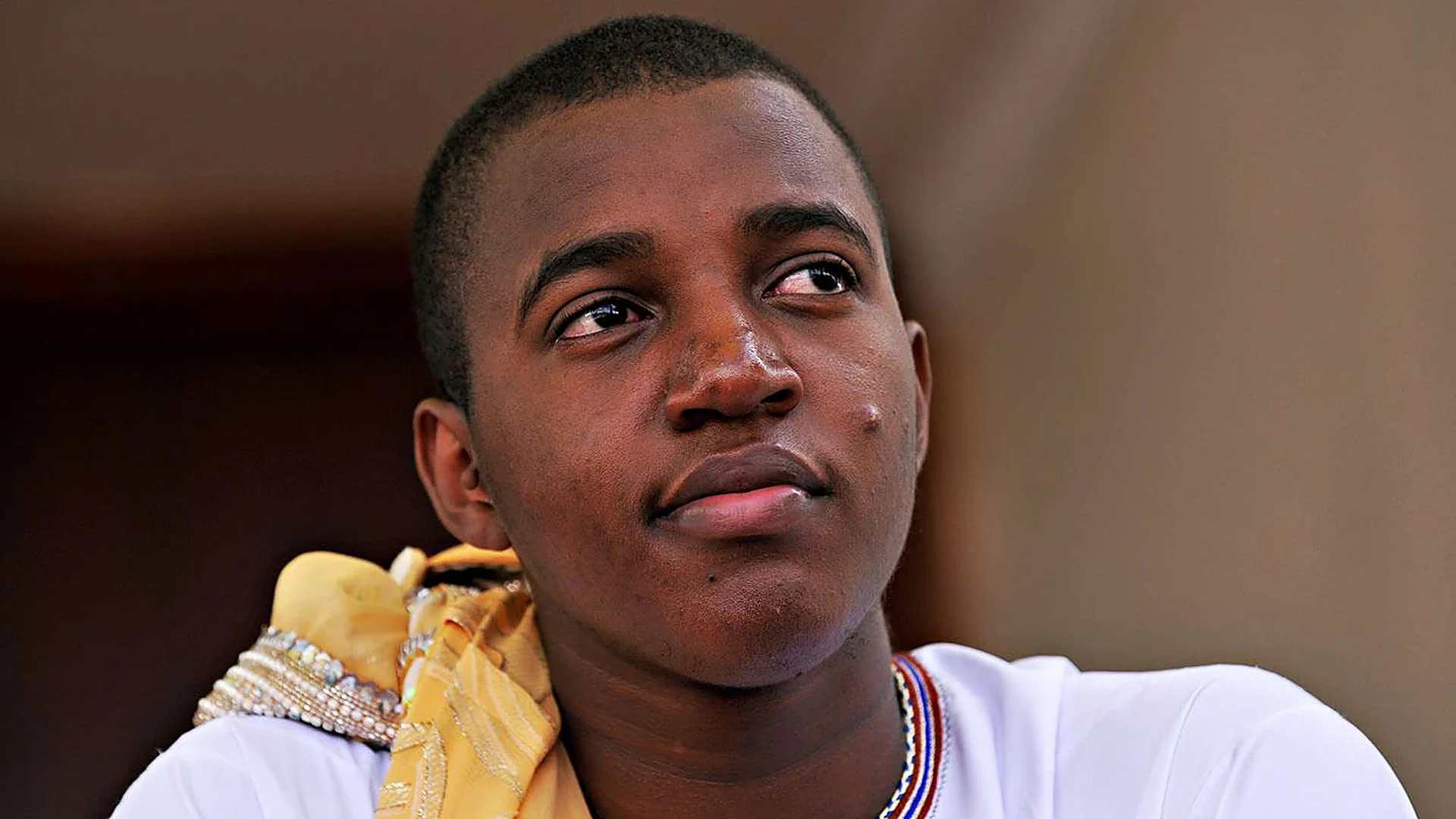
Condolences began to arrive quickly after the announcement of her death; King Carl XVI Gustaf of Sweden, who had spoken with Astrid in person just days before her death, was among the first to issue an official statement. Durek Verrett, husband of her niece, Princess Märtha Louise, also paid tribute to her on social media. “We will always remember your brightness and vitality. I will miss you very much. I am very sad. God bless you, good soul,” was the shaman’s heartfelt tribute.
Princess Astrid was regarded at the time of her death as Europe’s oldest active royal and was one of the five great-grandchildren still living of King Edward VII. With her passing, the number of living great-grandchildren of Queen Victoria also decreases. Among them are King Juan Carlos, King Carl XVI Gustaf of Sweden, Queen Margrethe II of Denmark, and Queen Anne-Marie of Greece.
Princess Astrid’s forbidden love
Princess Astrid Maud Ingeborg was born in 1932 at Villa Solbakken, a royal residence in Oslo, the daughter of then-Crown Prince Olav and Princess Märtha of Sweden. At the time of her birth, she stood eighteenth in the line of succession to the British throne. Astrid spent her early years with her parents, her elder sister Ragnhild, and her brother Harald at the royal estate of Skaugum, southwest of Oslo, from which they had to flee when Germany invaded Norway in April 1940.
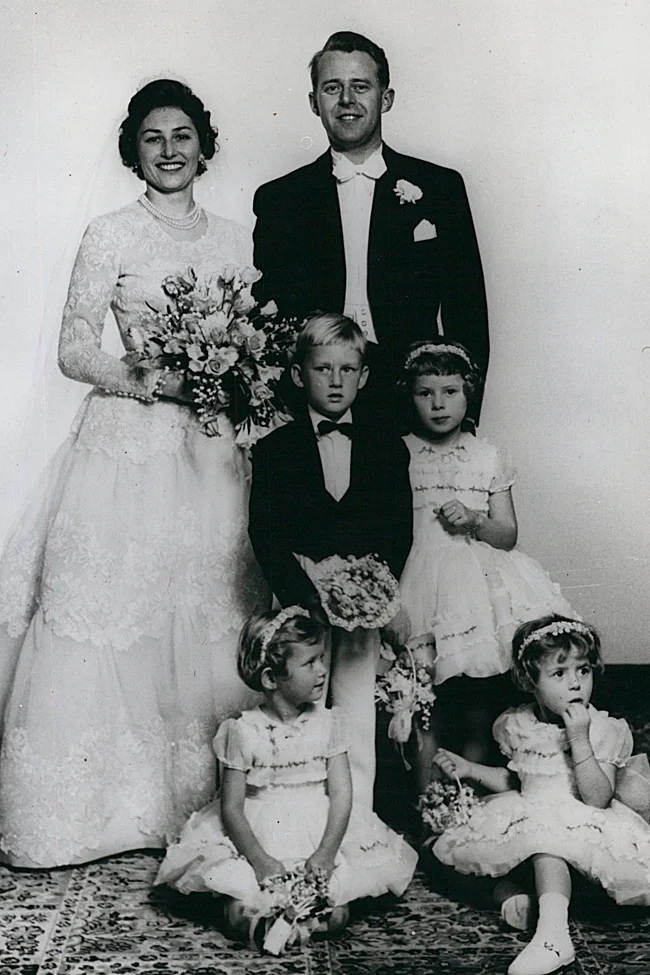
The wedding of Princess Astrid and Johan Ferner.
In the late 1950s she fell in love with Johan Ferner, the son of the owner of Oslo’s department store and an Olympic medalist. They wanted to marry, but because Ferner was a commoner, their relationship faced opposition from the more conservative sectors of their country. Moreover, the fact that he was divorced provoked opposition from the Church. Astrid threatened to go on a hunger strike unless her father gave his consent. Finally, he agreed and they married in 1961, although King Olav had to ask the retired bishop of Nidaros to officiate the wedding, since the Bishop of Oslo had refused to do so.
Astrid had to renounce her title of Her Royal Highness, her annual allowance, and her place in the line of succession, and from then on she became known as Princess Astrid, Lady of Ferner. She continued to participate in all major events of the Royal House until the end of her days and chaired the board of the Crown Princess Märtha Memorial Fund, a charitable foundation that provides financial support to social and humanitarian projects.