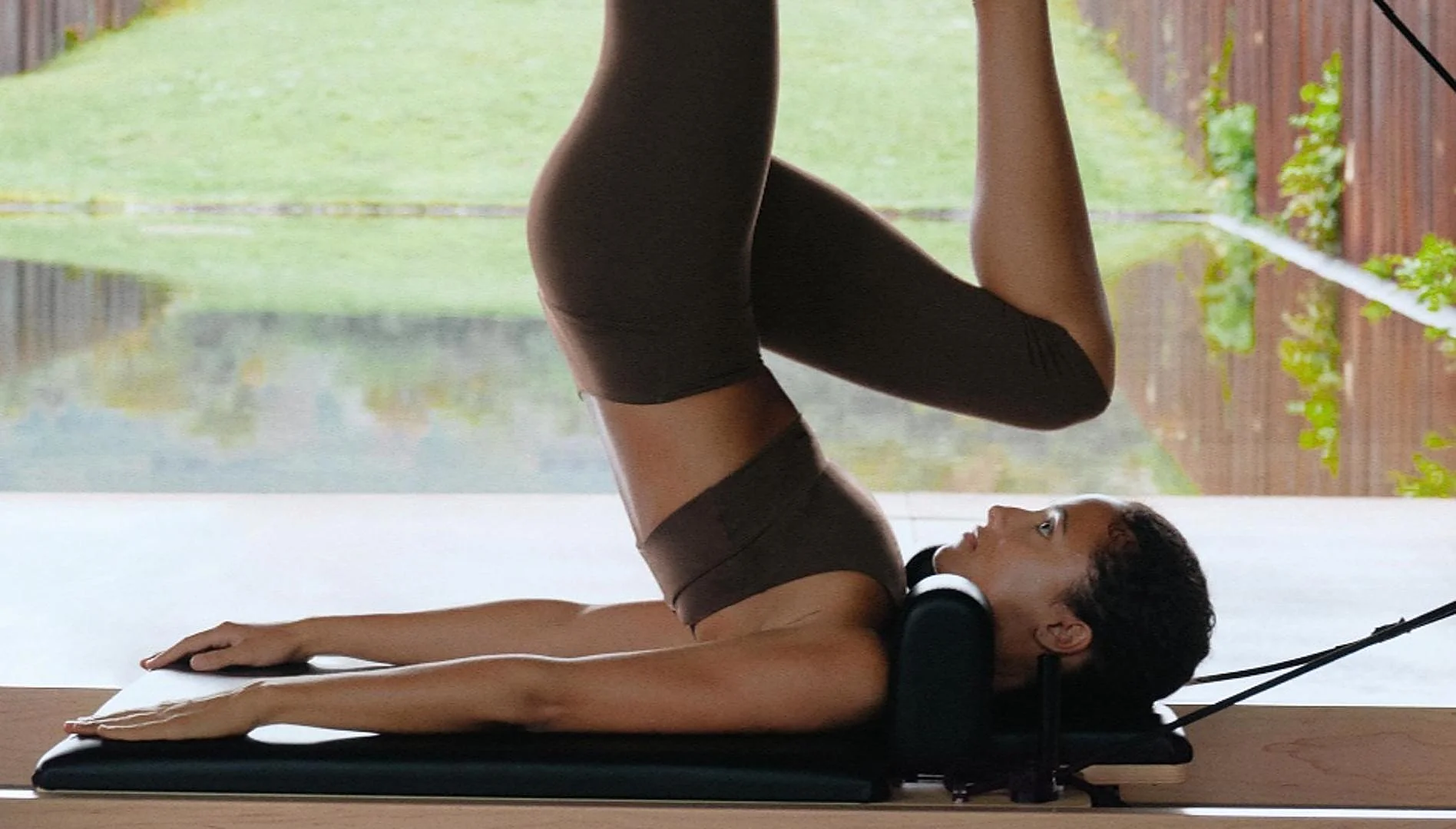
Low back pain rarely appears overnight. Henry Rodríguez, fitness manager of ZEM Wellness Clinic Altea explains it from what he sees in consultations every September: “Many people believe that low back pain appears overnight, but what usually happens is that it is the consequence of small overloads that accumulate.” Hotel mattresses, hours in the car or on a plane, packed suitcases, abrupt changes between inactivity and activity: all of this adds up during the summer without being noticed until one day it hurts.
The lumbar region is designed to move, and there lies the key to the problem. “The problem appears when we spend too much time in the same position or when, after several days of inactivity, we demand from the body an effort for which it is not prepared,” says Rodríguez. Often the back does not hurt from moving too much, but from weeks of moving little or always the same, something that goes completely unnoticed until the body begins to signal discomfort.
Pilates has real evidence behind it for this type of discomfort. “Pilates can be very effective for reducing nonspecific low back pain when performed progressively and under proper supervision. Not because there is a miracle exercise, but because it improves movement control, trunk stability, and the coordination between breathing and deep musculature,” explains Rodríguez. The pelvic curl, the cat stretch, the bird dog, the adapted dead bug and the toe taps are some of the exercises he most recommends for this initial stage.
All share a common principle. “They do not seek to move the spine a lot, but to teach the body to stabilize it while the rest of the body moves. That is precisely one of the fundamental principles of modern Pilates: to improve motor control,” details Rodríguez. It is not a matter of brute strength, but of learning to support the back while arms and legs work around it, something very different from what many people understand as training the back.
How the recovery routine is structured
When someone arrives with lumbar discomfort after the summer, the initial goal is not to strengthen quickly. “My goal is not to strengthen the back rapidly, but to first recover the quality of movement,” explains Rodríguez. First diaphragmatic breathing and pelvic mobility. Then stability exercises, dead bug, bird dog. And finally, more functional movements that already bring glutes, hips and trunk into the equation.
With two or three sessions a week, half an hour or forty minutes, changes begin to be noticed. “With two or three weekly sessions of about 30 or 40 minutes, it is usually enough to start recovering sensations,” always respecting each person’s progression,” notes Rodríguez. There is no hurry to move forward quickly: each phase is maintained until the body shows it is ready for the next one.
Exercises to avoid at the beginning
Trying to make up for lost time with demanding exercises is one of the most common mistakes. “Movements such as the teaser, the roll over, the jack knife or repeated spinal flexions with little stability can be too demanding if pain or lack of core control still exists,” warns Rodríguez. The problem is almost never the exercise itself, but doing it before the body is ready to undertake it.
Can Pilates truly recover the lumbar region after the summer? “Yes, as long as the origin of the pain is nonspecific low back pain and the program is adapted to the person,” says Rodríguez. The most recent scientific reviews show that Pilates can reduce pain, improve function and increase quality of life in people with persistent low back discomfort, and in consultation the reduction of stiffness is usually noticeable between four and six weeks of regular practice.
“The goal is not to stop having pain for a few days. The true objective is to build a back capable of tolerating better the demands of daily life. Because the best back is not the one that never hurts. It is the one that is prepared to move with freedom, adapt to different situations and continue accompanying us for many years,” summarizes Rodríguez.