We have internalized certain summer enemies, such as solar radiation, pollution, chlorine, sea spray, the wind… But heat always falls under the radar. And it also constitutes an aggression that causes wrinkles and sagging. This action of heat as an agent of premature aging is known as heat aging and is starting to draw the attention of skin experts. “The rise in temperature can produce alterations at the cellular level, microinflammation, dehydration… At a given moment it may not affect, but sustained heat for months, as happens in Spain in summer, can chronify and accelerate aging cascades,” warns Raquel González, cosmetologist and creator of Byoode.
High temperatures act slowly, but relentlessly. “There is clinical consensus about their involvement in the alteration of the skin barrier, the transepidermal water loss (TEWL), their contribution to oxidative stress and the accelerated degradation of structural proteins such as collagen and elastin,” assures Lucía Altozano, owner of the dermatological pharmacy Skinpharmacy Jorge Juan 34.
Sweating helps regulate that heat excess, but it does not sit well with the skin. “Depending on the intensity and characteristics of our own sweat, it can influence dehydration of the skin more or less. In addition, it interferes in cosmetic care, since that sweat ‘drags’ the moisturizer or the sunscreen,” adds Mireia Fernández, director of dermocosmetics at Perricone MD.
The cataclysm is measured in degrees
The normal surface temperature of the skin ranges between 32º and 34º. “Only ten minutes of sun exposure raise the external temperature by 6ºC.” And at 41º you reach the critical point at which the cell begins to deform internally and enters ‘survival mode,” declares Lucía Altozano.
This triggers two biological consequences: “On one hand, heat shock proteins (HSP), produced by the cell in stressful situations, switch to a ‘containment wall’ mode and ’embrace’ their vital structures so that the cell does not ‘melt-die’. And on the other hand, on the outer membrane of the cell the order to release matrix metalloproteinases (MMP) is fired, a type of enzymes that act as ‘molecular scissors’ to clean damaged tissues. In response to a thermal stress alert, such as heat, they enter a state of ‘false alarm’ and end up devouring healthy collagen, destroying the skin’s architecture and accelerating the appearance of wrinkles and sagging,” describes Altozano.
To sum up: cells activate their defense mechanisms against heat to try to protect themselves, but in the end the remedy is worse than the disease.
Then comes an unbearable summer of heat…
This biological defense mode ends up accelerating skin aging. “When the skin suffers heat over a prolonged period, it pushes signs of aging, such as wrinkles, loss of firmness, or pigmentation,” says Estefanía Nieto, dermocosmetics director at Medik8. “As if that weren’t enough, when the temperature rises a lot and the transepidermal water loss predisposes us to cellular dehydration, fine lines become more noticeable, especially in areas with less lipid production. It is not a structural wrinkle, but surface microrips in dry, tight skin,” notes pharmacist Altozano.
If so many days of sweltering heat and tropical nights disturb us, it does the same to our skin.
This is how you recognize skin that’s ‘baked’
Experts lay out some of the symptoms that reveal a skin that can no longer cope with high temperatures.
- Shininess appears. “They can be due to sweat or because barrier disruption leads to excess sebum production,” notes Irene Serrano.
- The sunscreen feels heavier. “Especially in highly humid areas,” according to Mireia Fernández.
- The skin looks dull at the end of the day. “If we don’t refresh the skin with mists or essences during the day, they tend to dull because hydration is lost,” says Estefanía Nieto.
- Pores look more visible. “Pores don’t open or close, but it may feel like they are more open throughout the day, especially if the skin is not exfoliated regularly or if it loses hydration during the day,” warns Raquel González.
- The texture becomes more marked. Texture is closely linked to pores. “When the skin is dehydrated, everything shows more: wrinkles, pores…,” notes Mireia Fernández.
- Hydration is altered. “In dry environments, that dryness takes a portion of the skin’s moisture. And if we sweat, the skin loses moisture and this leads to dehydration,” according to González.
- The skin barrier weakens. “Heat, solar radiation and sweat weaken barrier function and moisture is lost,” continues Raquel González.
- Inflammation is promoted. “It can be very visible if dehydrated, or invisible and deeper. This leads to irritations or to the degradation of collagen and elastin,” according to Irene Serrano.
- More sensitive: “That internal inflammation can cause skin sensitivity. Also, if heat causes sweating, this directly affects hydration levels and can lead to hypersensitivity associated with a weak barrier,” explains the Byoode founder. Redness and other alterations open the door.
- Accelerates the appearance of spots, wrinkles and sagging. “When there is internal inflammation or the skin is unprotected due to lack of hydration, it becomes more sensitive to solar radiation. As a protective mechanism, it tends to produce more melanin (pigment responsible for skin color). In addition, dehydration due to heat makes wrinkles more pronounced. And the silent inflammation that occurs leads to cellular alterations that unfold into degradation of collagen and elastin essential for firm and smooth skin,” adds Mireia Fernández.
Cosmetics for sweltering days
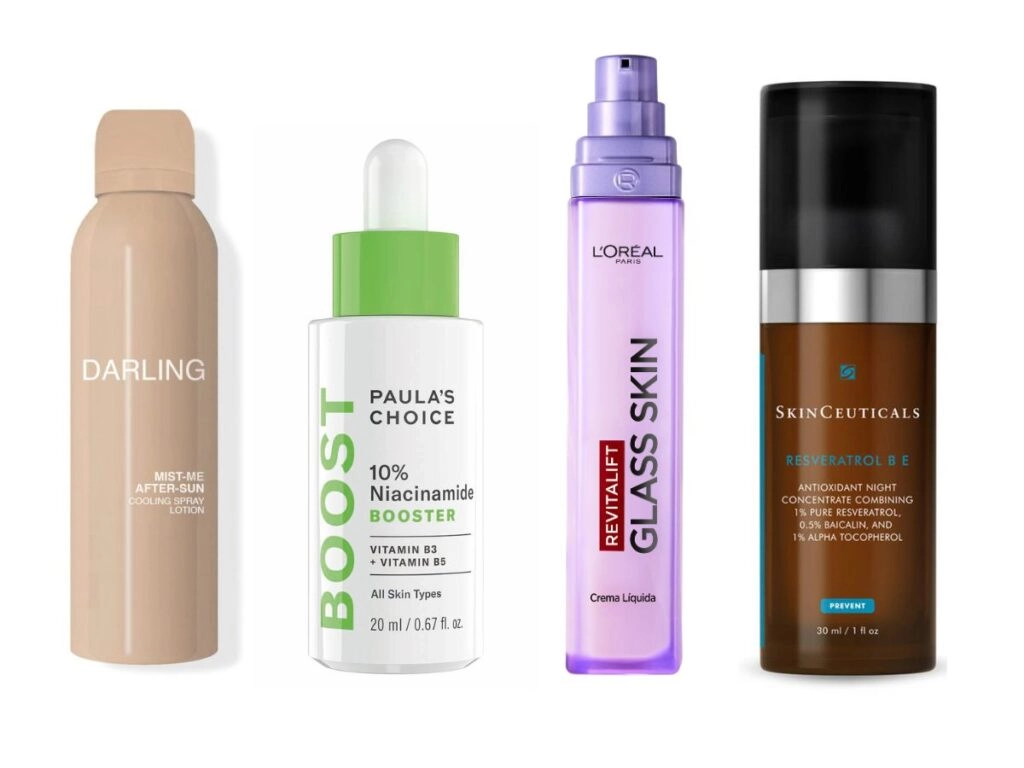
Ideally, you should supply your skin with ingredients that hydrate, regenerate, protect and calm. “In the morning we will reinforce everything that provides moisture and shield, with antioxidants and sun protection. And at night we will calm and provide regenerators, such as retinoids, so that the skin renews while we sleep,” advises Estefanía Nieto of Medik8.
Moisturizers are SPF for urban use and the new generation of sunscreens “combine sun filters with powerful enzymatic inhibitors that prevent the skin from heating up, help neutralize free radicals, inhibit cellular communication preventing the order to produce MMP and act as a ‘handbrake’,” advises the pharmacist Lucía Altozano.
Essential ingredients in the summer kit
The hyaluronic acid is fundamental because “it provides a plump and cushion effect by delivering moisture to the skin. And retinoids are the best active ingredients to regenerate and prevent the skin from degrading due to the effects of heat or other agents. They help produce more collagen and elastin, reduce pigmentation (spots) and improve tissue quality,” says Raquel González.
The antioxidants are also non-negotiable to prevent free radicals. “Vitamin C and ferulic acid recharge each other and are fundamental for the skin to be organized at the cellular level. And vitamin E has a peculiarity: in addition to being an antioxidant, it helps a more stable barrier function,” confirms the dermocosmetics director of Dermalogica.
For its soothing and balancing power, “niacinamide” is key when skin is inflamed, red, irritated… Or if silently it degrades collagen,” advises Estefanía Nieto.
Ceramides keep moisture in the skin. “They align with the skin’s hydrolipid barrier. They create a film that allows hydration to be retained better,” according to Mireia Fernández.
Peptides work as cellular ‘messengers’ that give orders for the skin cells to get to work more and better. “Depending on which ones we choose, they will have more hydrating, soothing, balancing or regenerating action and help avoid the effects of heat aging,” Nieto assures.
The reinforcement of nutricosmetics
“Oral supplements work in the deep dermis, where the most valuable collagen is found and where MMPs do the most damage. They provide an extra dose of collagen and amino acids so that fibroblasts can quickly rebuild the gaps left by the ‘thermal demolition,”
“In this time of year formulas with antioxidants, Omega-3 fatty acids and collagen are of interest. “They raise cellular resistance to oxidative stress, slow down the inflammatory cytokines provoked by the sun, preventing the MMP switch from staying on for days,” explains this expert.
The importance of the ‘aftersun’
“If we only apply a dense moisturizing cream, we can create an insulating film that traps heat inside, prolonging the activity of MMPs and the destruction of healthy collagen,” warns the pharmacist at Skinpharmacy Jorge Juan 34.
The after-sun cream “reduces physical temperature thanks to its refreshing ingredients. These immediately dissipate the retained heat and bring the skin down from the critical activation threshold of the defenses,” recalls the pharmacist. She suggests checking that they contain soothing active ingredients, such as allantoin, bisabolol or aloe vera. “They deactivate the inflammatory response and stop MMP production. And they also initiate nocturnal repair by providing the nutrients necessary for fibroblasts to begin producing replacement collagen while you sleep,” adds Lucía Altozano.