Many women feel that their hair no longer responds the same as they age. It gets dirty sooner, loses root volume, becomes weighed down even when freshly washed, or seems thinner even when using the same masks as always. And perhaps the problem lies simply in scalp care.
During menopause, the drop in estrogen can cause less hair density and more dryness. Additionally, at this stage there may be less hair on the scalp. Therefore, more and more experts insist on treating this area as an extension of the facial skin: clean it well, respect its barrier and Avoid buildup of residues.
Why the scalp matters so much after 50
For years we have focused almost all attention on the mask, the serum or the end-care oil. However, when hair loses body, oils at the roots or looks dull, the origin may lie in a scalp saturated with residue from styling products, dead cells, oil, pollution or shampoos that are too mild for a deep cleanse.
This is where the scalp exfoliant comes into play, a product that does not replace shampoo but helps achieve a more complete cleaning. For this reason, scalp exfoliation seeks to remove buildup of oil, product, dead cells and residues, always following the usage instructions and avoiding applying it on irritated skin or wounds.
What exactly does a scalp exfoliant do
A scalp exfoliant can have a physical action, with small particles, or chemical, with actives such as mild acids or enzymes. Its aim is to leave the scalp cleaner and more balanced so that the hair grows in a less saturated environment.
The most immediate result is usually a lighter-root feeling, hair with more movement and more visual volume. It’s not magic and it won’t make hair grow overnight, but it can significantly change how the mane behaves, especially if you use hairsprays, dry shampoo, foams, oils or finishing products.
The key is not to overdo it. For mature, dyed, dry hair or sensitive scalps, the ideal is to start with a low frequency: once every 10 to 15 days. If the scalp is oily and tolerates it well, it could be used once a week, but always gently.
The most common mistake is using it as if it were a regular shampoo. It is not. It is applied at the roots, massaged without scratching, and rinsed very well. Afterwards, it is advisable to wash with shampoo and apply conditioner or mask only from mid-length to ends.
How to choose it if you have fine or dyed hair
If you have fine hair, it’s better to choose light formulas, without particles too aggressive and designed for a sensitive scalp. If you have color, highlights or tinted grays, it’s wise to look for color-safe products and avoid exfoliants that are too abrasive.
It is also important not to use it if there is irritation, eczema, active psoriasis, wounds or high sensitivity. In those cases, the most prudent thing is to consult a dermatologist before introducing acids or exfoliants into the routine.
Purifying Rosemary Scalp Scrub by Aromatica.
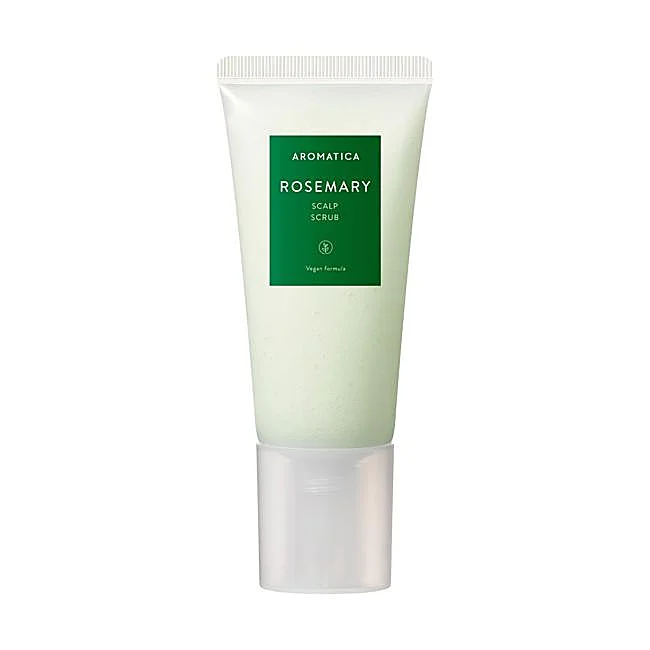
Purifying Rosemary Scalp Scrub by Aromatica
In Miin Cosmetics we have sourced this purifying scalp exfoliant for scalp care. It is a vegan product, free of sulfates, silicones and parabens. It is formulated with a blend of natural ingredients (rosemary, oregano, basil and cilantro) that gently exfoliate the scalp. Price: €23.99.
Hair mask for the scalp by Miriam Quevedo.
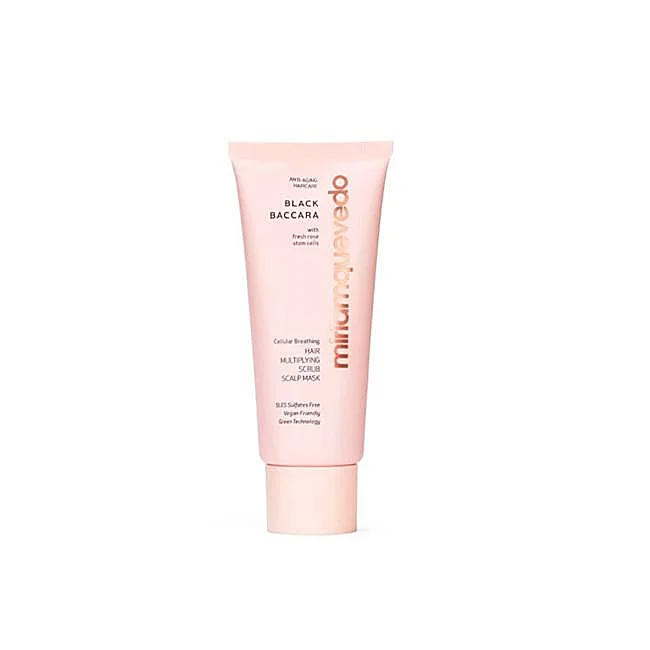
Hair mask for the scalp by Miriam Quevedo
If you prefer a mask-form product, we recommend this one from Miriam Quevedo. It is a purifying scalp exfoliating mask that supports the hair growth cycle while detoxifying and purifying deeply, resulting in a stronger, more vigorous mane. Price: €89.99.
Symbiose Micro Peeling Cellulaire Scalp Scrub by Kérastase.
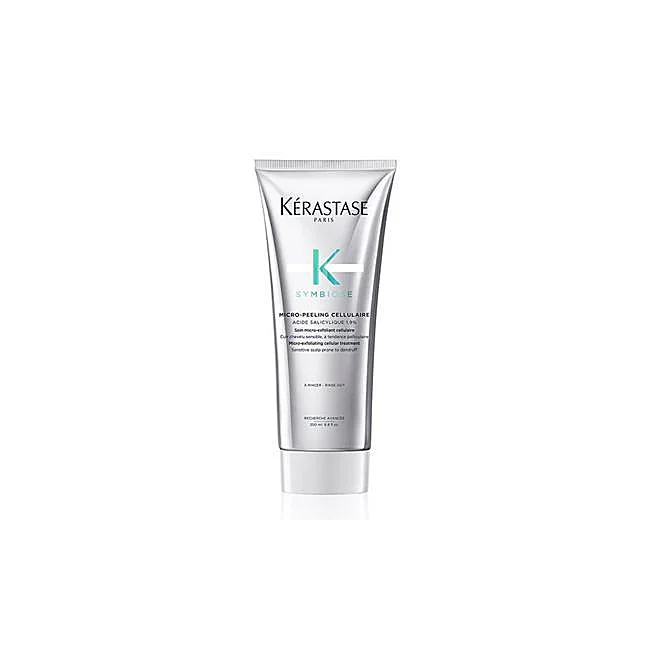
Symbiose Micro Peeling Cellulaire Scalp Scrub by Kérastase
Another exfoliant that helps the scalp is this one from the brand Kérastase. It is a micro-cellular exfoliating treatment for the sensitive scalp prone to dandruff. Ideally, massage the scalp with both thumbs from the lower areas up toward the top, and then continue the massage with the whole hand across the scalp.