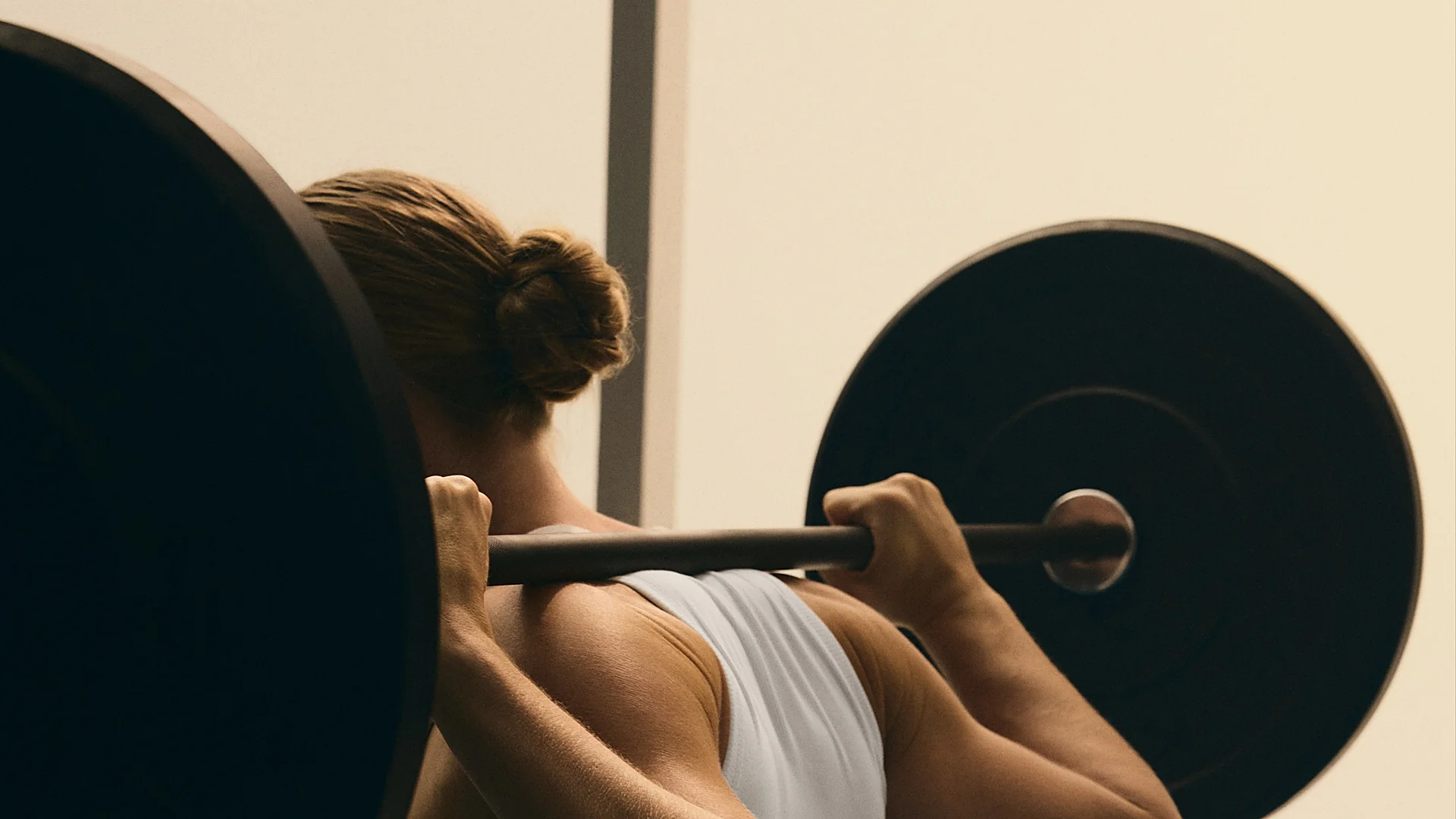
The hip hinge is a key movement pattern used in both the gym and daily life. Mastering this exercise will help you develop strength and power in the lower body, especially the glutes, as well as improve posture and shape your silhouette at any age, while reducing the risk of injuries.
The hip hinge exercise consists of bending forward from the hips while keeping the spine in a neutral position. You use this movement in many everyday activities, from picking objects off the ground to sitting in a chair. And, applied to fitness, in numerous gym exercises and in many sports.
While this is a natural strength movement, it is a movement that is often performed incorrectly, and instead of hinging from the hips, you bend from the spine. This is usually due to hip stiffness caused by a sedentary lifestyle, which makes performing this strength exercise more difficult.
Flexing the spine places pressure and load on the spinal erector muscles, instead of the large muscles of the hips and legs, which translates into an increased risk of back pain and injuries. That’s why it is often labeled as a ‘trap exercise’. Follow these steps to avoid mistakes and reap all the benefits.
How to do the hip hinge correctly
Whether you’re performing simple bodyweight hip hinge exercises or you prefer advanced weightlifting, the hip hinge technique is the same. Stand with your weight shifted onto your heels and your knees slightly bent. Now brace your torso from your abs, as if you were protecting yourself from a punch to the stomach.
Next, push your hips back while maintaining a neutral spine and an open chest. As a result, the knees will bend and the torso will move forward. To stand up, drive your hips forward while straightening the knees, maintaining a neutral spine at all times.
A woman exercising in a light blue sporty look.

There are very common errors when performing this strength exercise, and one of them is arching the back. Practice the hip hinge using only your body weight – that is, without weights – until you can activate the glutes and hamstrings correctly and maintain a neutral spine. You can place a rod or bar along your back to prevent it from arching.
Some people also arch their back too much instead of hinging from the hips. Focus on keeping the torso braced and the spine neutral as you push your hips back. And try not to bend the knees too much. The shins should remain at a 90-degree angle to the ground throughout the hip hinge.
Over-bending the knees turns the hip hinge into a movement more like a squat. Conversely, lowering too much when bending the hip causes the back to arch. Stop when you feel the stretch in the hamstrings or when you notice you are no longer maintaining proper form.
Benefits of performing the hip hinge
Learning to perform the hip hinge correctly offers many benefits, including a reduced risk of back injuries by reducing unnecessary load on the muscles and discs of the spine. Mastering the exercise also ensures the correct muscles are used when performing it, so you achieve the desired results.
Proper technique strengthens the glutes and hamstrings, which translates into greater power and strength in the lower body. It will help with squats, deadlifts, jumps, and more. It leads to better overall performance. And strengthening the glutes helps combat the poor posture caused by sitting all day. The glutes and hamstrings are the main muscles worked, along with the spinal erectors and the abdominals. You will develop a posture and an enviable silhouette at any age.