Many people nickname him as The King of Fashion (the King of Fashion). The Metropolitan Museum of Art in New York decided to name its dedicated exhibition in 2007 The King of Fashion, and that was also the title used for the British edition of his memoirs published in 1930. And the truth is that yes, Paul Poiret had plenty of reasons to reign. He was one of the first French designers to understand that fashion could be spectacle, brand, experience, and culture at the same time. Therefore, although modern Fashion Week did not originate with him (it would come many decades later), it is hard to understand the current format without several of the ideas that the Frenchman popularized at the beginning of the 20th century.
He was born in Paris into a humble family in 1879. His father was a fabric merchant and wanted him to learn the trade in a parasol workshop. There he took his first steps in design, sewing outfits for his sister’s dolls from scraps of fabric. It didn’t take him long to enter the most exclusive circles of the Belle Époque Parisian society, as his talent and charisma led him to work as an assistant (and later as head of the tailoring department) for Jacques Doucet.
For him, designing was only one part behind his work. He was one of the first to understand that there had to be an identity, to provoke conversation and to build an entire universe around a name. Poiret opened his own maison in Paris in 1903 and soon generated conversations in women’s fashion of the era. The reason? Against the rigid and structured silhouettes of the late 19th century, he bet on more fluid garments, on draping and on dresses that could fall from the shoulders without relying on the same inner structures. In fact, he is credited with having liberated women from the corset, although Madeleine Vionnet and Lucile also participated in this change.
Poiret and His Parties
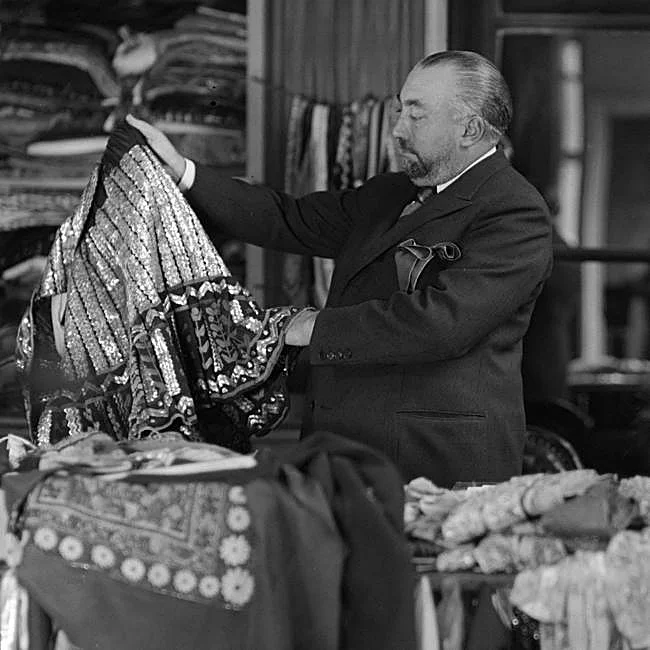
Paul Poiret.
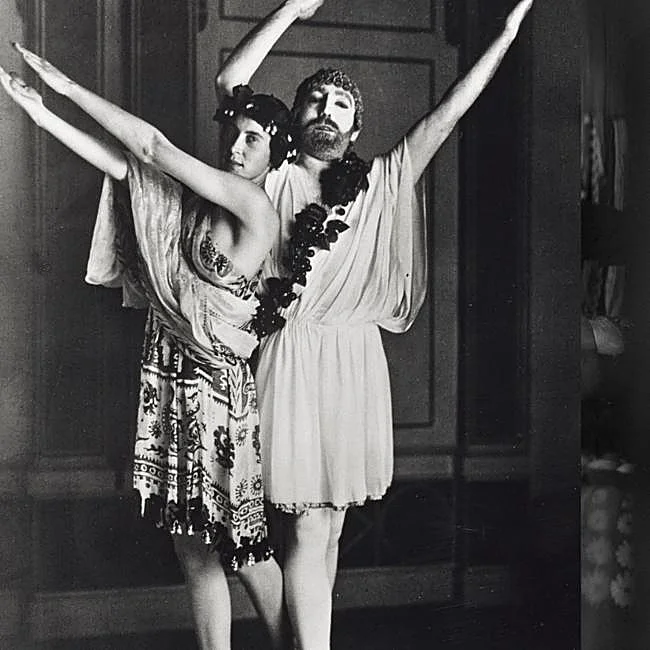
His most surprising contribution to contemporary fashion resides in his way of presenting it. In 1911, he organized an extravagant party at his maison, known as The Mille et Deuxième Nuit (The Thousand and Second Night). It was inspired by an occidental and fantastical version of the East, and all the guests had to dress according to the theme. Moreover, Poiret appeared as a sultan and his wife and muse, Denise Poiret, wore one of his most daring designs. That was a designed experience to make people talk about him.
Today this hardly stands out because it’s what we are used to. When any fashion house presents a collection, the garments are only a part. The location, the music, the stage set, the casting of the models, the front row and (more and more) the images that circulate afterward on social networks matter. A show lasts a few minutes, but it is designed to generate conversation for days. That is why it is striking that the Parisian designer understood this logic a century earlier.
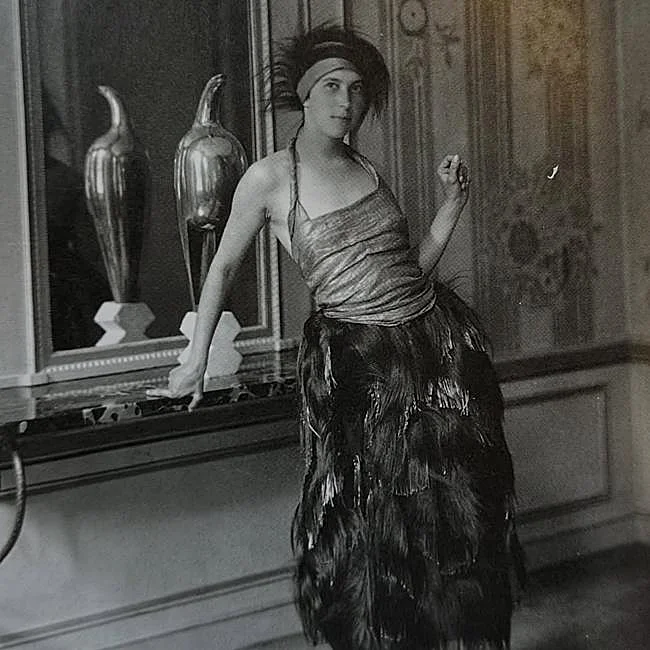
Denis Poiret,1919.
In another sense, he was also a pioneer in understanding that a designer could sell much more than clothes under a single identity. In this way, and in that same year, he created Parfums de Rosine, a line of perfumes and cosmetics in honor of his eldest daughter; and he developed Martine, another line dedicated to decorative arts and home goods in honor of his younger daughter.
What was his objective? To position the designer as a creator of universes and the house as a lifestyle brand. Moreover, he had very good relations with artists, illustrators, and photographers, who also contributed to this transformation. All of them believed that image held enormous value and used publications, parties, and collaborations to project an identity that is still recognizable today. They only sought to have his name circulate throughout Paris.
Everything He Contributed to Paris Fashion Week
Poiret and his wife, Denise.
Could one say that he helped to establish the Paris Fashion Week? Certainly, he influenced it. Runways, as we know them today, are the result of a much broader and more complex history. Charles Frederick Worth had already used models to present garments in the 19th century, Lucile was fond of creating theatrical presentations, and during the 20th century fashion shows ended up becoming events scheduled within international calendars.
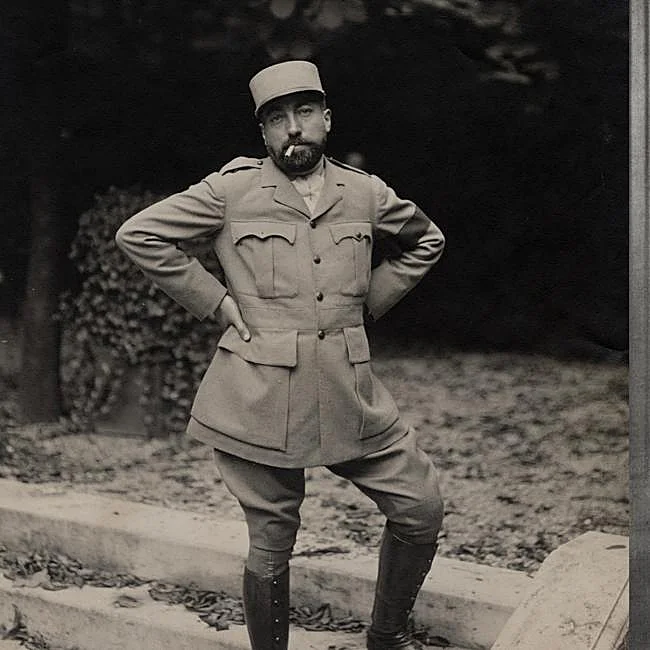
Poiret’s legacy is essential, even more so if we look at it with present-day eyes. His story had a very different ending from the big brands that are talked about today. After the First World War (where the designer survived as a tailor for the Army), public taste began to change. They replaced the exotism and the references to the Middle East that had characterized his early collections with a simpler, more functional modernity that moved away from theatrical luxury. That led him to close and he died alone and ruined in 1944 with his influence eclipsed by other names such as Chanel.
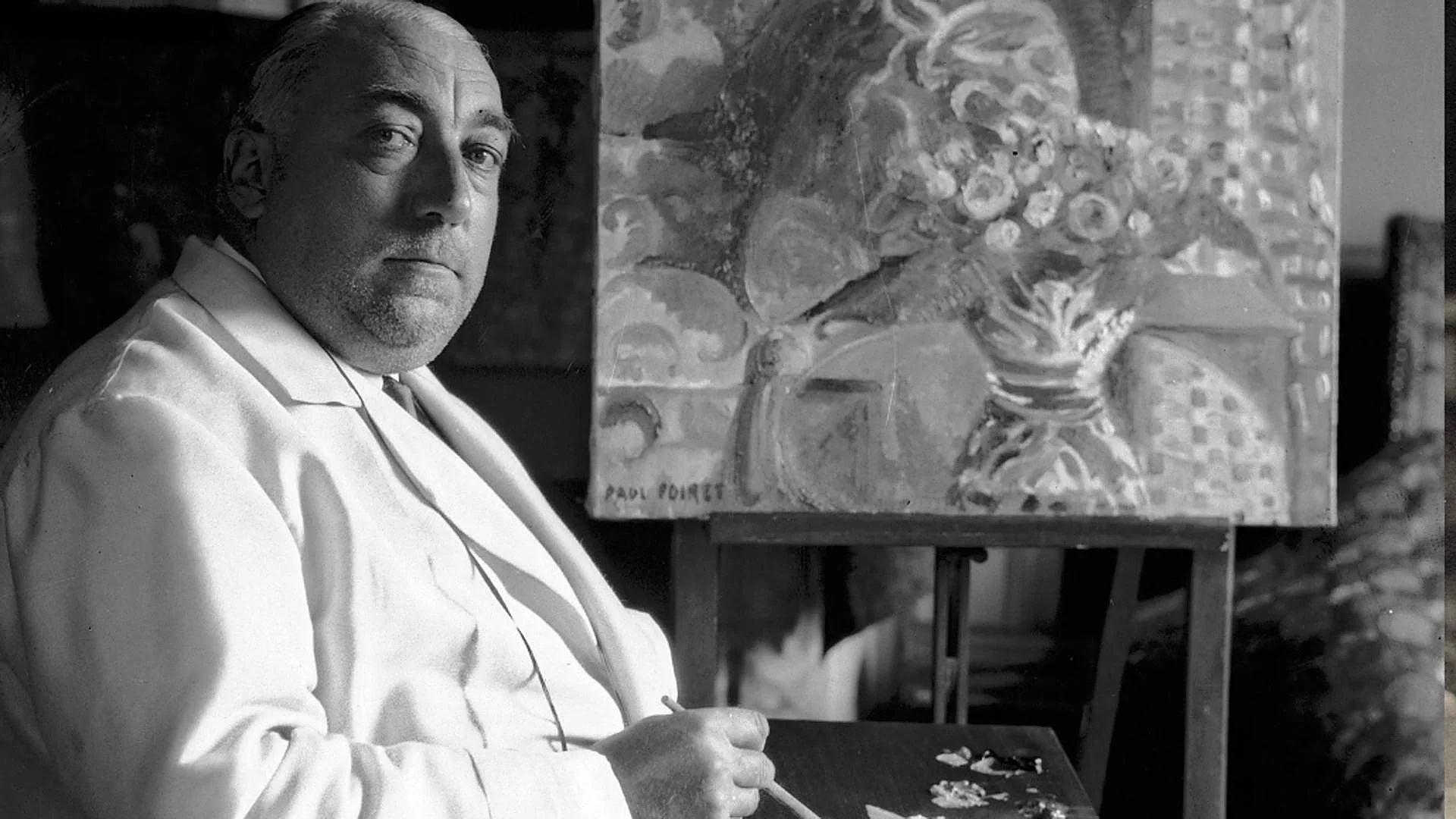
Paul Poiret, «roi de la mode».
Decades later, fashion rediscovered its history. Not surprising. More than a hundred years after that Parisian party in 1911, fashion has changed. Locations are larger, audiences global, and images travel around the world in a matter of seconds. Yet the strategy remains the same.