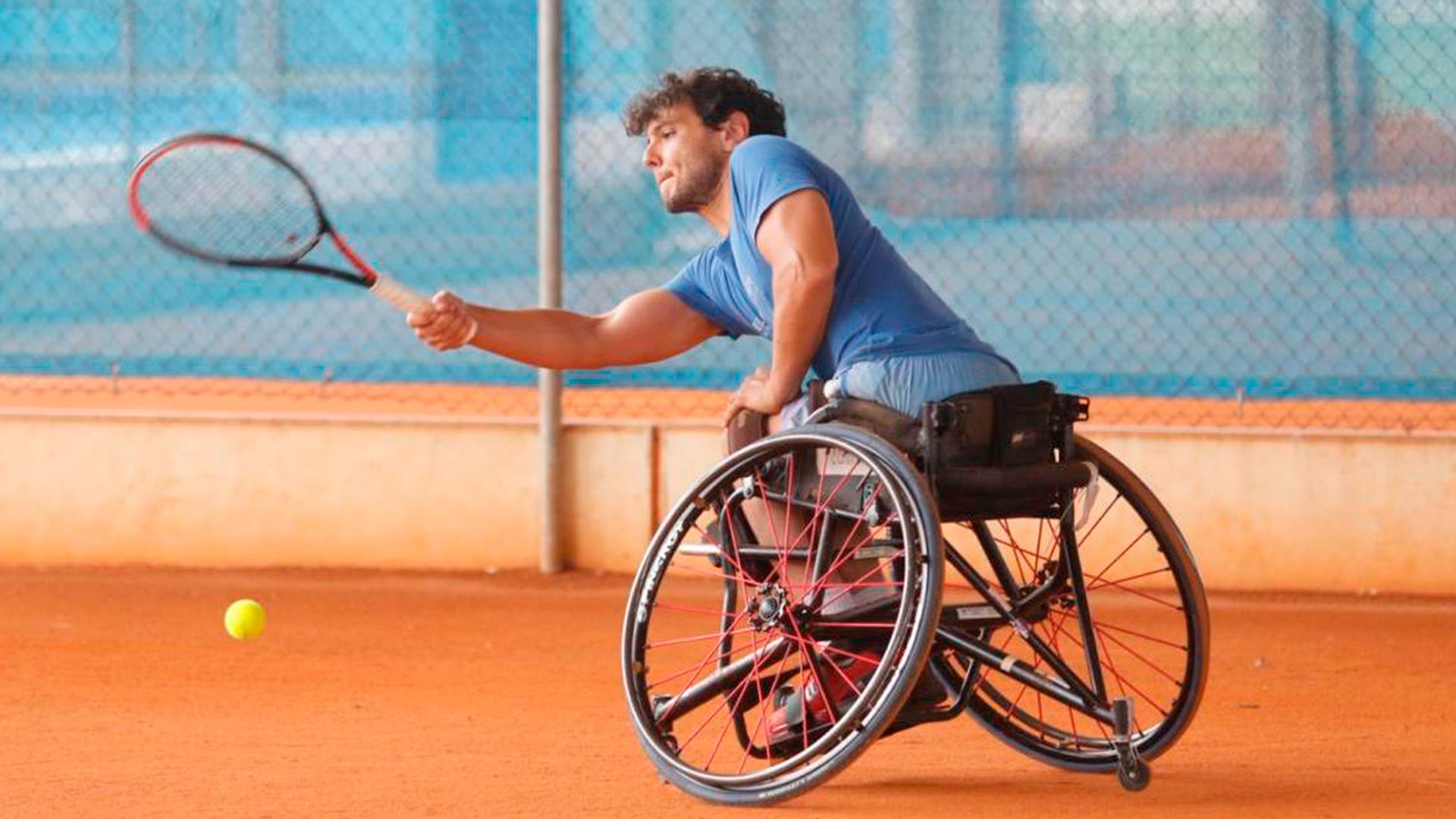
Moving more not only burns calories. It also stimulates neurogenesis. FOTO: Cottonbro/Pexels.
Will be at WeLIfe Festival 2026 on October 24
Movement not only has metabolic and cardiovascular benefits. Long-term brain health is closely related to physical activity.
By Ana Serrano
OCTOBER 17, 2026 / 07:28
The proverb ‘mens sana in corpore sano’ has turned out not to be a hollow phrase to encourage people to sign up for a gym. Scientific evidence confirms that a healthy brain needs an active body, and incorporating physical activity regularly adds years to the brain. The neuroscientist José Luis Trejo has spent years researching this and confirms the inseparable relationship between an active lifestyle and a brain that ages better. A tandem that translates into a guarantee of good longevity.
However, science clashes with an inertia too ingrained in our society: sedentary behavior.
José Luis Trejo will be one of the guests at WeLife Festival 2026 on October 24 in Madrid.
More stress, less movement
We all know that it is advisable to engage in physical activity regularly. The World Health Organization (WHO) even puts a figure on it: 150 minutes per week, far less than the time we spend scrolling before bed or binge-watching series on the sofa. But reality shows a very different face. The work environment and daily obligations create an environment that the neuroscientist defines as ‘stressogenic’, designed in such a way that it annihilates any impulse to move and triggers stress just by thinking about it.
“A long time ago we already discovered that, if what we ask of the brain exceeds our capacities, something is generated that biologically is called stress. If you live permanently in a chronic non-adaptive stress situation, feeling that you never achieve anything, that inevitably leads you not to exercise,” begins.
“It’s that I don’t have time to go to the gym”
The split workday, increasingly larger cities with hellish traffic, the housing crisis that forces many to live dozens of kilometers from their place of work… The feeling is that the day lacks hours. José Luis Trejo is very aware that “movement cannot become the umpteenth source of stress for that person who doesn’t have the hours.
The good news is that you do not need to have an intense hour at the gym to reap the benefits of physical activity on the brain. “As soon as you raise your heart rate and energy expenditure, this already yields benefits. It doesn’t matter whether it’s aerobic or anaerobic exercise, it doesn’t matter which sport, but you have to move,” he says firmly.
A trick is to incorporate active micro-breaks throughout the workday. “The essential thing is to minimize as much as possible those long hours we spend sitting,” he adds, emphasizing that “moving promotes neurogenesis, that is, the creation of new neurons in the brain.
Exercise and the PISA report
The disheartening data from the latest PISA report could be directly related to that sedentarism pandemic Trejo refers to. The scientist and his team have years researching the relationship between physical exercise and academic success, and that does not necessarily mean adding more hours to the Physical Education class. “We are in the midst of active research on how to bring movement to the school as part of the learning and memory routine,” he says. “We will soon have concrete data, but we can already confirm that the more exercise students do, the better their academic performance”, he says.
The latest studies from his team conclude that physical activity has more weight in students’ performance than diet or gender.
And here the influence of the socio-economic status of families stands out. “We are already seeing that the academic performance of the kids can be affected by their family’s purchasing power,” he notes. “They are children who grow up already with a level of stress that makes them hypersensitive to distressing situations that lead to anxiety, depression and, with it, premature aging.”
We will live longer… and will we move less?
We are in a society that strives for longevity. But as we obsess over living longer, there is little progress in the fight against sedentarism. Neuroscience warns that the lack of physical activity condemns us to a future of ever longer-lived citizens, but doomed to dementia and neurodegenerative diseases. That is why José Luis Trejo emphasizes that, when choosing between lifespan (living longer) and healthspan (prolonging years with good health), he prefers the latter. “Living many years without considering that you will have less neurogenesis and poorer brain blood flow, what is the point?” asks Trejo.
To achieve as many years as possible in full vitality, “we have to incorporate movement into the routine and reduce stress.” The recipe isn’t that complicated, especially knowing that you don’t have to be a brilliant athlete for movement to confer all of its benefits to brain activity.
Better late than never
Living a healthy life and exercising is a long-distance race that should start in childhood. But even as adults, it is never too late to hop aboard the active-living train.
“There is scientific evidence about people who had never exercised and who start at 70 and have minimized the appearance of neurodegenerative symptoms,” he reveals. It does not mean they will not arise, but they can be delayed. “If you grant yourself a few years of cognitive capacity, even if Alzheimer’s may be diagnosed later, well, that is what you have gained,” the researcher affirms.