Milan Fashion Week returns to place Milan at the center of fashion with the presentation of the spring-summer 2027 collections. But before discovering the new trends that will shape the coming season, it is worth recalling some of the most iconic looks that have graced its runways and that, years later, remain part of fashion history.
From Giorgio Armani’s tailoring to Versace’s supermodels, Tom Ford’s Gucci, Prada’s ugly chic, or Jennifer Lopez’s unforgettable jungle dress, Milan Fashion Week has been the stage for moments that transcended the runway and ended up influencing the way we dress.
Some of those looks were copied, reinterpretated or revived decades later. Others became directly images of pop culture. And many of the codes that are trending again today —oversize blazers, low rise, the 90s aesthetic, or the obsession with archives— already had one of their great moments in Milan Fashion Week.
Giorgio Armani, 1980: the suit that changed the way of dressing
Long before the oversize blazer and wide-leg pants kept returning to trends, Giorgio Armani had already begun dismantling the rigidity of traditional tailoring.
In the late 70s and early 80s, the Italian designer softened the shoulders, lightened the structures, and turned the suit into a much more fluid garment. In his feminine proposals, the blazer ceased to function only as an adaptation of the masculine wardrobe and became a new way of dressing with authority without sacrificing comfort.
The autumn-winter 1980 collection condensed much of that language: sober colors, wide pants, relaxed jackets, and an elegance far less rigid than what had dominated until then.
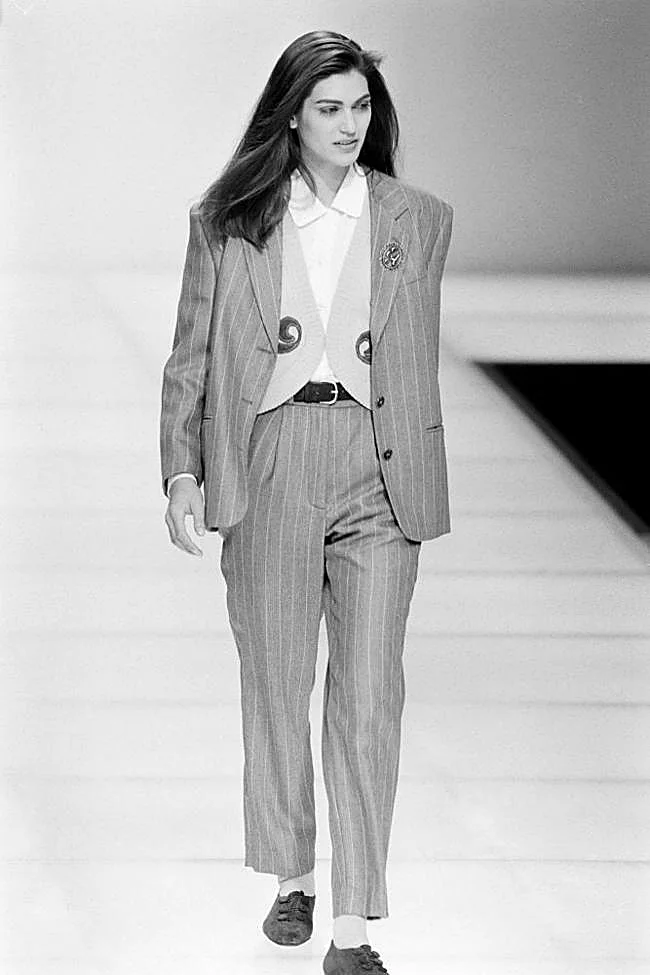
Armani show in 1980.
That same year, American Gigolo helped carry Armani’s aesthetic off the runway thanks to Richard Gere’s wardrobe.
Decades later, its influence remains evident. Whenever wide blazers, fluid pants or suits in neutral tones return, there is something of that early-80s Armani.
Versace, autumn-winter 1991: the supermodels and Freedom! ’90
Linda Evangelista, Cindy Crawford, Naomi Campbell and Christy Turlington closed the fall-winter 1991 show by lip-syncing Freedom! ’90. The four had previously appeared in George Michael’s music video and were already part of a new generation of models beginning to attain as much fame as the celebrities they walked for.
Versace understood that change very early. Its models were not anonymous figures destined solely to showcase clothes. They had names, personalities and an increasingly media-savvy presence.
Linda Evangelista, Cindy Crawford, Naomi Campbell and Christy Turlington at the Versace show in 1991.
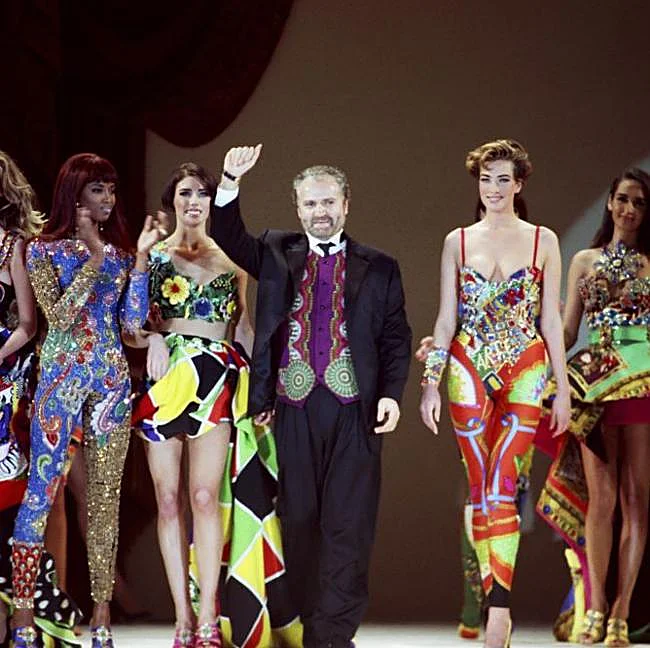
That scene ended up becoming one of the images that defined the golden age of supermodels. It also established a link between Versace, music, celebrities and spectacle that the house would continue to exploit for decades.
Gucci by Tom Ford, autumn-winter 1995: when sensuality returned
Low-rise velvet pants, satin shirts opened almost to the waist, jewel tones and a sensuality that seemed carefree. The autumn-winter 1995 collection of Gucci marked one of Tom Ford’s great moments at the helm of the house.
In the face of the more austere minimalism that had dominated parts of the early 90s, Ford revived a 70s-inspired aesthetic and turned it into something fully contemporary.
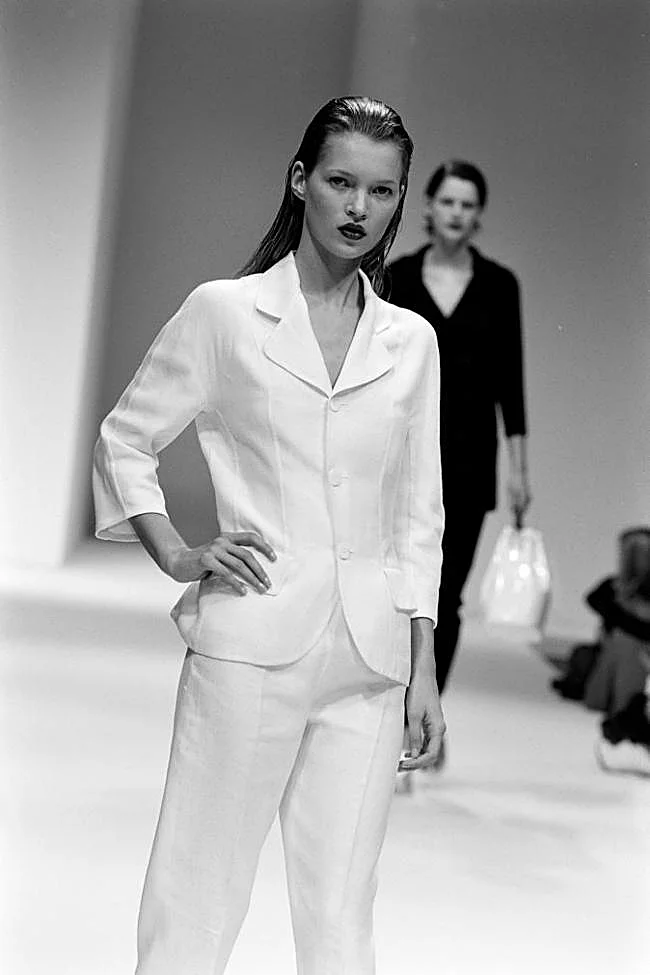
Kate Moss during Gucci show in 1995.
On the runway appeared Kate Moss, Amber Valletta or Shalom Harlow in garments that are instantly recognizable today: hip-hugging pants, shiny shirts and a constant mix of sophistication and provocation.
Its influence is particularly easy to detect now. The return of the low rise, velvet, sheer fabrics and that way of understanding sensuality have brought Gucci from the mid-90s back to the center of numerous current references.
Prada, Spring-Summer 1996: the birth of ugly chic
The Spring-Summer 1996 collection brought together avocado greens, browns, mustards, geometric prints and combinations deliberately deviating from the conventional idea of beauty.
It was one of the great moments of the so-called ugly chic, that capacity closely linked to Prada to transform something initially strange, old-fashioned or even unflattering into a new object of desire.
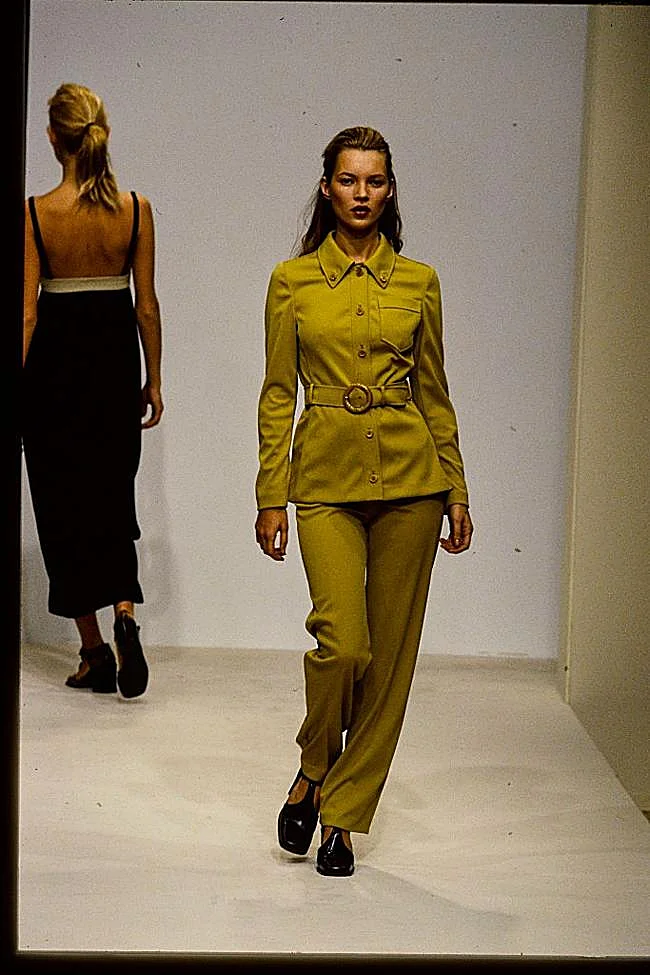
Kate Moss during Prada show in total green look in 1996.
That mechanism remains very present in current fashion. Oversized sneakers, difficult colors, shoes that divide opinions or deliberately unconventional garments continue along the same path: first they surprise, then they provoke rejection and, finally, they end up becoming a trend.
Moschino, autumn-winter 2014: when McDonald’s arrived on the runway
The first collection of Jeremy Scott for Moschino made it clear in a matter of minutes what his proposal for the Italian house would be.
The designer turned McDonald’s codes into fashion: red and yellow, arches reinterpreted with the Moschino name, and fast-food uniforms transformed into jackets, dresses and accessories.
As the show progressed, garments inspired by packaging, wrappers and consumer products also appeared. There were references to Chanel, but also to Budweiser, Frito-Lay and the fast-food universe.
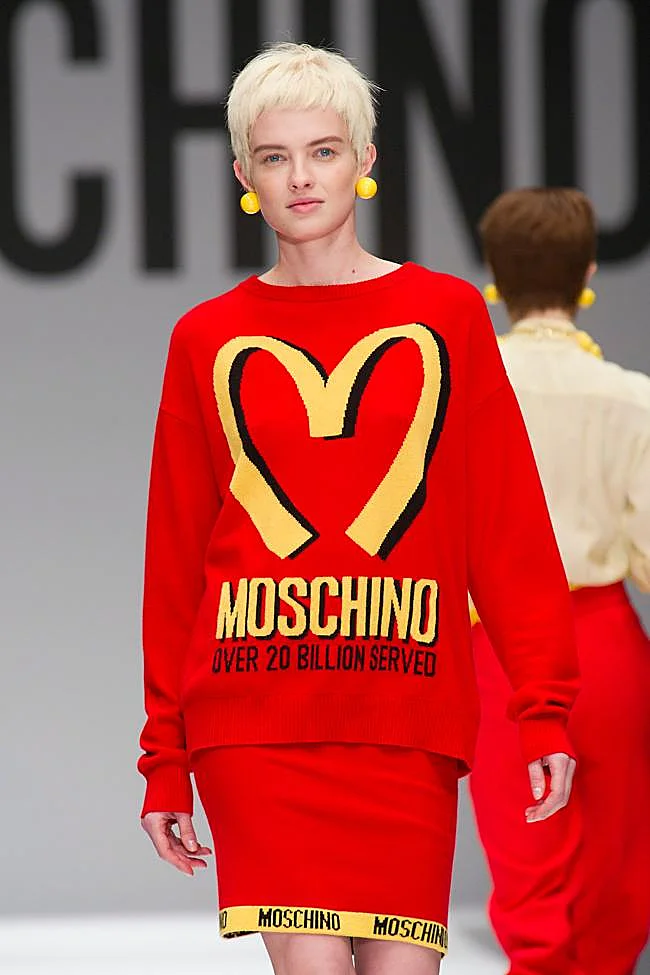
The iconic Moschino sweater during the 2014 show.
The result was ironic, exaggerated and tremendously recognizable, something that connected with the irreverent character Franco Moschino had originally imparted to the brand.
But Jeremy Scott took that formula to the social media era. The collection produced images designed almost to circulate: easy to understand, easy to recognize and sufficiently extravagant to be shared.
Versace, spring-summer 2018: the golden supermodels
In September 2017, Donatella Versace presented an especially emotional collection. It marked 20 years since Gianni Versace’s death and the designer decided to recover some of the most recognizable codes from the collections created by her brother.
The baroque prints, butterflies, black, gold and some of the motifs that had built Versace’s visual imaginary during the 90s returned.
Naomi Campbell, Cindy Crawford, Claudia Schiffer, Carla Bruni and Helena Christensen at the end of Versace’s show in 2018.
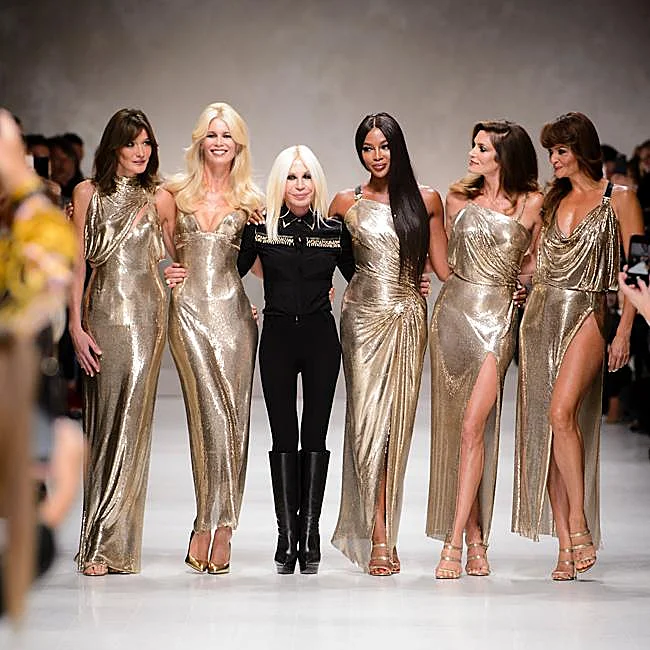
Naomi Campbell, Cindy Crawford, Claudia Schiffer, Carla Bruni and Helena Christensen appeared together on platforms wearing long golden designs. Then they walked the runway alongside Donatella.
The reference to the 1991 show was evident and managed to connect two moments separated by more than two decades. The models who had helped build the supermodel phenomenon were now back, having become fashion icons.
Jennifer Lopez and Versace in 2019: the jungle dress comeback
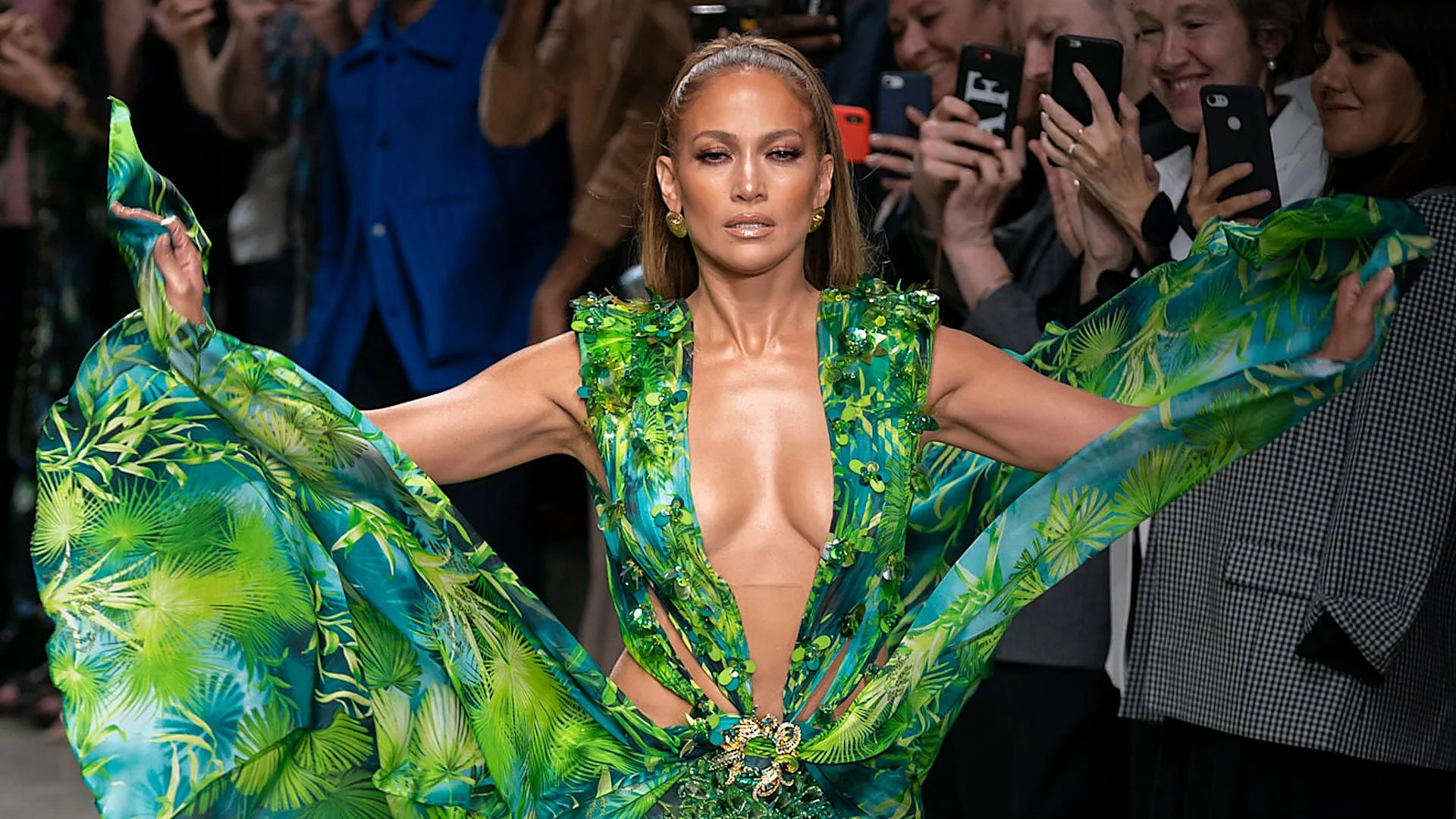
There are few dresses so closely linked to a celebrity as Versace’s jungle dress on Jennifer Lopez. The singer wore the green design with tropical print to the 2000 Grammys. The dress, with a neckline that descended almost to the navel, instantly became one of the most talked-about red-carpet looks of its era.
Almost 20 years later, Versace decided to revive that moment. During the presentation of its Spring-Summer 2020 collection in Milan, the stage design referenced the search for the original dress. Soon after, Jennifer Lopez appeared with an even more daring reinterpretation of the design.
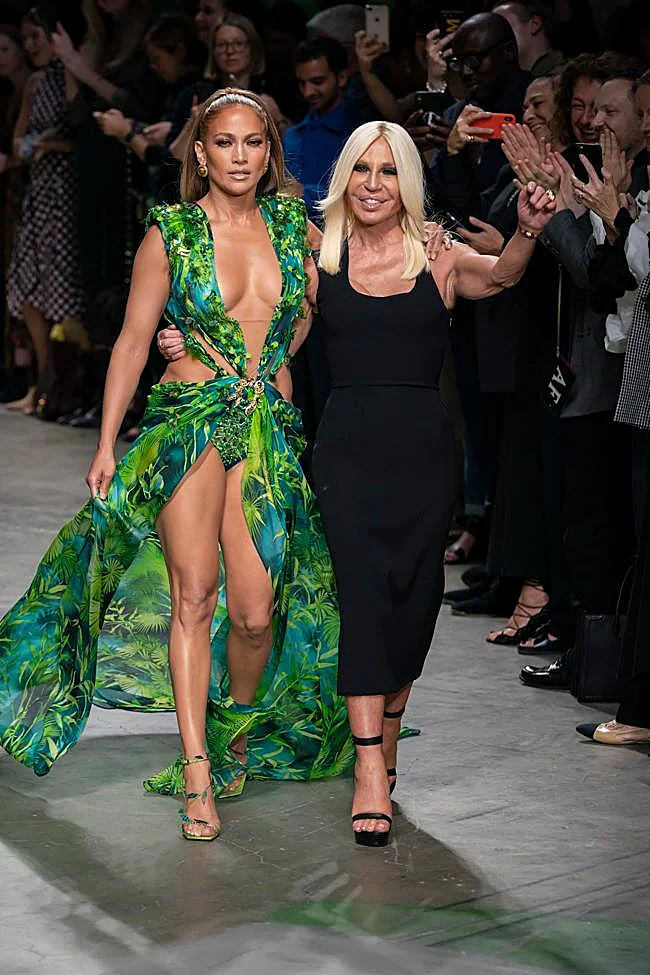
Donatella Versace with Jennifer Lopez during the 2019 show.
It was a perfect demonstration of how a look can emerge from a collection, become pop culture and return decades later with even more power thanks to the history it already carries.
Bottega Veneta, Spring-Summer 2023: the Kate Moss look that fooled everyone
In Bottega Veneta’s Spring-Summer 2023 collection, Kate Moss appeared in a white T-shirt, an open plaid shirt and jeans that looked worn.
The shirt and pants were crafted in leather and treated to visually reproduce the look of cotton and denim. The apparent simplicity concealed an extremely complex artisanal work.
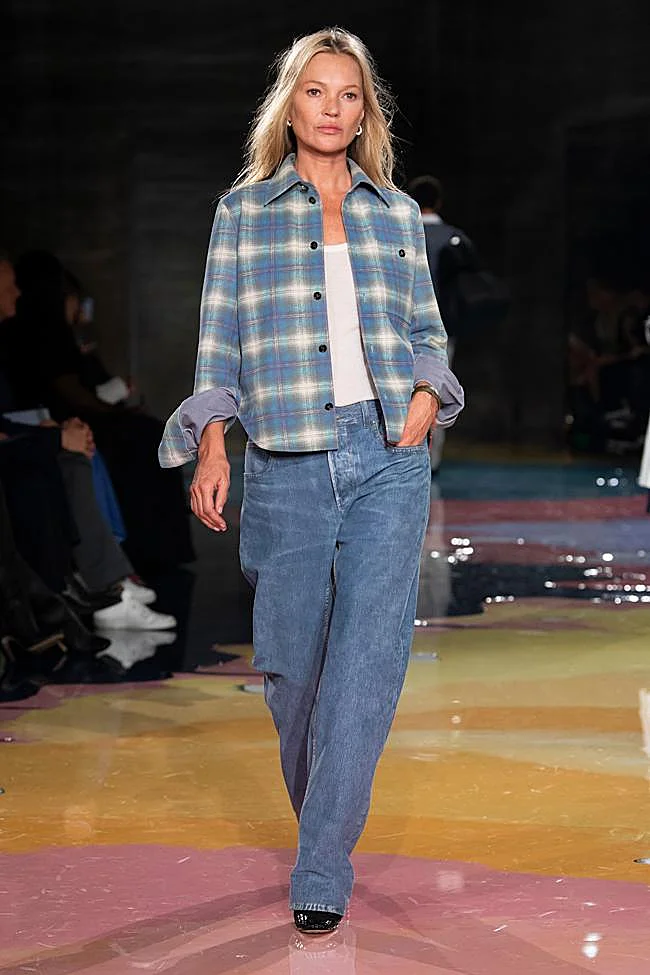
Kate Moss with jeans and a plaid shirt during the Bottega Veneta show.
It was Matthieu Blazy’s second collection at the helm of Bottega Veneta and the look perfectly summed up his approach to luxury: garments that do not need to flaunt logos or be instantly recognizable, but whose complexity becomes apparent upon close inspection.
The image of Kate Moss ended up circulating precisely because of that contradiction. It seemed the simplest possible look and, at the same time, represented one of the most sophisticated ways of constructing a garment.