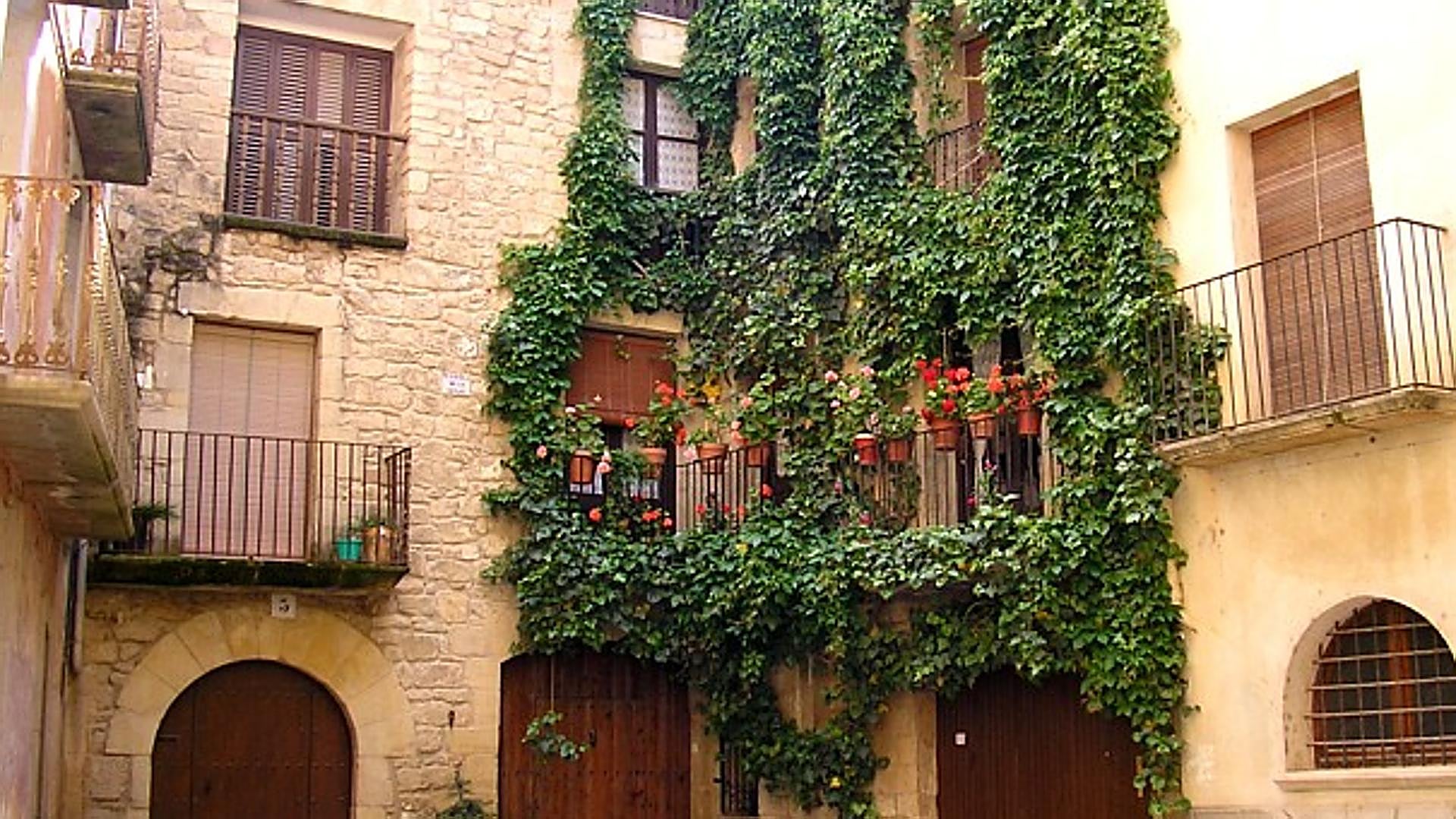
The province of Teruel hides towns that are true gems for their beauty, their history, and the surrounding environment. One of the most impressive has more than enough reasons to stand out on its own, but its richness is even greater when you consider where it is located. One of these towns belongs to the region known as the “Spanish Tuscany”, which encompasses the Matarraña comarca and that shares landscape and architectural characteristics with this Italian corner, albeit without losing the distinctive personality of northern Spain.
Among all those special places that make up the Matarraña comarca, Calaceite deserves special mention. Its value lies not only in the overall ensemble to which it belongs (and which is worthy of visiting town by town), but also in the history so present in its streets and the beauty uncovered while strolling through them, which add uniqueness to the whole and justify the fact that Calaceite is one of the honorary members of the list of the Most Beautiful Villages in Spain.
The heritage of Calaceite is clearly medieval, and it is enough to stroll its streets to get a fairly accurate idea of how the villages of that era were. In fact, much of the medieval architectural and cultural heritage is still preserved in its historic center, which was declared a Bien de Interés Cultural in 1973.
But Calaceite’s history begins much earlier, specifically in prehistory. From this era there are engraved works and cave paintings that were discovered by the archaeologist Juan Cabré at the beginning of the 20th century. A native of the town, upon his death his family decided to donate a large part of his collection of artworks and archaeological pieces to the Juan Cabré Museum, a mandatory stop to learn about the beginnings of the history of this beautiful enclave.
Also worthy of mention are the remains of Iberian settlements located a few kilometers from the historic center of Calaceite, on Cerro de San Cristóbal. To explore them in depth and to get an idea of what life was like in this era, the best option is to approach the Iberians Route of Bajo Aragón, a project created to present this part of history to visitors through the remains that survive.
Calaceite, Teruel
Everything You Need to Visit to Know Medieval Calaceite
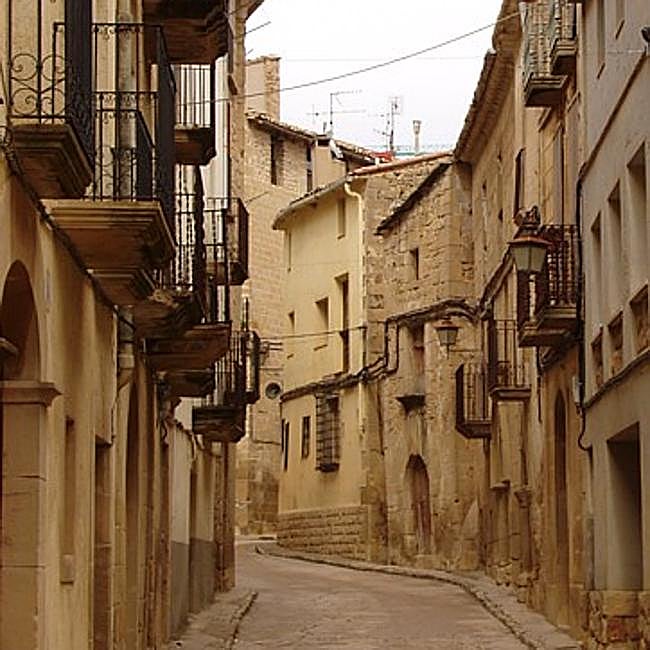
Undoubtedly, the period of greatest splendor for Calaceite was the Middle Ages. Where the imprint of that era is best seen is in the layout of its streets, paved and with a predominance of materials such as stone that transport visitors to this moment in history. A hallmark of Calaceite are also its grand houses, built in stone and in the Baroque style, with a special presence on Mayor, Maella, and Roquetas streets.
Religious architecture holds a special weight in Calaceite’s composition. Among its most significant churches is the parish church of the Assumption of Our Lady, a Baroque work dating from the 18th century and raised on the site of an old Gothic church from the 14th century. Its façade stands out with Solomonic columns and is a perfect example of Aragonese Baroque.
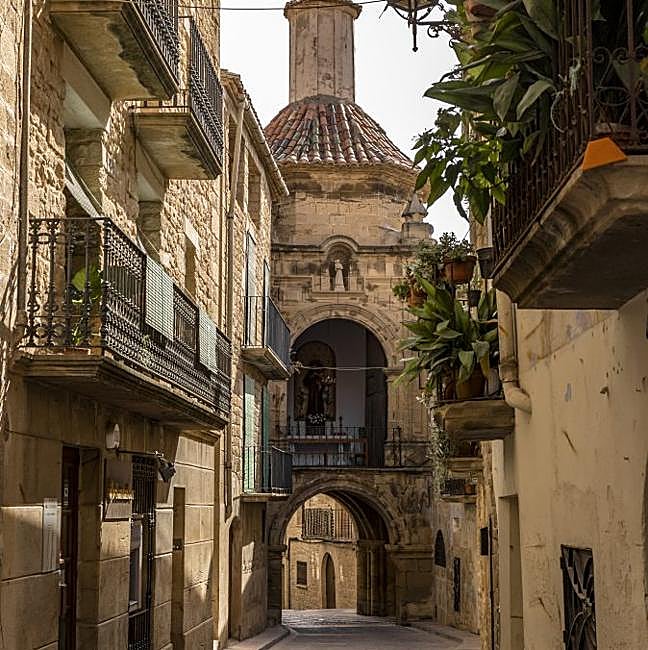
Portal of Orta and Chapel of Saint Anthony, Calaceite, Teruel
In Calaceite there are also magnificent examples of other styles such as Renaissance, and its best representative is the very Town Hall, located in Plaza de España or Plaza del Sitjar. It was built in the 17th century by the stonemason Pedro Pizarro. Its ground floor houses a market hall and an old jail, while in the inner courtyard a Gothic keystone from the old parish church dating from the 15th century is preserved.
Plaza de España, Calaceite, Teruel
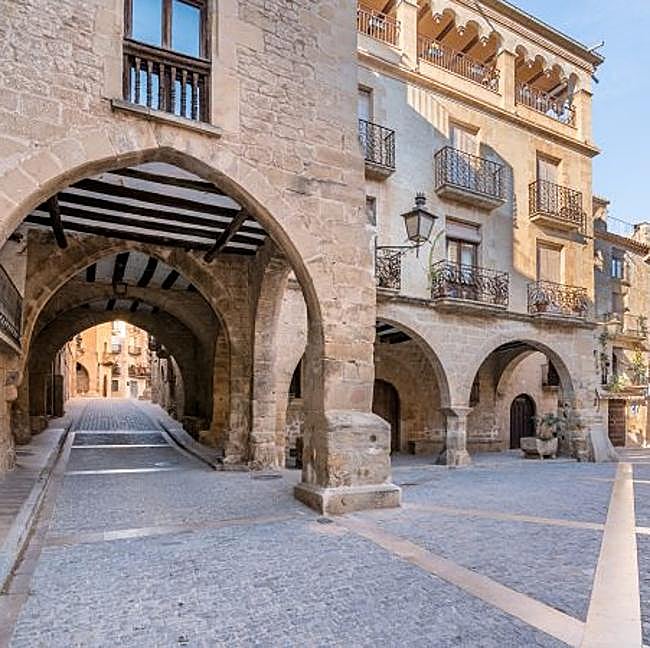
Once here, it is absolutely worth strolling through this Plaza de España, the nerve center of this town that sits in the expansion built in the 14th century. Its arcades stand out, under which the market used to be located—a tradition that has persisted for centuries, hosting an increasingly modern market every Wednesday.
Finally, it should be noted that Calaceite’s history does not end in the Middle Ages. In fact, it played a fundamental role in the boom of Latin American literature at the end of the 20th century. Calaceite was the refuge of writers such as José Donoso, who lived here for several years, Mario Vargas Llosa, and Gabriel García Márquez, among many other renowned names of this literary current that drew from the magic that breathes in this impressive corner of the Spanish Tuscany that hides Aragón.