The cummerbund has lived almost entirely within the same uniform: a black tuxedo, a white shirt, and a bow tie. It was one of those garments that seemed to come with instructions so clear that it was hard to imagine it outside a gala dinner.
The latest runways are dismantling precisely that idea. The cummerbund, as the classic tuxedo sash is known internationally, has started to appear atop garments with which until recently it would have been difficult to associate it. Sweaters, relaxed shirts, wide trousers, blazers and even daytime looks now cinch at the waist with this wide band of fabric.
The cummerbund becomes autumn’s accessory
Its origin explains why we still associate it almost automatically with formal wear. The modern cummerbund is related to the Indian kamarband and was adopted by British officers in India during the 19th century as a lighter alternative to the waistcoat. Over time it ended up incorporated into the Western black-tie code.
Stilettos are worn with jeans, silk pajamas go out in public, ties have entered the women’s wardrobe, and garments traditionally reserved for special occasions are increasingly mixed with everyday basics. The cummerbund seems to be the next step.
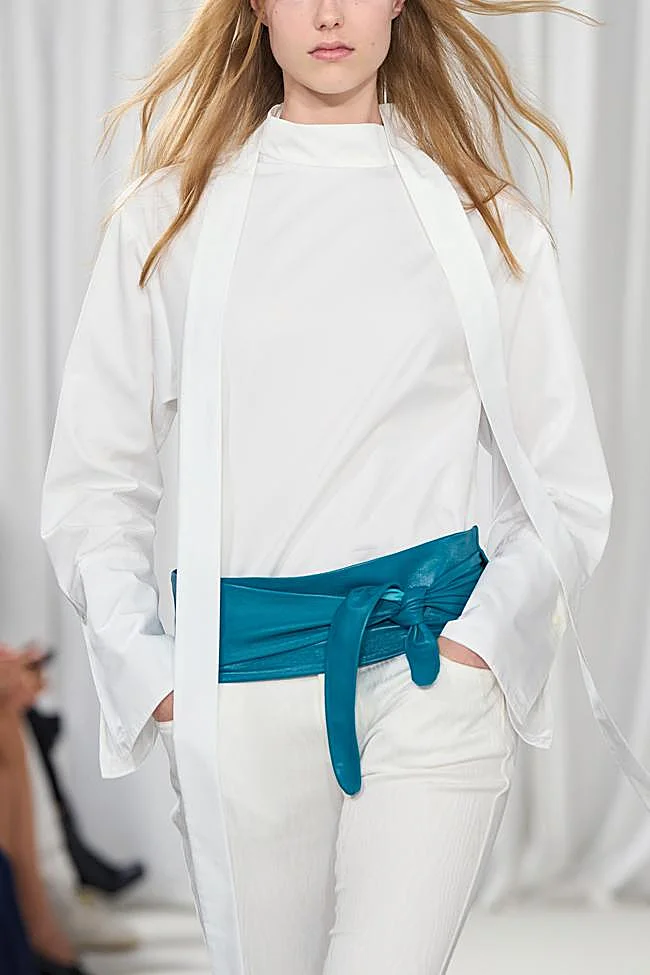
Detalle de fajín efecto cuero en azul.
Valentino had already revived it in its recent collections, while Celine gave it a much less classical twist, wearing it in colors such as pink and pairing it with voluminous pants. The piece we used to see only in black began to behave like any other accessory.
But the Spring–Summer 2027 collections presented these days in New York have confirmed that it wasn’t a one-off appearance. The cummerbund has repeated on several runways until becoming one of the most recognizable waistline resources of the season.
The waist returns to be the protagonist
The return of the cummerbund does not appear in isolation. Just observe some of the silhouettes that are gaining weight to understand that fashion is turning its attention back to the waist.
The peplum is regaining ground, tailored jackets return, and belts are placed again even over garments that we traditionally wore loosely. At New York Fashion Week, cummerbunds and statement belts were precisely two of the tools used to emphasize this area of the body.
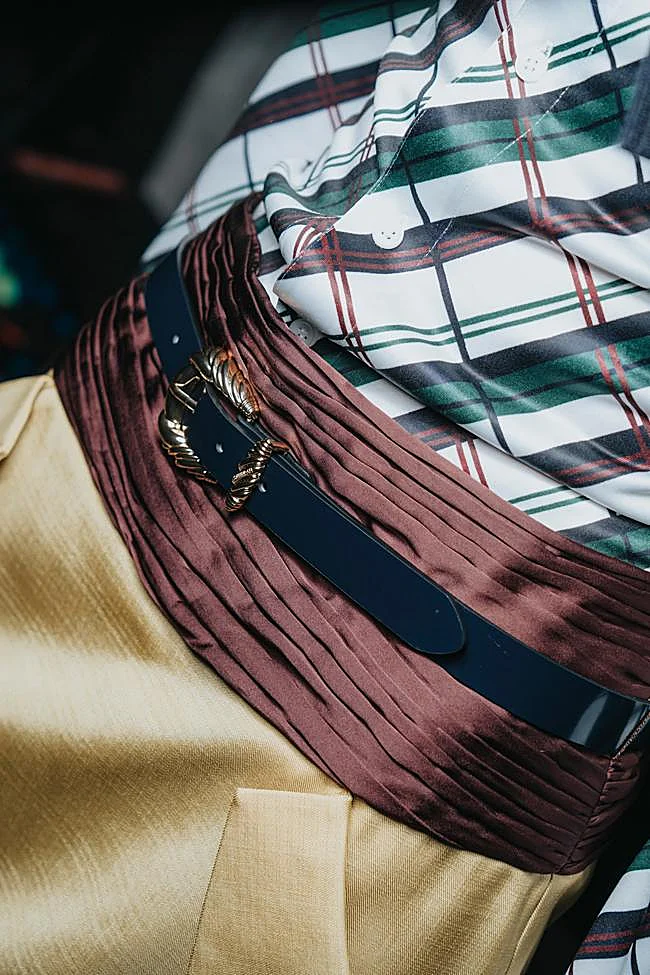
Detalle de fajín de tela combinado con cinturón.
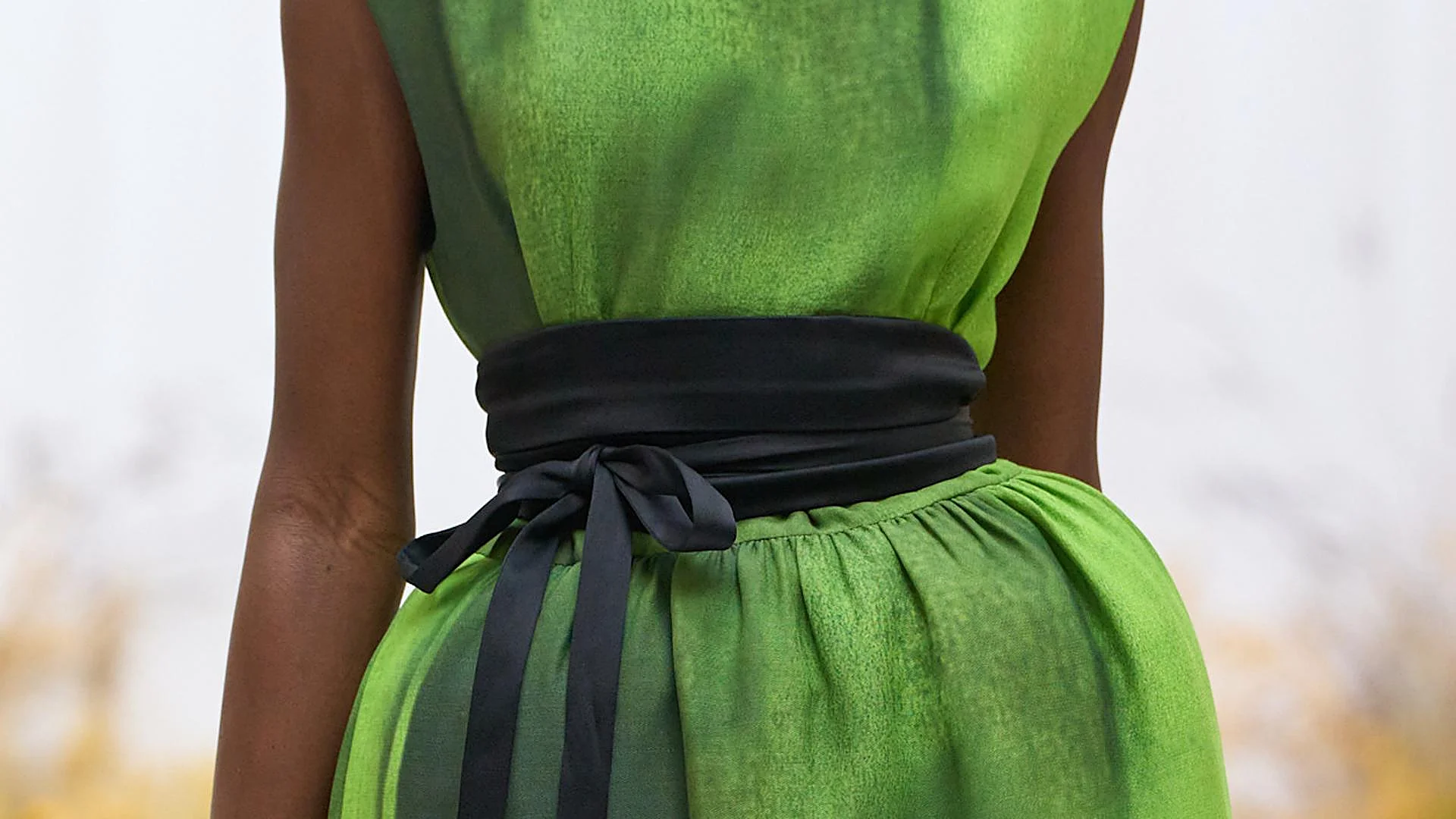
Being much wider and normally lacking a prominent buckle, it creates a kind of block around the torso. Visually it gathers a broad shirt, changes the proportions of a blazer, and clearly separates the top from the bottom.
It also allows playing with contrast. A satin cummerbund can make a simple white shirt look much more sophisticated, while one in an unexpected color transforms a sweater and neutral trousers without needing to add too many accessories.
How to wear the cummerbund without looking like you’re in a tuxedo
There is no need to translate the runway proposal literally into the wardrobe. In fact, the more the rest of the styling departs from the classic label, the more current it feels.
The simplest combination starts with items almost everyone has: a slightly oversized white shirt, black trousers, and a cummerbund in the same color placed over the shirt. The result retains a masculine reference, but it doesn’t look like a tuxedo.
It also works over a blazer. In this case, the cummerbund replaces the belt we have been using for several seasons to cinch oversized blazers, but it achieves a much cleaner effect. With a gray, brown, or black jacket and a contrasting band, it can be enough to completely change the silhouette.
Another possibility is to use it to balance voluminous pieces. A loose sweater paired with straight-leg pants takes on a different proportion once a wide waistband is introduced at the waist. And on a flowing dress it can essentially perform the function of a small corset, though in a much less structured way.
The runway also suggests the easiest option of all. A rectangular silk scarf long enough, folded to create a wide band and discreetly tied at the back or to one side, allows you to reproduce the effect.