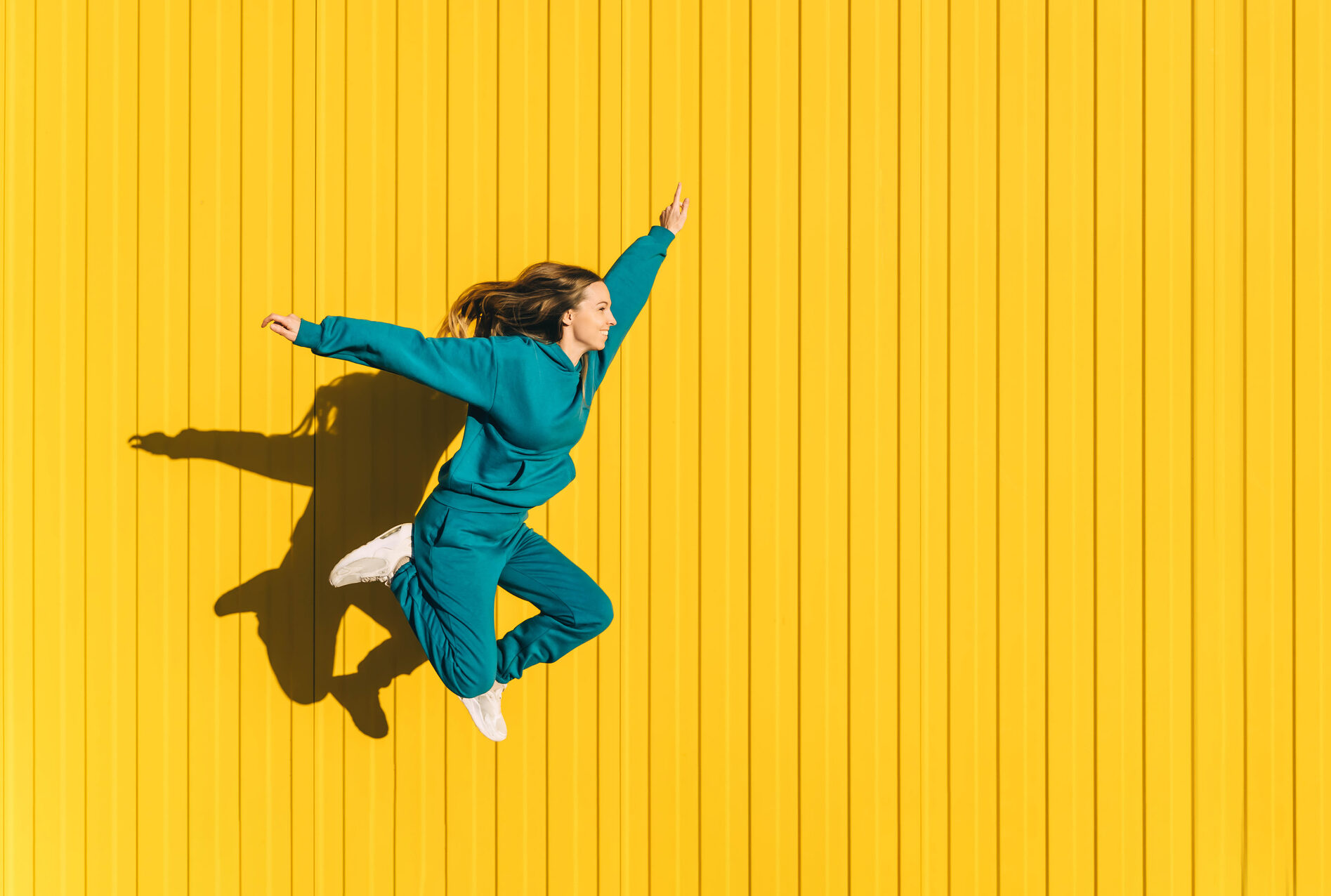
Some are unveiling a yoga mat. Others are already thinking about retiring from certain things. Guess who will live better… Photo: Cottonbro / Pexels
You don’t get old until you start behaving like it
Menopause, hormonal changes, and prejudices often push us onto the sofa just when it’s most important for us to stay active
By Cristina Martín Frutos
28 AUGUST 2026 / 07:30
Three or four years ago the phrase ‘I am a lady’ became the motto of a generation of women. Stamped on t-shirts, mugs and tote bags —confess, I have one too— it came to advocate for female maturity. Something like telling the world: “Call me madam, but I don’t mind.” However, not everything is as simple as these viral messages sometimes promise. Many women, upon crossing the 50s Rubicon, start to feel older (generally more than their ID indicates).
And not only that. They also become older, and worse, they begin to think and act as they have always imagined the stereotype of an older lady to be.

Join our menopause community
You will be able to participate in events, contests and experiences, as well as receive all the information that will allow you to face this stage in the best possible way.
I want to join!
It’s curious because this form of self-ageism is closely related to social ageism. Throughout history, it has been taken for granted, without thinking about the consequences, that menopause was some kind of end. As gynecologist Diana Freire in ASISA WeLife Menopause A Coruña said: “People always thought menopause was little more than reaching hell. And it isn’t. It’s just the end of a stage in which you can no longer have children, but there is a lot of life ahead.”.
However, the narrative, as happens in many other areas, has taken hold. “Many women wrongly assume that, upon reaching menopause, it is normal to lose physical capacity, gain weight or reduce activity. And they end up adopting more sedentary habits,” notes Marta Sánchez-Dehesa, a gynecologist specialized in fertility.
A Cluster of Circumstances
The feeling of looking older is just that: a feeling. Not to mention, there are 75-year-olds who travel, practice sports, go out with friends and don’t stop. A 2022 study conducted by Caser indicated that six in ten Spaniards feel younger than they are. Specifically, they perceived about four years younger than their age.
So why does this happen to women? Menopause has a lot to do with it. It is a process full of changes. So many that it is not always easy to understand them and get along with them.
To this is added another set of vital circumstances, such as children —if any— growing up and becoming more independent. In addition, work responsibilities tend to be greater and the way routines are approached changes. People use the car more for commuting because “there is no need to spend the day on public transport”.
A series of thoughts and attitudes that end up feeding what we call ageism and which the WHO has defined as “the way of thinking (stereotypes), feeling (prejudices) and acting (discrimination) with respect to others or ourselves because of age”.
How self-ageism ties you to the sofa
This way of thinking is erroneous and very damaging to those who suffer it. It is bad if it comes from others and even worse if we are the ones who self-immunize convinced that we are already older. That we are not up for certain feats. That what we once loved is no longer for us. It is not only a psychological issue, but it is also physical. “Often, these women, without realizing it, reduce their level of physical activity and adopt much more sedentary habits. And they begin to believe that certain activities, sports or projects are no longer for their age,” laments Dr. Sánchez-Dehesa.
And there lies the unexpected consequence. More sofa, more sedentary lifestyle, less movement. A explosive cocktail that, combined with hormonal changes, can lead some women to gain weight. Because, as the gynecologist recalls, “the decrease in estrogen favors changes in the distribution of body fat and metabolism becomes slightly slower, but there are other factors that influence weight gain more.” Among them she cites nutrition, physical activity and habits.
It Could Be Worse…
Growing older is a fact we cannot change. What we can modify is the projection we have of ourselves as we age. The biochemist Pere Estupinyà, author of ‘What Do You Want to Be When You Grow Up?’ (Debate). “The point here is that we do not always feel older or younger than we are. In fact, statistically, studies show that most people from around 40 or 50 onward feel younger, in the sense that cultural references expected them to be worse off.”
Of course, there can be occasional moments when a knee hurts, you wake up tired or you have a hot flash. In that moment, of course you feel older… But it is temporary.”
You Still Have Half a Life to Enjoy
Besides not obsessing too much about these sensations, Estupinyà shares another piece of advice. “Self-ageism makes us perceive that there is less time ahead and that it is no longer worth doing this or that. It is a mistake. Prospective age (the years we have left) is more important than chronological age (the years we have already lived). That way of looking at it should help us change our mindset,” he explains. Also, we do not know how long we will live. Longevity expert Manel Esteller recalls the case of María Branyas, a Catalan woman who lived to 117. “She said it was because she ate three yogurts a day, but it is also true that, even at that age, she still had a purpose.”
The key is not to stop doing things we enjoy, such as training, eating well, going out with friends… for the age we have reached. “We should do it because we feel like it. That motivation hides the secret to not dimming down or stopping taking care of ourselves,” adds Estupinyà.
Because age falls like lead at the precise moment we abandon our self-care.