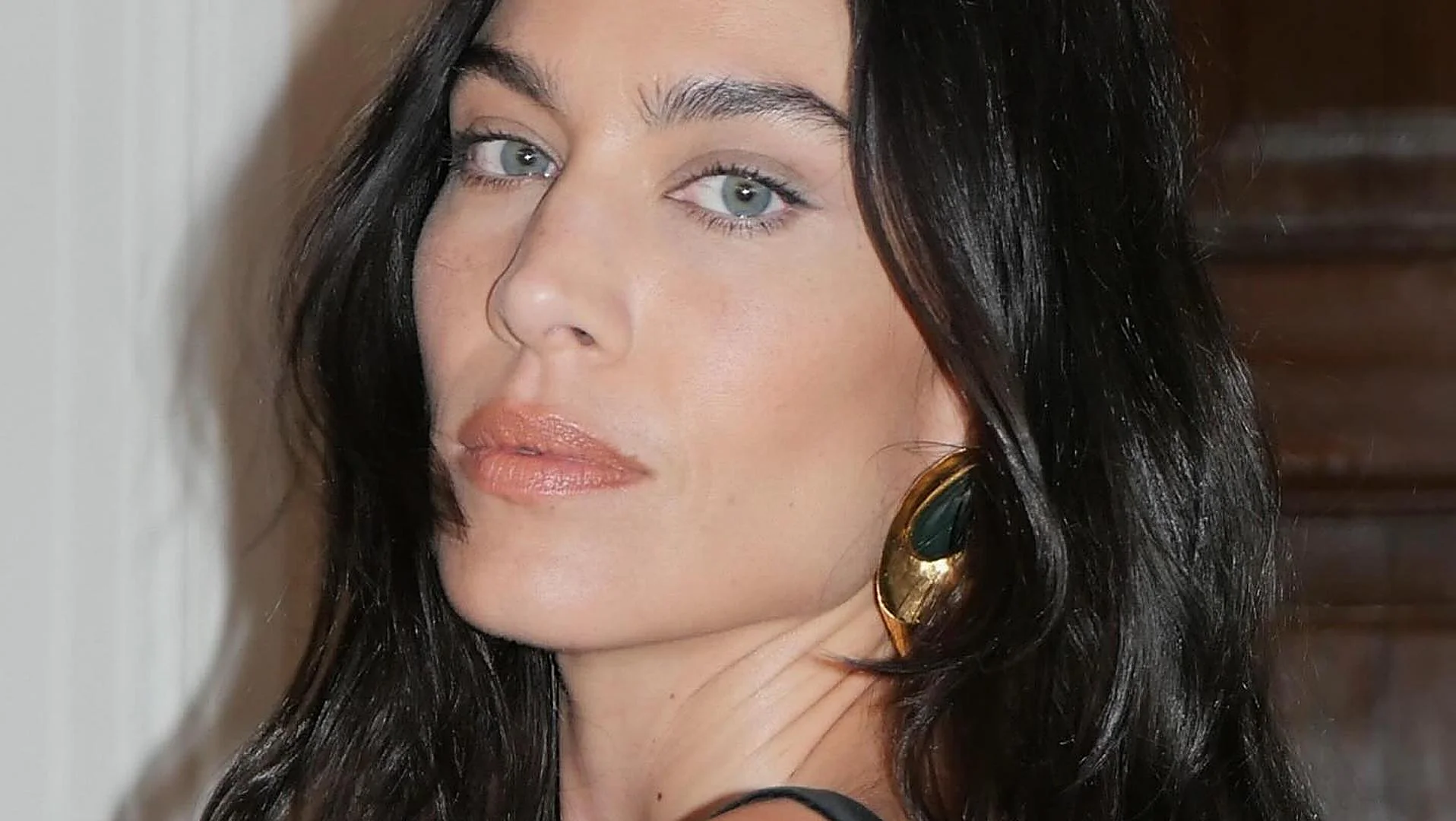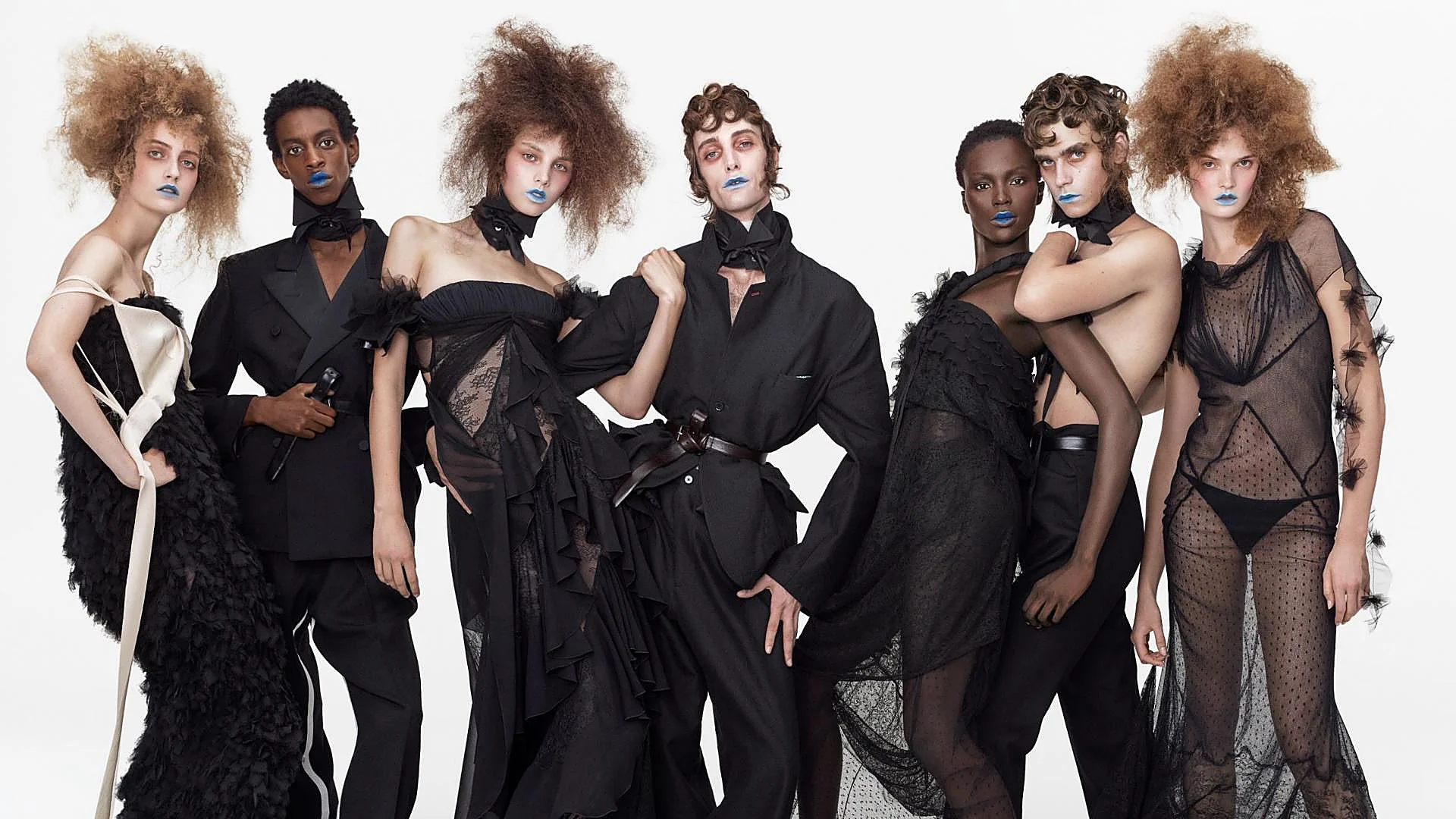
We had all been eagerly awaiting it. Galliano had just released his new collection for Zara, Re{form}, which retrieves some of the most recognizable pieces in any wardrobe to give them a second life through his own creative universe. In this release, the idea aims to dismantle and reauthorize Zara’s archive without lowering the bar. That would explain the prices of some designs. However, anyone familiar with the designer’s career that revolutionized Dior and Maison Margiela’s runways will have noticed that there are also nods to his beginnings.
And the proof is in the beauty section. The reason? With him, he builds characters again. Far from using makeup to beautify in a conventional way, Galliano uses it to complete an identity. It is not the first time he does this. During his years at Dior, the beauty segment was part of the show’s narration as much as the collection pieces. That era was defined by extreme makeup, elaborate hairstyles, and a whole theatrical mise-en-scène.
At Zara, something similar happened, but in a cleaner way. The white background and Steven Meisel photography remove all staging so that the character is built through the body, the face, the hair, and the clothes. And frankly? We love it.
The Keys to Galliano’s Beauty at Zara
Electric Blue
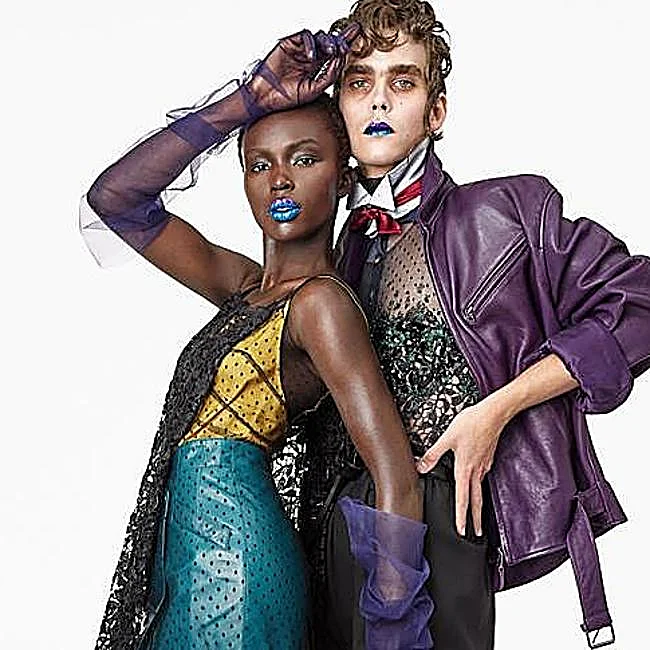
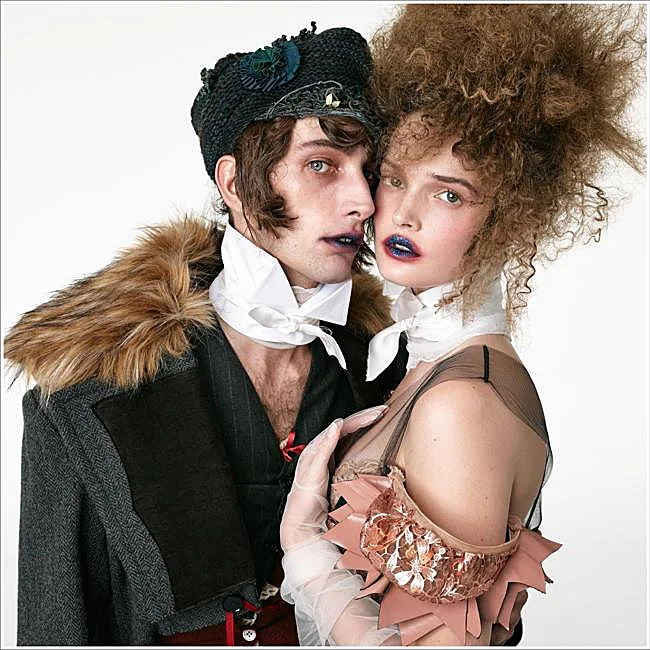
It is the most evident color of the entire campaign. We see it, above all, on the lips. Sometimes more precisely, and other times with a painterly feel. The connection to his 2000s collections is direct, as he seeks to pull color out of its natural place. If we take a look at the Dior archives from the Galliano era, we’ll realize that makeup artist Pat McGrath was in charge of using chromatic and unconventional tones to achieve exaggerated eyes, intense lips, and saturated colors. At Zara, everything reduces to a graphic sign that repeats across all genres with the aim of becoming a common code of the Galliano tribe.
Decadent Beauty
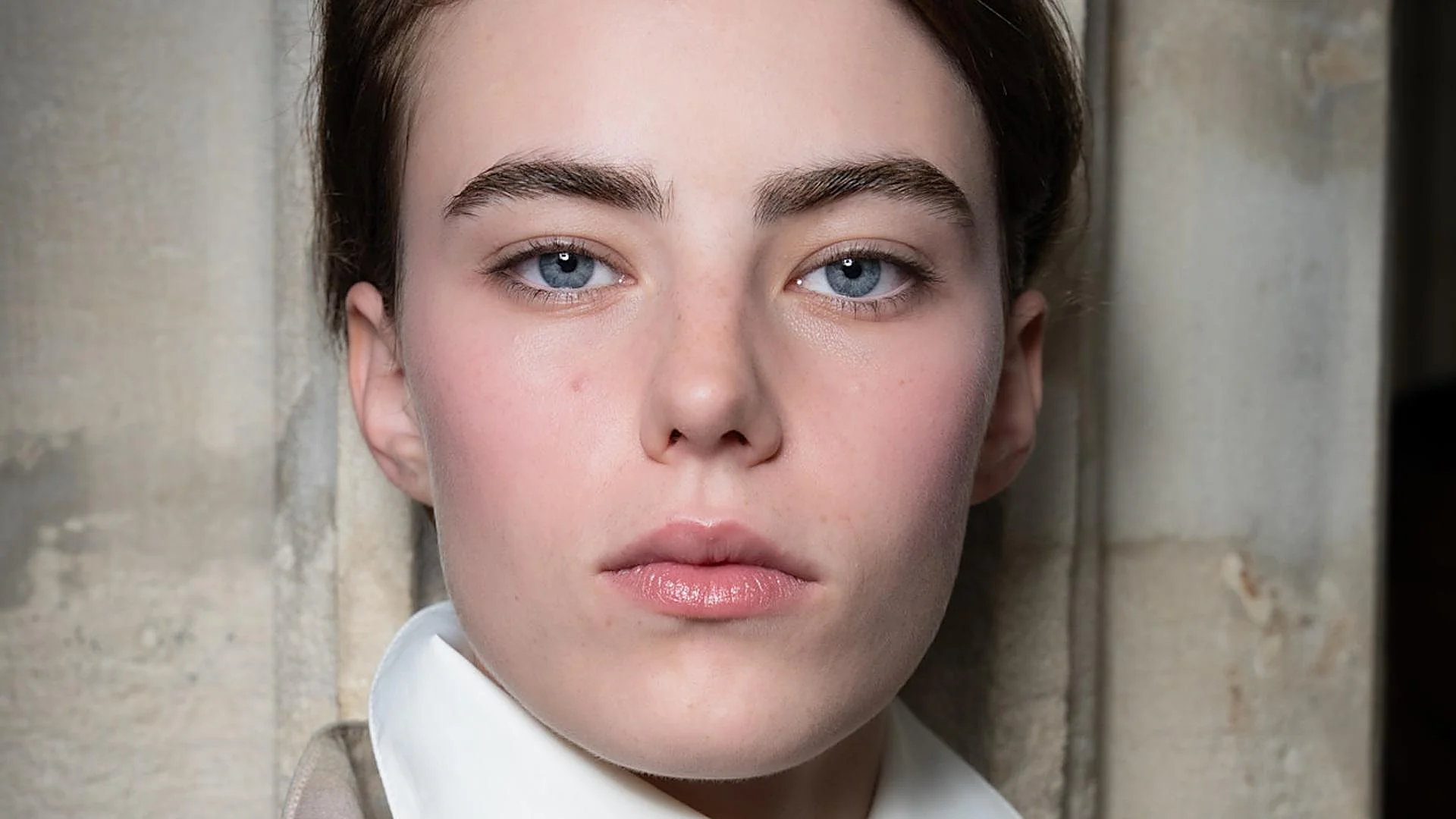
Another notable aspect is that, in the midst of the clean look era and the glow effect, the models’ skin is pale, matte, and with a deliberate sense of tiredness. It reminds me of the romantic decadence that could belong to another century (but is present in 2026). This resonates because if there is one thing the creative loves, it is mixing historical and cinema references with contemporary distortions.
Verbose Yet Not Accidental Androgyny
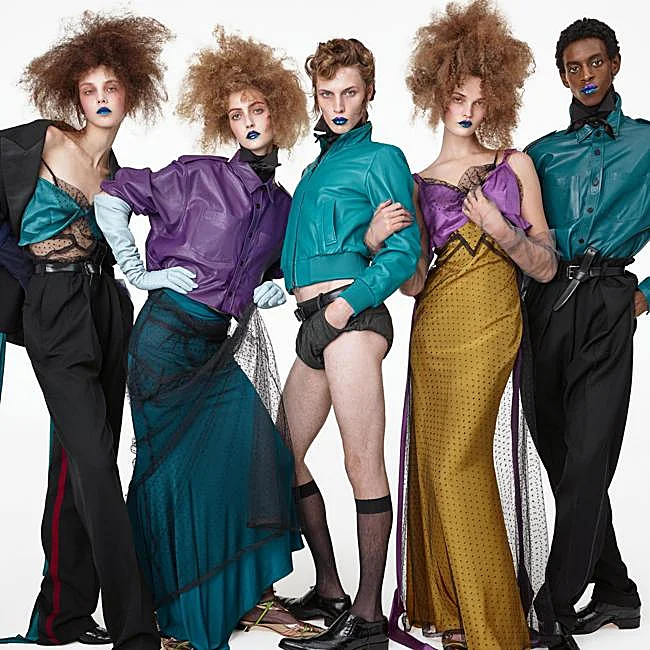
On the other hand, one of the most evident aspects is that there are no distinct readings between masculine and feminine. More than genderless, it is neutral minimalism, a concept that has always been part of his identity as a creative. In the Re{form} collection he injects this intention in a natural way, where wardrobe elements can be worn, removed, and exaggerated, just as he presented in Les Incroyables et Les Merveilleuses.
If we had to compare the designer’s 2000 collections with Re{form}, the summary we could draw is that there is no archive recreation, but a method one. The Galliano of 2000 leaned into extreme transformation through color, character, excess, and imperfection.
The 2026 version seeks hypertrophied hair, blue lips, and pale skin to amplify deconstructed styling, androgyny, and historical references. Therefore, more than resurrecting a specific Y2K look, Galliano returns to Zara its way of reclaiming beauty and using it as a tool for transformation and character-building.