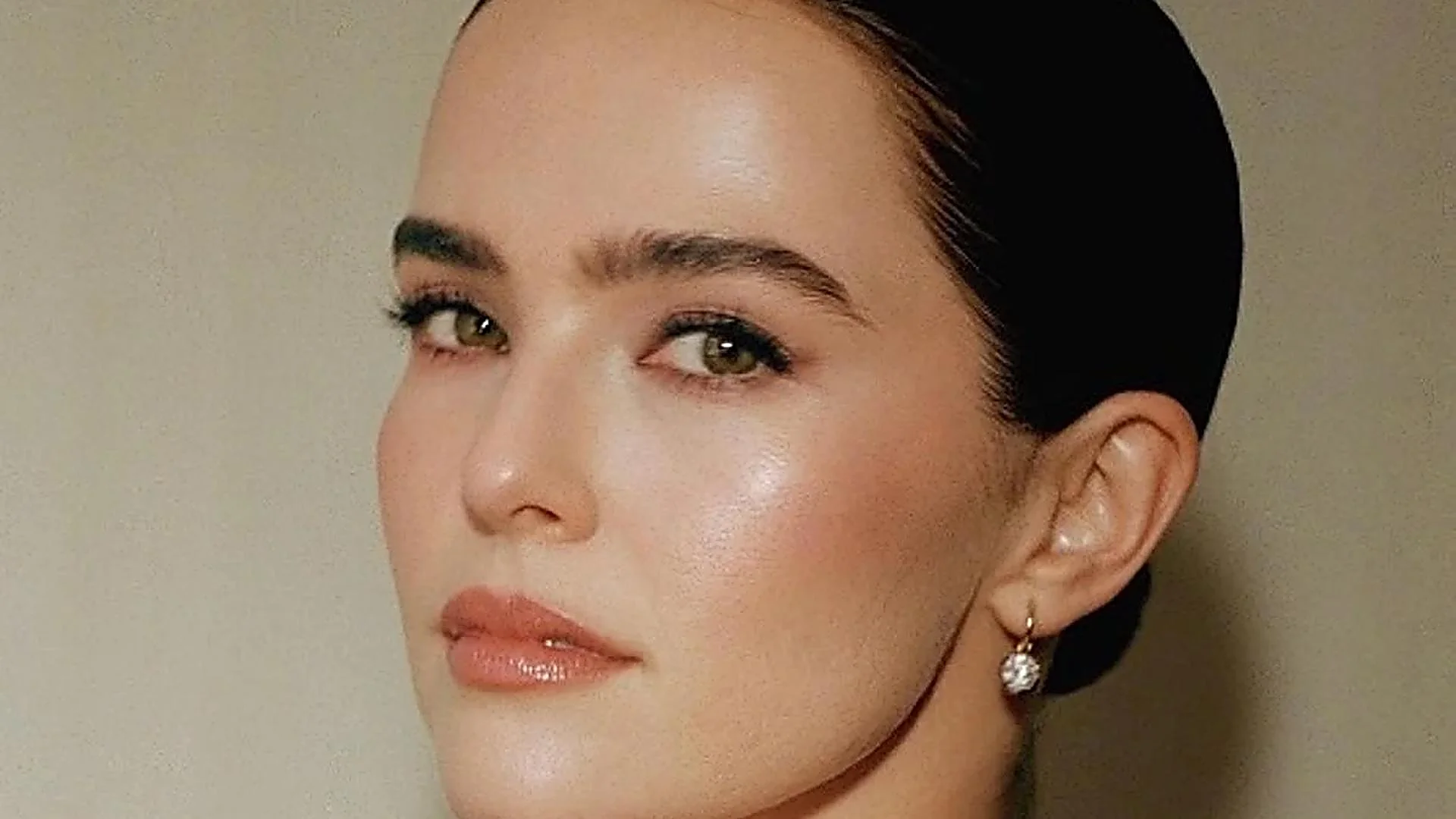
There are small changes we barely notice until one day they become evident. Eyebrows are one of them. Maybe before it was enough to comb them and apply a bit of clear gel, and now we need to fill in some gaps. Or perhaps the tail of the eyebrow seems progressively thinner, small sparse areas appear, or the hair simply does not grow back as it used to.
Although we usually associate it immediately with having plucked them too much for years, the loss of brow density can have multiple explanations. In fact, there is a medical term for partial or total loss of eyebrow or eyelash hair: madarosis. It can be temporary and reversible, but it can also be associated with processes in which the follicle becomes permanently damaged.
Why might eyebrows begin to lose density?
The first explanation may be purely mechanical. Repeated waxing or plucking,certain traumas, or any constant aggression on the follicle can contribute to the hair becoming thinner. Therefore, when we notice less density, it’s also worth reviewing what we do daily with the eyebrows: from how we shape them to how often we manipulate the area.
However, it is not always so straightforward. Hair loss can also appear associated with atopic dermatitis, psoriasis, rosacea, alopecia areata, or thyroid function disorders, among other causes.
Precisely because of that variety of possible origins, focusing only on the number of hairs can be insufficient. It also matters how that loss is occurring.
It’s not the same to observe that the eyebrows are slightly less populated with age as it is to notice that a specific area disappears suddenly. It also isn’t the same a brow with seemingly normal skin as another accompanied by redness, flaking, itching, or visible changes in the skin surface.
When the problem is not only in the eyebrows
Alopecia areata, for example, can affect the scalp but also the eyebrows and other hair-bearing areas. And there is another dermatological condition, frontal fibrosing alopecia, in which eyebrow density loss can appear even before the recession of the frontal hairline becomes evident.
In this type of alopecia there is inflammation around the follicle and permanent hair loss can occur, which is why early diagnosis is especially important.

Thin eyebrows.
This does not mean that any less densely populated eyebrow is a sign of disease. But it does explain why a progressive change and apparently cosmetic deserves attention when it continues to progress.
When should we consult a dermatologist?
A sudden loss, the appearance of clearly delineated gaps, the progressive decrease in density without an evident cause, or the presence of symptoms such as itching, redness, flaking, inflammation, or changes in the skin justify a dermatological evaluation. The same happens when eyebrow hair loss appears accompanied by hair loss on the scalp or other areas of the body.
During the consultation, the dermatologist can study both the pattern of loss and the condition of the skin and follicles. Depending on the case, the diagnosis may include dermatoscopy or trichodermoscopy and, if there are indications that justify it, blood tests — for example to study thyroid function — or other specific tests.
The mistake of trying to recover density without knowing why it has been lost
The popularity of eyebrow serums has meant that, at the first gaps, the immediate reaction is to look for a product that promises to stimulate growth. However, not all density losses have the same origin and, therefore, do not respond to the same treatment.
If the follicle remains intact and the cause is reversible, the hair can regrow once the problem causing its loss is resolved. When there is deep inflammation and follicle scarring, however, the loss can become permanent.
That is why, before piling up products in the vanity case, it is worth examining the eyebrows with a bit more attention. Is the loss homogeneous or are there specific hairless areas? Has it happened suddenly? Is the hairline also changing? Does the skin itch, redden, or flake?
Because eyebrows that are less dense can simply be eyebrows that have changed with time. But when they begin to transform without a clear explanation, finding out the cause is far more useful than simply trying to disguise the gaps.