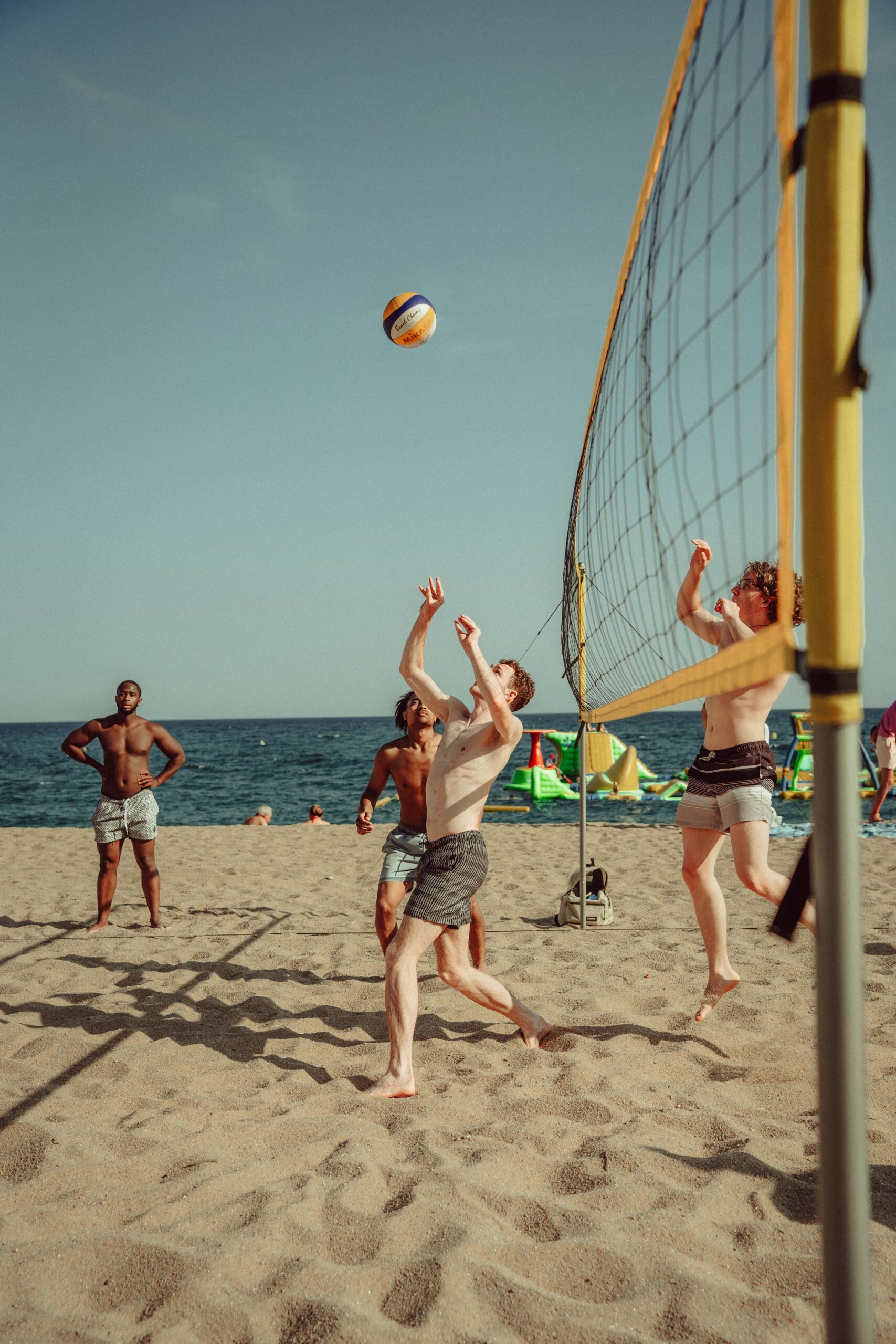
Con la excusa de jugar un rato, tu cuerpo también trabaja: salta, corre, reacciona y se adapta. Foto: Jonas Horsch / Pexels
The Science of Movement
The yielding sand, the waves that push and the uneven paths are not just obstacles: they are small challenges that make your body work better
By Silvia Capafons
10 AUGUST 2026 / 07:30
When you get used to training in the gym, it’s hard to adapt to a new setting. Especially if it’s outdoors. In the last edition of WeLife Longevity, José Luis Trejo, researcher at the Spanish National Research Council (CSIC), specialized in neurobiology and exercise physiology, already noted that “exercising outdoors is a fabulous exercise for the brain. Unknowingly, we are processing a multitude of information. Not only our breathing or the pace we carry, but also the proximity of a tree, shrubs, a slope… These are data that greatly enhance brain neuroplasticity, one of the levers that favor longevity.”
The Power of the Unpredictable
The waves change, the terrain changes… Even the weather can be very variable and force us to push the pace to avoid getting soaked by a summer shower. All this optimizes our neuro-muscular control. In other words, the brain learns to coordinate better the muscular response to small imbalances. This improvement in intermuscular coordination has an explanation: as we have to constantly correct small losses of balance, the central nervous system optimizes the intensity with which it activates each muscle.
Battle for Balance
There is more: if we train on sand, soil or grass, we force the brain to continuously integrate visual and proprioceptive signals (the sense that informs the brain about the position, movement and orientation of the different parts of the body) to maintain stability. This improves postural control and the ability to react to unforeseen events. Because, who hasn’t had to correct a step when a rock appeared in the path or a significant unevenness in the sand?
Training on changing terrains in the long term improves functional balance and fosters concentration during the exercise. Here comes another extra: without realizing it, you’re practicing mindfulness, because you inevitably stay mindful of not tripping or twisting an ankle, so you are in the here and now.
Jaques de Irala, expert in the sports area of the Henao Wellness Clinic team in Bilbao, warns that these improvements may not translate into faster times. It doesn’t mean you will have bigger legs or a great increase in maximal strength. You will acquire a more efficient and robust stability system, a greater activation of ankle, foot, hip musculature and the core due to terrain variability; greater motor control, greater reaction capacity and greater endurance of the muscles.
Sea or Mountain?
Compared to the predictability of the treadmill, doing it outdoors presents different degrees of difficulty. “For regular running, the ideal is to do it on compact and stable ground, even on grass. For specific neuromuscular control and stability work, in short blocks, sand,” explains Jaques de Irala. The small irregularities of the beach offer a challenge to the entire locomotor system. It is also more exhausting, so don’t be surprised if you cannot complete the kilometers you usually do in your routine. “The important thing is not to overload the joints excessively,” add the Henao Wellness Clinic team.
The beach is also a good setting to play paddle tennis. “It’s an effective and fun way to tone the legs. The extra resistance of the sand, together with dynamic and multidirectional movements, provides an excellent workout for the leg muscles. Also, since it’s a fun and social activity, it’s easier to stay consistent and enjoy the exercise,” points out Mamen Jiménez, assistant coach and personal trainer.
Stand-up paddle surfing is another practice that tests our proprioception, especially on windy days or with gentle waves. “Standing up and maintaining balance on the board strengthens the quadriceps and glutes, since these muscles work to stabilize the body. The hamstrings and calves also activate to maintain the correct posture and balance, especially when you change direction or face the waves.”
Relieving the Joints
Anyone who enjoys open-water swimming, go ahead. It does not involve any impact on the joints and strengthens muscle tone more than the calm waters of a pool. With a plus: reduces cortisol levels because it provides mental calm while releasing dopamine and serotonin and improves mood. “Open-water swimming offers great neuromotor and cognitive benefits and unloads the joints compared with running on a hard surface,” says the expert and this is confirmed by a review published in the Journal of Environmental Psychology.
If you prefer to challenge the high temperatures and go running at night, grab a headlamp and take advantage of the fact that “it forces the brain to manage uncertainty and to increase the demand for attention, anticipation and visual processing,” explains Jaques de Irala. That said, proceed with caution in the form of controlled paces, known terrains and good lighting, because the risk of stumbling and ankle injuries increases.
What If You Don’t Want to Go Outside?
If you prefer not to innovate or suffer possible heat from the comfort of your gym, you can also add small novelties to your routine. “In the session we can incorporate inclines, speed changes, curved treadmills… That said, it will never be the same as an outdoor environment with constant changes,” says the sports expert. And the same with strength activities. The key is to step out of your comfort zone. The famous hormesis that makes things tough for a moment and grants you years of life after finishing the workout.