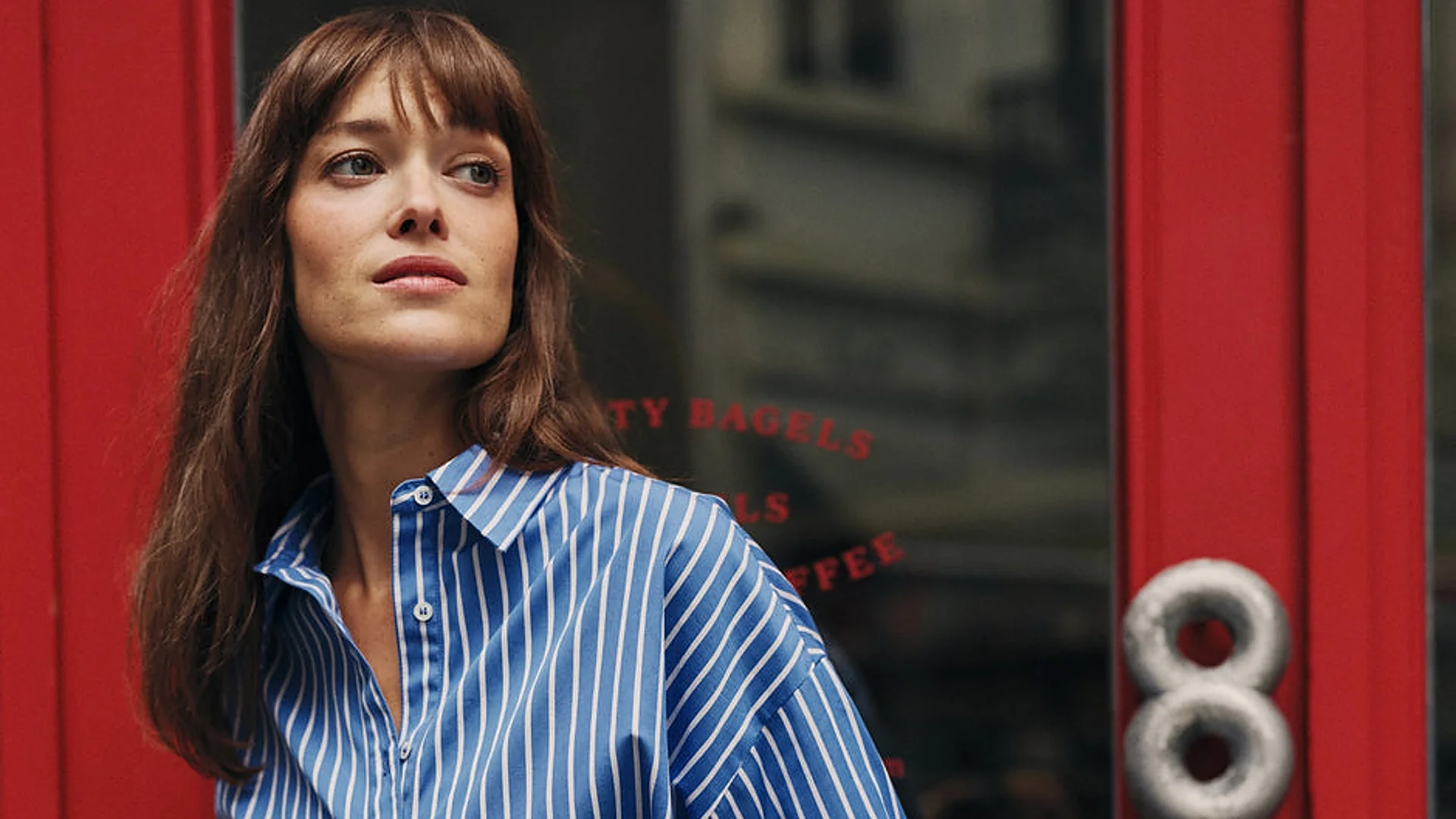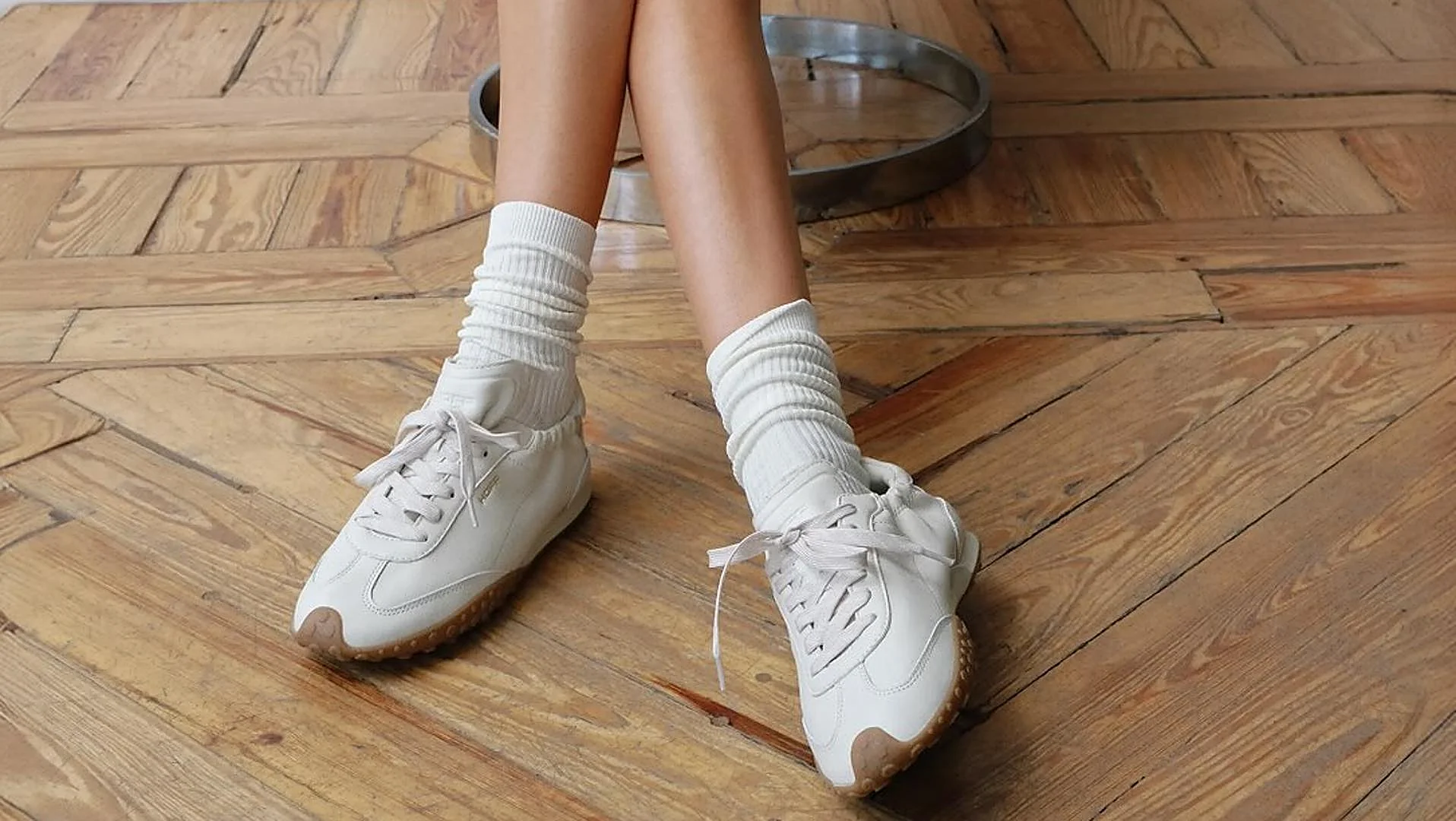
There was a time when the most desired sneakers were also the bulkiest. Thick soles, running-inspired designs and a sports aesthetic that seemed to dominate any other proposal. However, trends have been changing, and now it is the lightweight silhouettes, delicate and close to the world of ballerinas, that are conquering our wardrobes.
Among all of them, ruched sneakers have become one of the most interesting proposals of 2026. Their peculiarity lies in a detail that may go unnoticed at first glance: a small elastic ruching, generally located at the back, that allows the footwear to adapt to the contour of the heel.
Although their appearance is especially appealing, an inevitable question arises: are they really more comfortable than conventional sneakers or is this another detail that works better in photographs than in real life?
What is special about ruched sneakers?
Unlike traditional sports shoes, which usually incorporate a more structured rear part, many ruched models resort to an elastic finish around the heel. This detail allows the edge of the shoe to adapt to the movements of the foot without always maintaining the same rigidity.
The inspiration largely comes from the world of ballet flats, where elastic edges have been used for years to achieve a tighter fit. Translated to sneakers, this resource allows to create lightweight designs, with less volume and a more delicate aesthetic.
That said, not all ruched sneakers are the same. Some incorporate a functional elastic in the heel area, while others use the folds mainly as a decorative feature on the upper.
Are they really more comfortable and do they prevent chafing?
The main advantage of a well-designed elastic heel is that it can adapt more easily to the shape of the foot. In certain cases, this helps to reduce the localized pressure caused by the rigid edges of some sneakers and facilitates walking movement.
It can also be practical for those who find sneakers with a rear part too hard uncomfortable. Instead of applying constant pressure on the heel, the elastic fabric can accompany their movements and provide a smoother feel.
Brands that have already embraced this trend
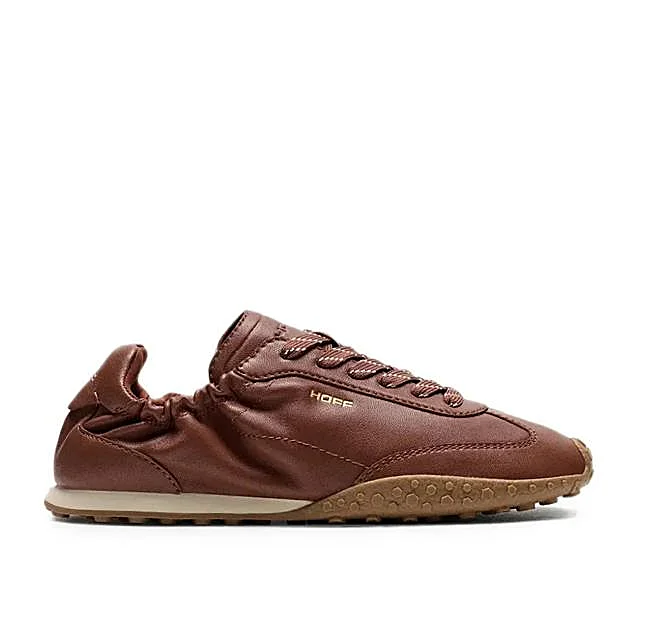
One of the brands that best represents this evolution is the Spanish HOFF. Its Bridge line includes models with ruched elastic at the heel and a lightweight silhouette that recalls the most stylish retro sneakers.
Ruched brown Bridge sneaker by HOFF.
Dentro de la colección, las Bridge Satin combinan tejidos satinados y piel con una suela de perfil bajo. También incorporan una plantilla de espuma con memoria, un elemento que aporta amortiguación y demuestra que el atractivo de estas zapatillas no depende únicamente de su parte posterior.
Sneakerina Jogger Re-Nylon (Yancy) by Vivaia.
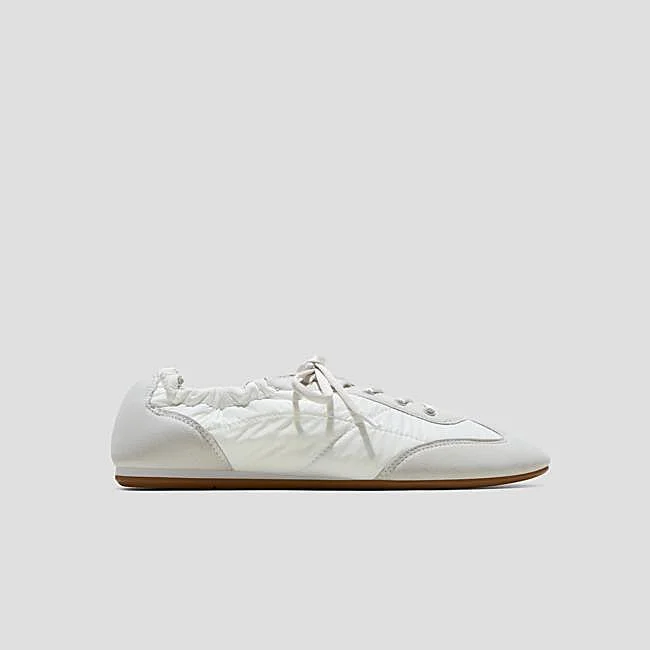
One of the models that best represent this trend is the Sneakerina Jogger Re-Nylon (Yancy) by Vivaia. Its design combines the delicacy of ballet flats with the sporty aesthetic of seventies sneakers, but the most interesting part lies in its construction.
They incorporate an elastic heel that, according to the brand, is designed to adapt to the movement of the foot and help prevent rubbing and blisters. In addition, they are made from recycled Re-Nylon fabric with a light padding, they include an EVA midsole to cushion the stride, and offer discreet support for the arch of the foot.