There are few things more satisfying in life than drinking a glass of water when you are very thirsty. The instant and grateful relief; now… is it enough? There are several studies already discussing how many minerals and electrolytes water loses as it passes through a filtration system, especially calcium, magnesium, sodium, and potassium. Not long ago, the World Health Organization (WHO) published a report analyzing the consequences of prolonged consumption of waters obtained through demineralization processes and warning that water low in minerals provides few micronutrients.
Does this mean water doesn’t hydrate? Not at all, water is fundamental, but most of us cannot press our lips to a spring (we would like to). To this we add that in some communities in Spain drinking tap water is not an option. It is for all these reasons that —taking advantage of the II edition of the Quinton Sport Summit, held in Alicante— the Quinton brand, the first biotechnology company to offer the possibility of caring for health and wellbeing with natural specialties based on seawater, tells us everything behind marine therapy.
Marine Therapy
“People think it’s going to the beach with a bucket and taking water,” says Rocío López, technical director of Quinton. But nothing could be further from the truth. And we witnessed this after an exhaustive tour through every corner of her laboratory in Cox, specialized in Marine Therapy and in the development of solutions based on the scientific knowledge of seawater, which this 2026 marks 30 years of activity in Spain. “We have the concept that hydrating means drinking water, and it’s much more. We forget about mineralization. Seawater in the human body helps our internal milieu clean itself and our cells function better because they receive more nutrients,” she asserts.
The filtered seawater ampoule that revived Rafa Nadal in Australia was one of the many headlines that could be read when the tennis player took Totum Sport at the Australian Open. However, setting aside the anecdotal part, and considering that impact and endurance sports are in fashion, it’s important to know that behind that ‘life-saving’ little ampoule there are years of studies and meticulous work.
“Drinking ‘dead water’ is hydrating only halfway,” López comments during the visit. And indeed, if it is known that the microbiota, sport, and a good diet are crucial for health, proper hydration is not left behind. That was the central theme of the II Quinton Sport Summit —where experts in the field and various professional athletes gathered— which investigated the relationship between elite sport and digestive health.
II Quinton Sport Summit
Training more does not necessarily mean performing better. Individualization, digestive tolerance, the replenishment of water and electrolytes, rest, and adaptation of strategies to the effort are part of the same preparation. Fernando Mata Ordóñez, a dietitian-nutritionist and professor of Physiology, Pathophysiology and Nutrition at the European University of Andalusia, explained that more than 60% of endurance athletes experience gastrointestinal problems during exercise and addressed factors such as redistribution of blood flow, intestinal permeability, physiological stress, and dehydration.
One doesn’t have to look far in time and, if not, ask the athlete Joanna Wietrzyk and her unfortunate gastrointestinal incident during a Hyrox competition in Beijing, whose media storm was such that the Australian had to apologize for not withdrawing after the incident, relinquishing the win, and announcing a temporary retirement.
Gastrointestinal Tolerance Is Also Trained
Nutrition strategies must be tested progressively, adapted to each athlete, and never tried on the day of competition. For his part, Dr. Jesús Rodríguez Huertas, professor of Physiology at the University of Granada and president of the Spanish Society of Physiological Sciences, said: “Needs change according to the athlete, the discipline, the sweating rate, the loss of electrolytes, the temperature and the moment of effort.”
And what role does marine therapy play in all this? Well, a lot, since in sports not only must preparation and performance be considered, recovery is also essential. They are three pillars that must coexist in balance. And that balance was mentioned by Dr. Ana Brotons, scientific director of Quinton: “Hydration does not consist only of replacing water, but also the electrolytes lost during exertion.” In this sense, Totum Sport was present across contexts through experiences shared by experts and athletes in training, competition, hydration and recovery.
Hydration, Nutrition, Recovery and Digestion
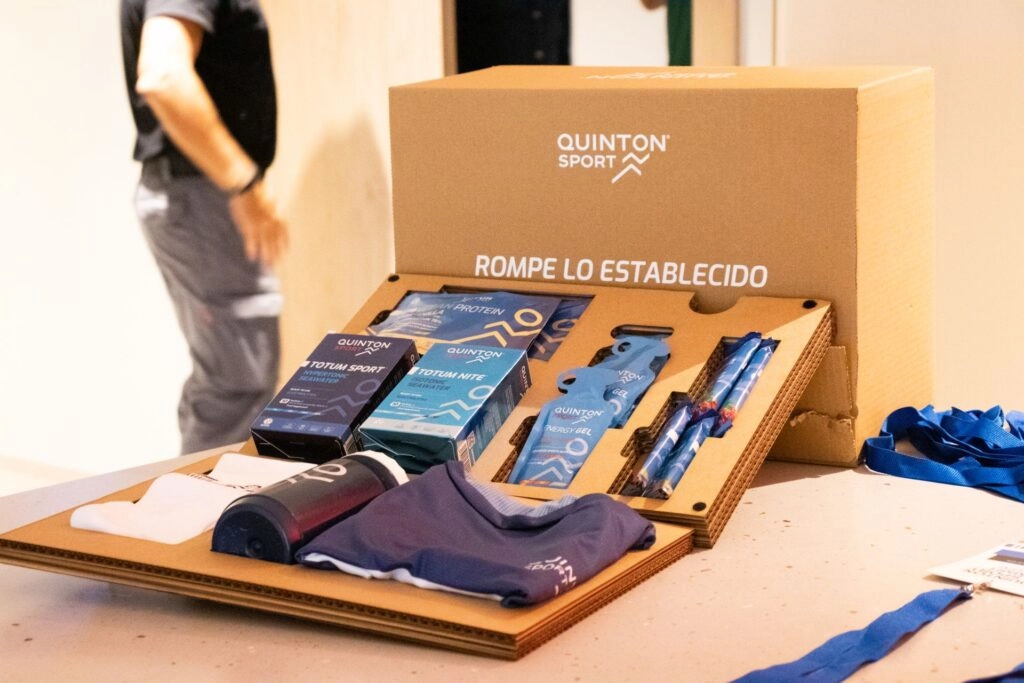
The professor and physiology expert, Jesús Rodríguez Huertas, highlighted its composition based on seawater and its mineral richness, and explained that it forms part of the protocols used with athletes in certain competitions and contexts of recovery. Moreover, the Summit has been the chosen venue to premiere Seabiotic Balance, one of Quinton Sport’s major innovations for 2026 and the first marine-based probiotic developed for sport. The product focuses on digestive tolerance and on the athlete’s ability to maintain their nutritional strategy during exertion.
What does it contain? Each sachet combines 25 ml of isotonic seawater Quinton, 105 mg of probiotic i3.1 and 600 mg of Berriotics, a matrix of fermented berries with prebiotic and postbiotic components. Its dual-compartment format keeps the liquid and solid phases separate until intake. The isotonic seawater acts as a mineral base and reconstitution medium, studied for its ability to promote the survival of probiotic microorganisms after mixing.
Invisible Training
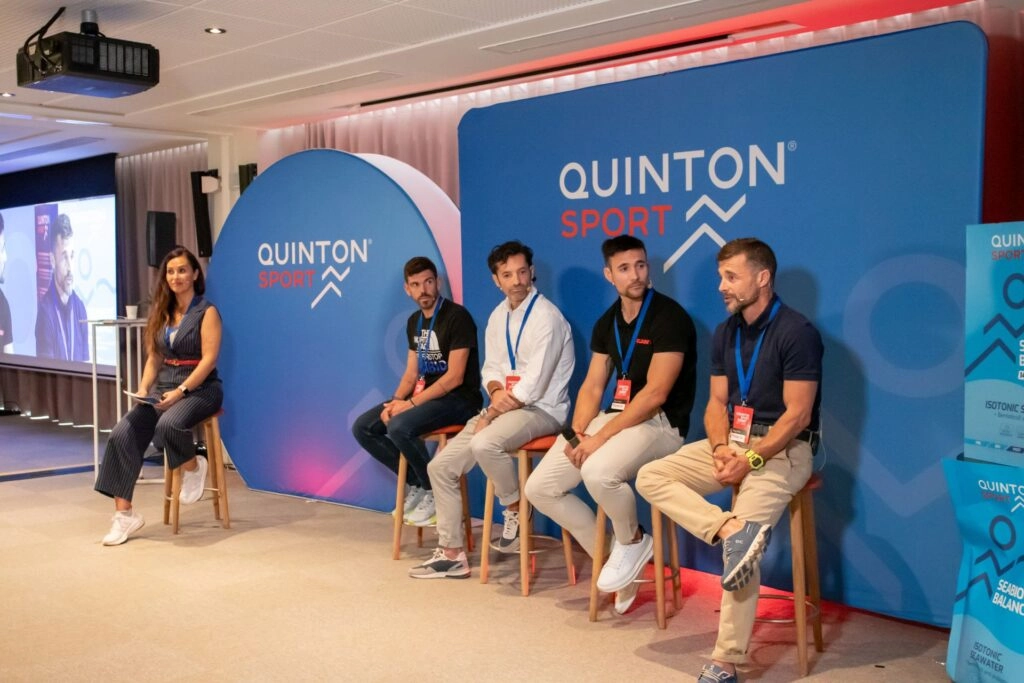
After the scientific block, Pau Capell, Paquillo Fernández, Dani Andújar, and Roger Pérez translated these ideas into the real high-performance experience: everything that happens outside visible training also conditions the ability to perform. The different voices of the Summit converged on the same idea: to sustain performance, it is necessary to start from a healthy organism, and health requires balance. A balance of hydration, minerals and electrolytes, digestion and metabolism.
This vision applies to both high performance and amateur athletes. In the professional realm it demands individualization, discipline and coordinated work; for those who train without dedicating themselves professionally to sport, organization, coherent goals, listening to the body and enjoying the process. Because doing sport is not only what you see from the outside.