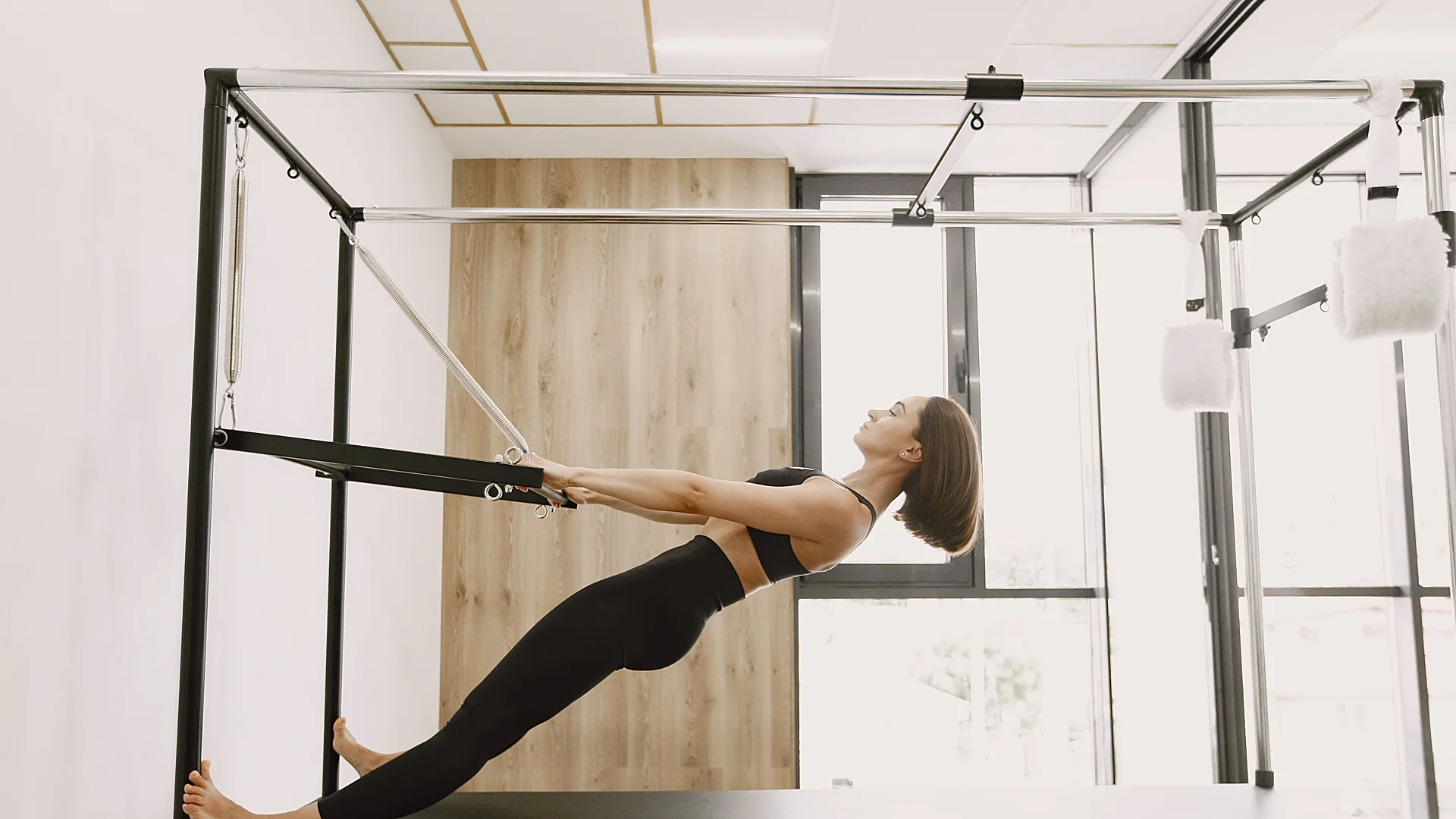
Imagine a belt that wraps around your waist from the inside, from the belly to the lower back. This is how Zahira Fernández, a Pilates Reformer coach at Floor Studio (@floorstudioreformer) describes the transverse abdominis, the deepest muscle of the abdomen. “This muscle acts like a girdle,” she explains. On top, it’s closed by the diaphragm and underneath by the pelvic floor. When it functions well, it keeps pressure inside the abdomen and provides stability to the whole body.
The problem arises when it does not activate. According to Fernández, then its work shifts to the superficial muscles, which are meant to move the body and not to support it. Those muscles end up tired and overloaded, as is often the case with the quadratus lumborum. In addition, the transversus abdominis goes hand in hand with the multifidi, the small muscles that stabilize the spine. If one shuts off, the other does too. “In Pilates, we work a lot on the deep musculature, which improves stability and the associated pains,” she summarizes.
With fifteen minutes, the coach would dedicate the first portion solely to breathing and awakening that internal musculature, still without moving. She proposes sitting on a chair and seeking the support of the sit bones, “the bones you can feel in the cheeks of the buttocks,” as she describes them. If you lengthen the spine over them, she explains, the multifidi activate, and with them the transversus. It is an almost invisible job from the outside, but felt from within.
Then comes the breathing. With hands on the ribs, you must take a deep breath aiming for the ribs to separate when you inhale and come together when you exhale. This is known as costal breathing, and, according to Fernández, it helps deepen that activation. To complete, she suggests seeking a sensation of bringing the sit bones together, or a suction of the sphincters. This also activates the pelvic floor, and with it everything else.
Three exercises, from easiest to hardest
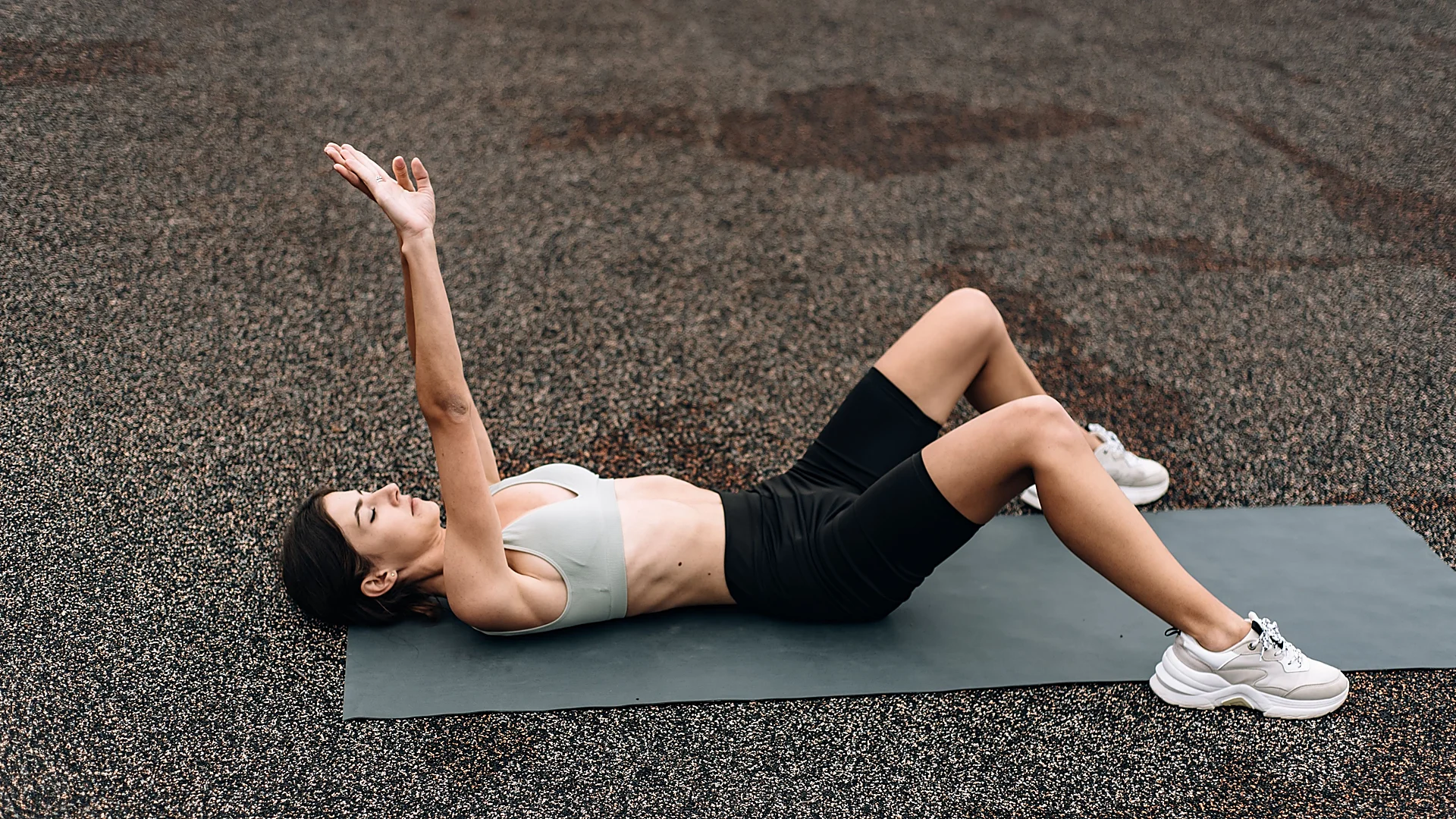
With the body already awake, you lie on your back with your knees bent. First you lift one leg without straightening it, keep it supported, and switch. Then, both legs up at a right angle, and in turn you lower one foot until it touches the floor. The final step is lowering both at the same time. The important thing, Fernández notes, is that the spine does not change shape during the movement. If the lower back lifts off or arches, it’s better to revert to the previous step.
The breathing sets the pace. According to the coach, in these exercises it is advisable to exhale just as you lower the legs, which is when the abdomen works the most. “Exhaling closes the ribs and helps us maintain the activation we need,” she explains. And you don’t have to wait weeks to notice something. From the first sessions, she assures, you can become aware of that musculature and “wake it up” if it was dormant.
The last block is done on all fours. With the spine in a neutral position, you lift one arm forward, then the other, then a leg and the other, until you pair the opposite arm and leg. For beginners, that is enough. Those who already have experience can add the chest lift or the hundred lying down, or try lifting the arm and leg on the same side. “There really isn’t an exercise that is right while another is wrong,” Fernández clarifies. Everything depends on each person’s level.
And for neck tension
The routine can be done daily and at any time of day. But the coach distinguishes two things. One is strengthening the deep musculature to prevent lower back pain. Another, very different, is the tension that builds up in the neck and the upper back. There the trapezius muscles come into play, which raise the shoulders as a protective gesture when there is stress. And also the sternocleidomastoids, which shoulder the burden of the shallow breathing typical of anxiety.
To release that area, Fernández again starts with breathing: several seconds inhaling and, above all, several seconds exhaling. Then, gentle neck movements, looking to one side and the other, tilting the head and ending with circles. The shoulders also move, lifting and lowering them, bringing the shoulder blades together or making full circles. The key, according to her, is not to pull on the neck. The sensation should be like “moving the shoulders from the armpits.”
Does it work for women who have had discomfort for a long time? “Of course it will get better,” the coach replies. That said, she recommends that someone supervise at the beginning to correct the technique and gradually increase the difficulty step by step. Attending class at least once a week, she adds, helps a lot. Regarding timelines, she prefers not to commit, because every body is different. What she does assure is that “the sense of well-being starts from the first day.”