Coughing, lifting shopping bags, or taking a small jump. They are everyday gestures that, from a certain age, test something that is rarely talked about: the pelvic floor. Teresa Vázquez de Castro, product manager of Club Pilates Spain, explains that from the age of 45 many women begin to notice the effects of perimenopause. With the decline in estrogen, muscle mass and bone density can be lost, stiffness can increase, and the way fat is distributed can change.
The pelvic floor doesn’t escape either. Its tissues can lose elasticity and their ability to support, and that increases the risk of urinary leakage or a feeling of heaviness. For Vázquez de Castro, here is the great advantage of the method. “Pilates allows addressing these needs in an integrated way,” she explains. Mobility, core stability, and pelvic floor coordination are worked at once, and always tailored to each woman.
That said, the expert makes clear that aging by itself does not change the routine. “There is no specific routine that should be recommended solely because you have turned 45,” she warns. What decides which exercises to do are each woman’s symptoms, their physical condition, and whether they can perform the movements with comfort and control. Age is a datum, not the only one.
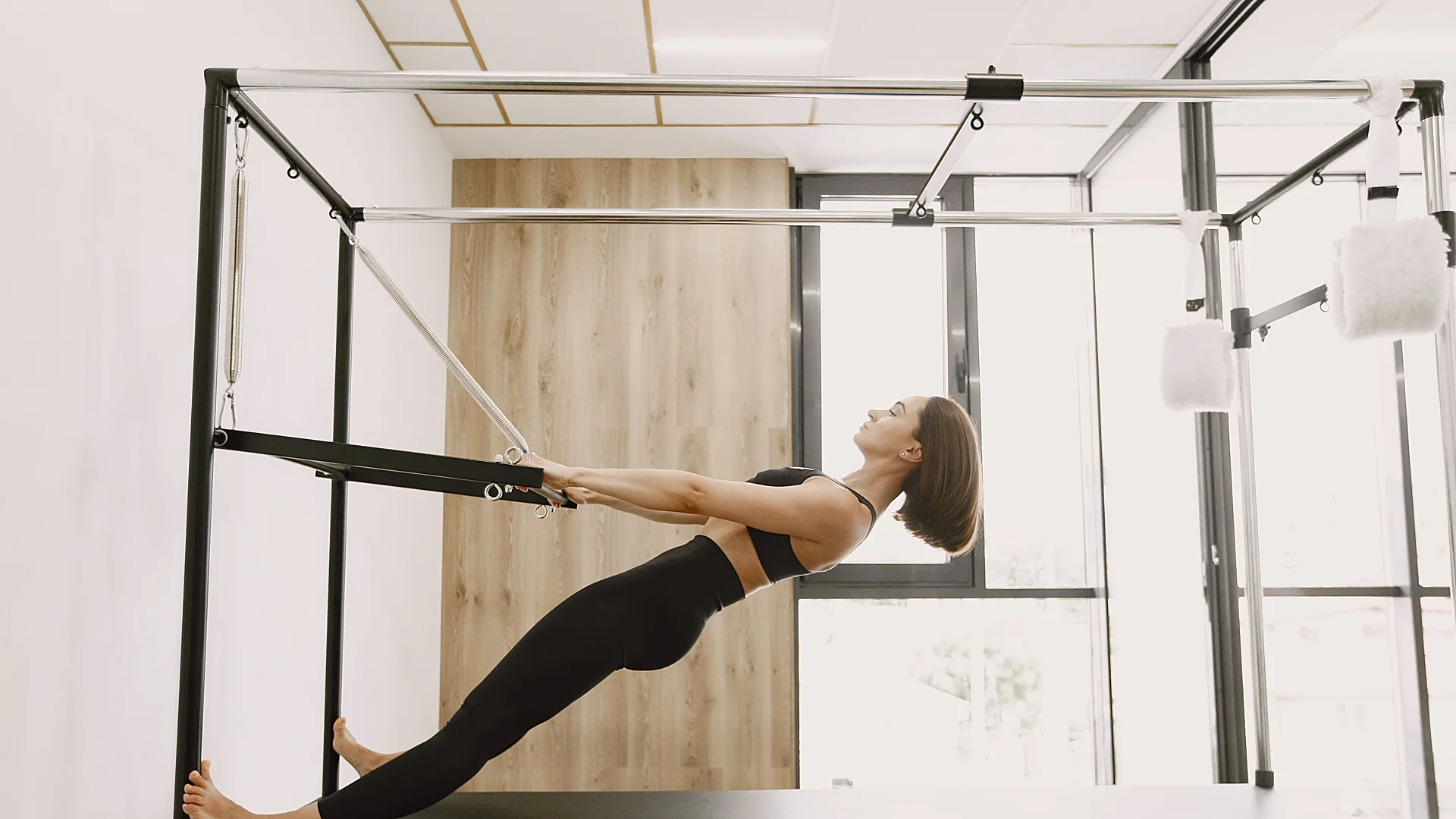
For the back, Vázquez de Castro prioritizes exercises that lengthen the spine and strengthen the muscles in front and behind the trunk. Also those for stabilization and extension, which help improve posture and compensate for a tendency to slouch. Among the examples she cites are Swimming and Swan, performed face down, and Chest Expansion. All of them also have a good core-work component.
The connection between the core and the pelvic floor
What happens in the abdomen directly affects what happens lower down. According to the expert, the core and the pelvic floor work as a team with the diaphragm to stabilize the trunk and control the pressure inside the abdomen. When that coordination fails, especially when lifting weights, coughing, or jumping, the pelvic floor bears more load than it should. And that’s when urinary leaks or a feeling of vaginal heaviness can appear.
Vázquez de Castro cautions, however, not to oversimplify. These problems can have many causes and are not always due to a weak abdomen. What Pilates can do is help you breathe better, to control the abdomen and coordinate all these muscles with each other. Always, she insists, with exercises tailored to what each woman needs.
The mistakes worth avoiding
There are faults that recur a lot. According to the expert, one of the most common is holding the breath when exerting force. Another is pushing the abdomen outward and downward without control. And also increasing the intensity too quickly. Vázquez de Castro adds a clear alarm signal: if an exercise causes pressure or heaviness in the pelvic area, it probably needs to be adapted.
The most surprising nuance has to do with the idea of squeezing. «Not all women need to strengthen or contract the pelvic floor more», the expert explains, because some have an excess of tension in that musculature. In those cases, contracting more does not help. Therefore, for her, the fundamental thing is to learn to coordinate breathing, effort and relaxation, according to what each body needs.
What changes with practice
When worked together, the results are noticeable in everyday life. According to Vázquez de Castro, Pilates can improve the strength and endurance of the deep musculature and help manage abdominal pressure more effectively. With consistency, many students notice changes in posture, mobility, and the way they perceive their own bodies. And they gain confidence to move, something that’s welcomed in tasks as simple as lifting weight or bending down.
The expert defines it as a great ally for women’s health, but also sets a clear limit. When there are persistent discomforts or signs that the pelvic floor is not functioning well, Pilates does not replace an assessment by a health professional. With that review done, autumn can be a good time to start taking care of the back, abdomen and pelvic floor as what they are: one single team.