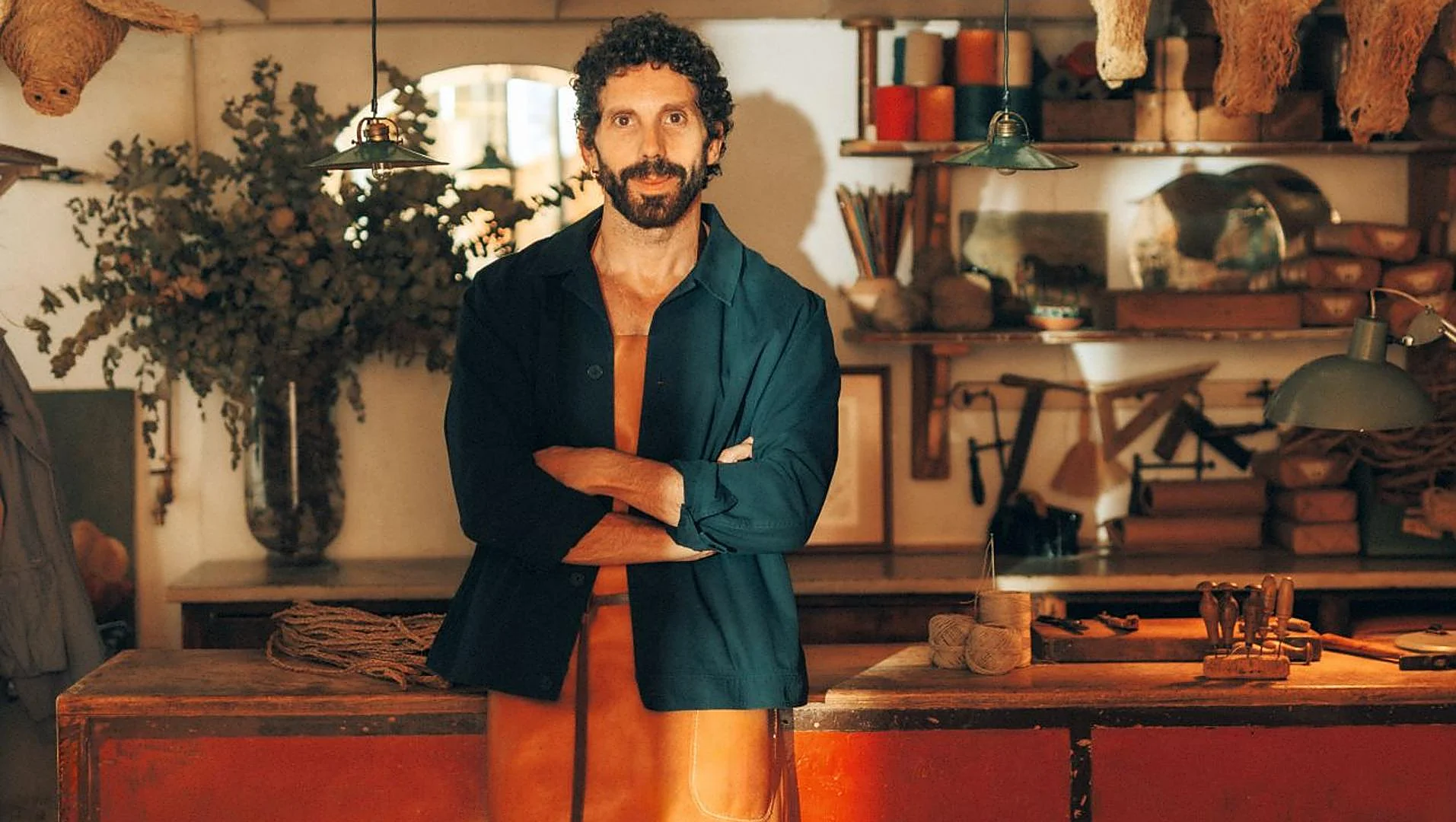
Javier Sánchez Medina had heard all his life in Badajoz, where he was born, that creativity was only entertainment. He trained to take the firefighter entrance exams and secured a post in Cádiz. But he began meeting people who painted, who sculpted and lived from it, and he wanted to try his luck.
“I chose esparto and natural fibers because they are my roots, where I come from, who I am,” he says. He recalls his grandfather working in the courtyard of his house, mending reed chairs or making the thick esparto curtains that protect from the heat in Extremadura.
“I learned, even as a child, by playing around him.” In addition to using this inherited material, he uses all natural fibers —the wicker, the rush, the pith, the rattan— and captures the magic of an ancestral technique that tells the story of families and places often forgotten.
His starting point is traditional pieces, but in his small workshop-store in the Malasaña district, in Madrid, opened fifteen years ago, Javier takes them beyond the legacy, turning them into objects that are exhibited in art galleries.
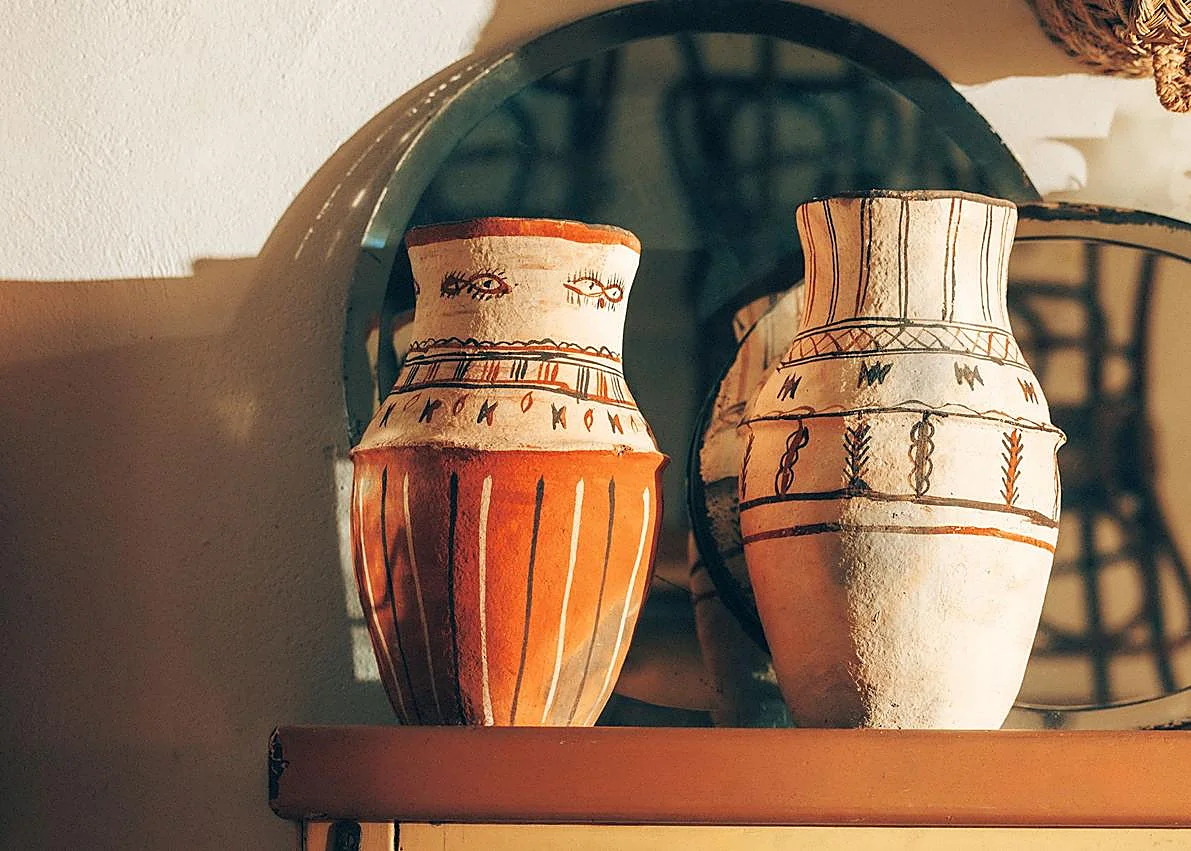
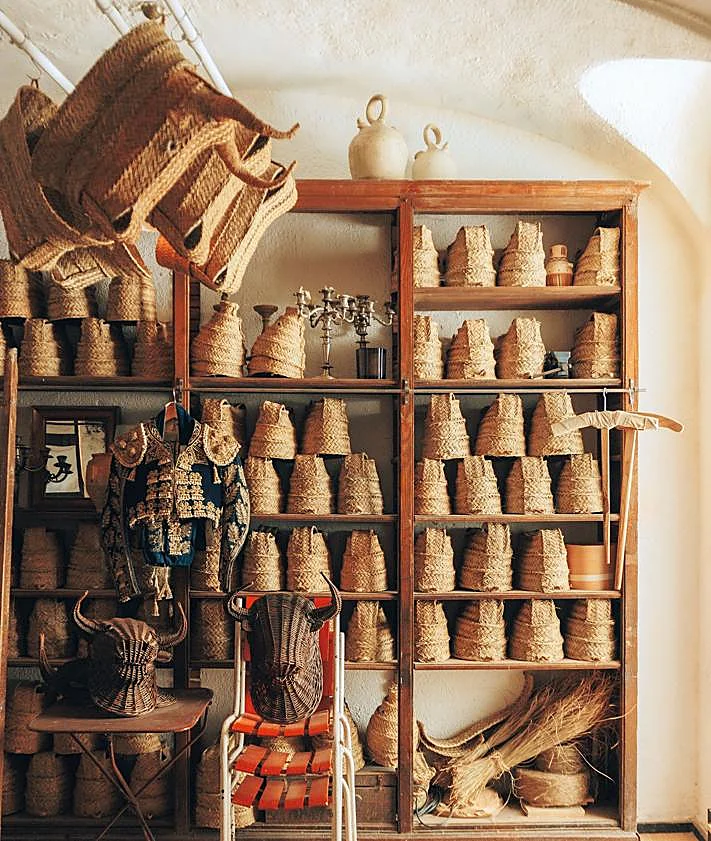
Interior of the workshop decorated with industrial lamps. Above, an old shelf with baskets and head stands; and to the right, clay vases, and on the wall, a sign from an old tavern with more animal heads, and jugs and baskets.
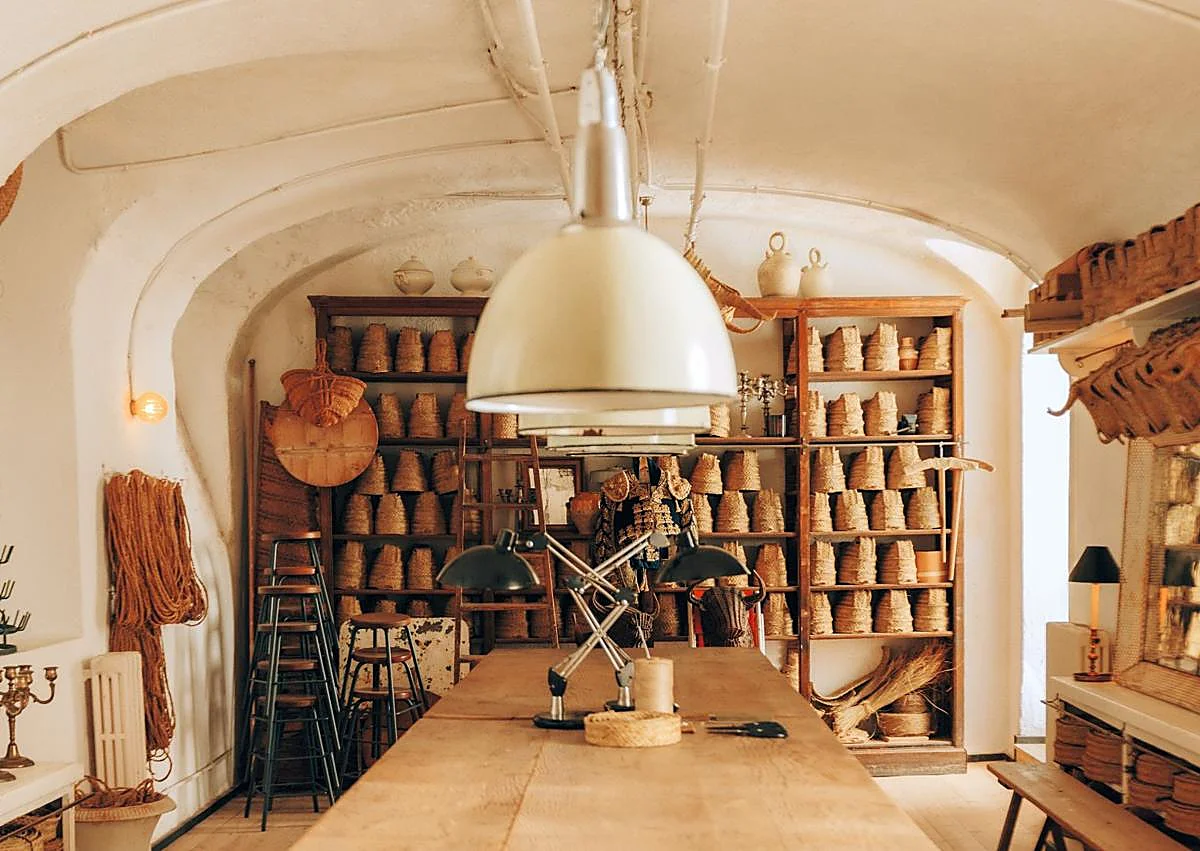
In this old shed, which Javier rehabilitated with care, time seems to have stood still. All the tools are antique: next to the spools of marline used for sewing are the awls that belonged to his father or the scissors inherited from his grandfather.
“The counter belonged to an old haberdashery and the shelves are French salvaged,” explains the craftsman. “The curtains were sewn by my mother and the drawings and the letters I painted by hand,” he recalls. The leather apron he hardly ever takes off was made for him by his father, who has since died. They worked together and now his brother collaborates with Javier from Badajoz.
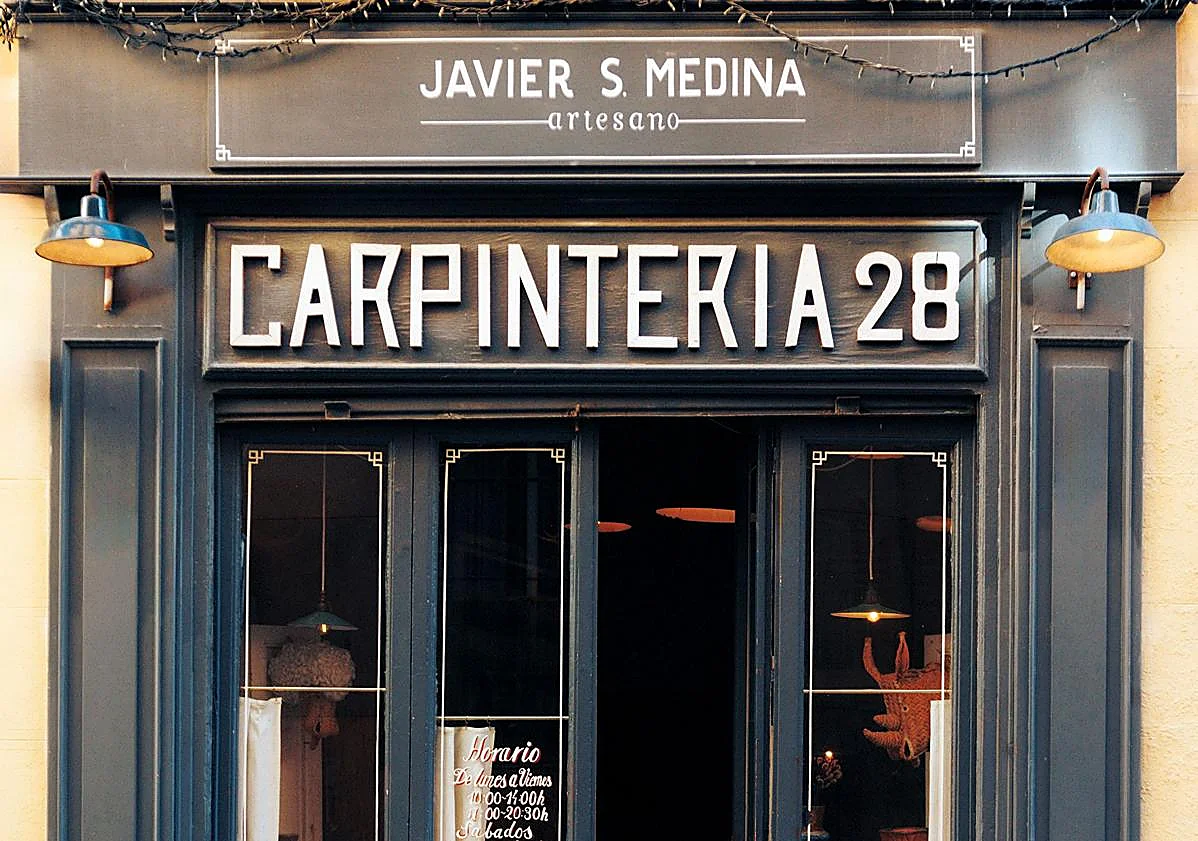
Above these lines, the facade of the workshop, located in the Malasaña neighborhood, Madrid, which preserves the sign of a carpentry that once housed this space. Javier recovered the display cases from an old shop.
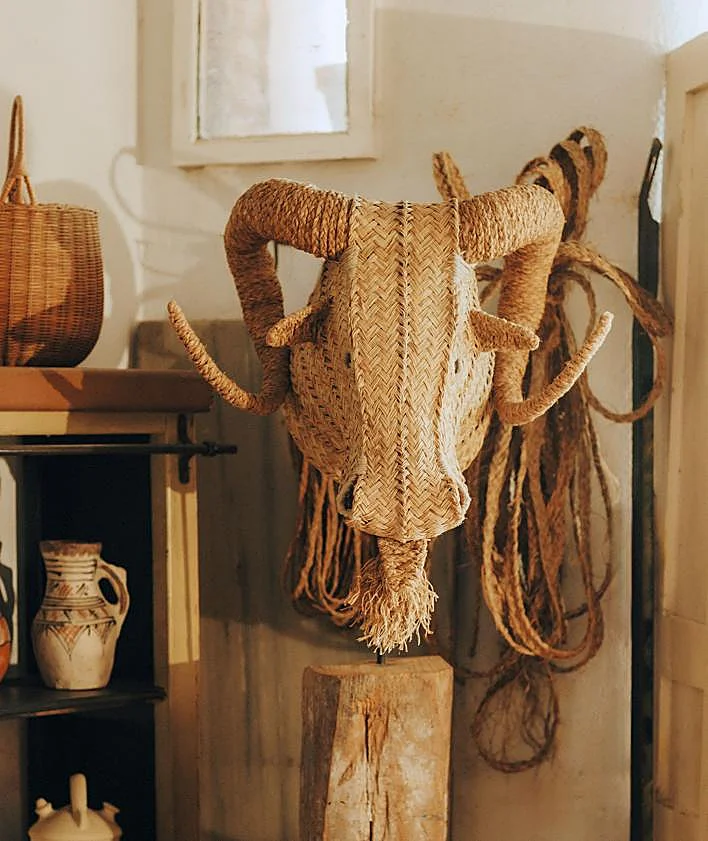
His most emblematic creation are the animal heads, which mimic hunting trophies or bullfighting trophies, as a tribute that removes the pain and that became a great success with exhibitions in Los Angeles and New York.
Among his clients are environmentalists —in fact, his pieces are called Eco Trophies— but also bullfighting enthusiasts. They conceal a subtle critique and a personal sense of humor. The bulls were the first components of this peculiar family, which today also includes donkeys, reindeer, buffaloes or moose, and they are the pieces he is most proud of, apart from his collaboration with designer Jonathan Anderson, with a sculpture exhibited in Shanghai. He has also done projects for Zara or Loewe. And he knows that one can live from creativity.