“Doctor, is my hair going to fall out?” The question repeats in many oncology consultations when the doctor explains to the patient how they will treat her breast cancer. It may seem frivolous to talk about hair or eyelashes falling out in an oncology consultation, but it is not.
Within that whirlwind of emotions and fears that is the diagnosis of breast cancer, the abrupt hair loss represents, in some way, a loss of identity and a new abyss that the woman must face every day. Because doctors handle the cancer. But the image in the mirror is hers to own, as women have been taught since the beginning of time. And that is terrifying.
‘The important thing is that you get cured’
If a healthy woman talks about concerns regarding hair loss, everything is normal, but if a chemotherapy patient does, trivializing comments quickly appear. ‘The important thing is that you get cured,’ some say. Others are less subtle and will label her immature.
A study led by psychologist Miriam Belber-Gómez, from Hospital Universitario Son Espases, shows that a breast cancer diagnosis forces the woman to cope with, among other changes, a redefinition of the ‘self’. And in that regard, the physical changes that worry people the most are alopecia, weight gain/loss, or burns in the irradiated area.
Cancer patients, emotional censorship?
“Esthetics is never only something superficial. Behind our image there are much more complex personal aspects: identity, self-esteem, the relationship with our body or the way we want others to perceive us,” explains Pilar Conde, psychologist and technical director of Clínicas Origen.
The expert explains that at certain moments —such as an illness, a physical change or a new life stage—, the image can acquire even more meaning. And that transformation can become a risk factor for the person: “Losing hair abruptly makes the disease visible to others, erasing the right to decide to what extent they want to keep this process in the private sphere.”
It’s not ‘a silly thing’
Bárbara Cortés, general health psychologist, explains that the most common phrase with which her patients typically voice these concerns is: “It may seem silly to you, but…” or “I know it’s silly, but…”. However, as the expert notes, “oncology units are increasingly multidisciplinary and there is greater attention paid to the emotional and aesthetic wellbeing of patients”.
But ensuring emotional balance at such a crucial moment for the woman is far from being a silly thing. “Having a good mood is not any kind of silliness. Some people think that, during a medical treatment, especially one as significant as cancer treatment, other aspects of life are suspended and depend on the needs of the treatment,” she adds.
We forget that the patient must continue living 24 hours a day in a body that has changed. “If it is important for them to look good, they should continue with their skin care (always with the prior medical advice on what to use), apply makeup and buy a wig that makes them look radiant,” adds Cortés.
Self-censorship?
The paradox is that often it is the patient herself who, involuntarily, creates self-censorship. This is highlighted by Elena Cedillo, psychologist at yees!, “the first to censor herself emotionally is the woman herself when she thinks she has no right to feel bad about something she considers less important.”
The expert explains that she is used to many people downplaying her speech. Her response, always, is that anything that causes emotional suffering is a priority: “We cannot implement a hierarchy. No one would have the right to determine how another person should feel“.
How cancer treatment affects the skin
Dr. Cristina Garcia Millán, dermatologist expert in sensitive skin and director of ESTHEA MEDICA, explains that current cancer treatments target tumor cells, which have very rapid division activity. However, they also affect other healthy cells with high proliferative activity, such as the epidermis and the nail matrix.
Additionally, certain treatments alter the function of lipids that act as glue between the cells of the superficial skin layer, causing water loss and reducing repair capacity: “That is why it is common to see intense dryness, eczema, sensitivity, itching, pigmentation changes, irritation from an inflammatory process and even cracks and fissures in the fingers, heels or lips.”
How to care for the skin during the illness
“It is important to avoid potentially aggressive cosmetics and to use simple formulas that help maintain the integrity of the skin,” García Millán maintains. And after treatment? They will progressively improve on their own, although dryness, sensitivity, pigment spots or certain texture changes may persist.
“In this second stage we can start to gradually incorporate other cosmetic actives and, when indicated, specific dermatological treatments to improve sequelae, always under medical supervision and choosing what best suits the patient,” she adds.
Skin care routine for oncology patients
“I usually prescribe a very simple routine —minimalist cosmetics— focused on three goals: gentle cleansing, hydration and protection,” she assures.
- In the morning: a very gentle cleansing that is not harsh, always with fragrance-free products. Then, apply a reparative and quite emollient moisturizer, preferably with ceramides, glycerin or hyaluronic acid. Finally, apply a broad-spectrum sunscreen, always SPF 50.
- At night: we repeat the gentle cleansing and apply a reparative cream that is somewhat more nourishing, or a calming mask if dryness is very intense. It is also essential to moisturize the body’s skin daily; “I point this out and repeat it a lot in consultations, especially after the shower.” Also, take good care of the hands, nails and cuticles.
“I recommend keeping nails well trimmed so they don’t snag on anything, avoiding aggressive cuticle removal and limiting traumatic manipulations. In this stage, less is more: we do not need ten-step routines or many active ingredients, but well-tolerated products that help keep the skin healthy and comfortable,” she adds.
Ingredients not to use
We must identify those ingredients that could be very aggressive for skin that is in such a sensitive state. The dermatologist lists them:
- Avoid potent chemical exfoliants, such as highly concentrated acids. When there is extreme dryness or flaking, it also doesn’t make sense to apply retinol, retinal, or retinoic acid.
- It is advisable to forgo very fragranced products, toners containing alcohol and abrasive physical exfoliants. For example, vitamin C is often formulated at high concentrations with a very low pH to be active, and that such a low pH can cause sensitivity.
“It’s not that these ingredients are completely contraindicated, but, with the skin barrier compromised and dehydrated, they simply are not the most suitable and I prefer to postpone them until the patient is better,” she explains. Conversely, the preferred ingredients are those that help maintain hydration and restore the skin barrier.
Ingredients that can be used
- Ceramides: “I love them and they are especially interesting because they help to replenish the lipids of the epidermal barrier.”
- Glycerin and hyaluronic acid: “They are excellent humectants”.
- Pantothenol and petrolatum: “Help retain water and prevent dehydration. I really like, for example, using petrolatum on the lips”.
- Niacinamide: “In appropriate concentrations it is very well tolerated and very useful due to its dual effect: improves barrier function and provides anti-inflammatory action”.
- Urea and lactate: “For body dryness I like urea and lactate in low concentrations. Urea in particular is very beneficial, though it should be avoided if the skin is irritated or has fissures”.
- Shea butter: “It’s excellent for body care”.
- Sun protection: “I consider it essential because some cancer treatments can cause high sensitivity to sunlight”.
“In short, during this stage I always prioritize reparative ingredients over transformative cosmetics, because the latter are not needed when the skin is not intact and healthy. The aim at this moment is not to achieve perfect skin, but to keep it healthy,” she concludes.
What is clear is that all these changes can generate sadness and discomfort. That suffering is real and deserves to be validated and attended to without needing to compare it. For this reason, there are several brands on the market that focus on the needs of oncology patients. One of them is MÊME and its dermocosmetic line designed for skin weakened by cancer treatments.
Dermocosmetics for oncology patients
It all began with the experience of Judith’s mother, who died of cancer when she was 19. Despite the illness, her mother continued to care for her image and femininity —fashion, creams, nail polish— as a psychological fight against cancer. However, finding beauty products tailored to the specific needs of skin under treatment proved very difficult, which led Judith to conceive MÊME.
The brand promotes an integrated support model, with a holistic approach to health between physical, emotional and psychological wellbeing that places the patient at the center of the care process. Its objective is to contribute to the wellbeing and quality of life of those undergoing the disease by means of specific products but also, a movement ACT FOR SKIN, an initiative of the Pierre Fabre laboratories that seeks to mobilize health professionals and the entire health ecosystem in favor of skin care during oncology treatments.
How do they do it? With medical visit activities in oncology centers and training programs in hospitals, providing specialized information on skin care and contributing to a better understanding of the specific needs of patients.
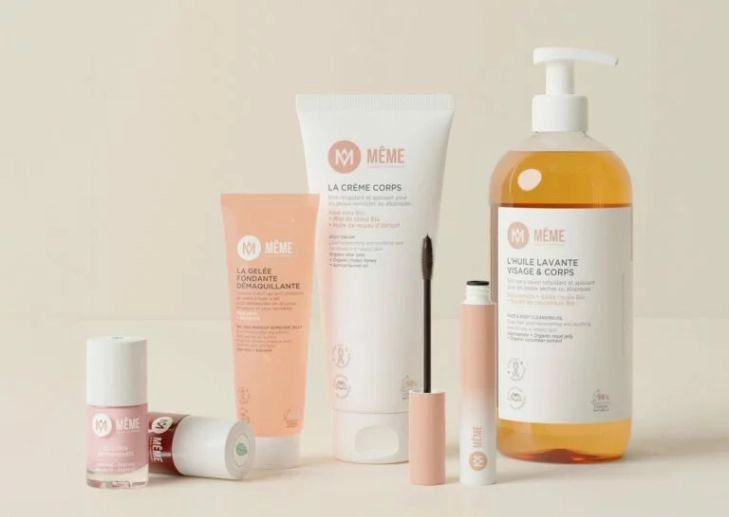
Also, they have a collection of more than 70 products (tested and extensively studied) that includes products for nails and nail polish; facial and body care, with moisturizers, serums, balms, cleansing gels and calming mists; makeup, with concealers, BB Cream, eyeshadows, blushes and eyebrow/eye pencils; and hair care and hygiene, with gentle shampoos, hair masks, serums for eyelashes and brows, and much more.
No es solamente perder pelo: es perder el control
Three concepts must be differentiated: body image, self-esteem, and identity.
- Body image concerns the way we perceive and inhabit our body.
- Self-esteem is the evaluation we make of ourselves.
- Identity is the sense of who we are and how we recognize ourselves.
“The changes arising from the disease affect both how we value ourselves and how we feel about ourselves. Although we cannot generalize, because not all women experience these changes in the same way, nor necessarily see their self-esteem affected,” argues Cedillo.
A cancer diagnosis implies many changes over which the woman feels she has no control. It is very common for them not to recognize themselves in the same way because of all the visible changes it triggers. Caring for appearance can be a way to maintain some continuity with who they were before the disease and even to recover a small part of control.
Experts agree: “Our body is also part of how we recognize ourselves, how we present ourselves to others or even how we experience our intimacy. Therefore, in the face of cancer, bodily changes take on a meaning that goes far beyond aesthetics.”
Each person experiences the disease in a different way; who are we to judge others?