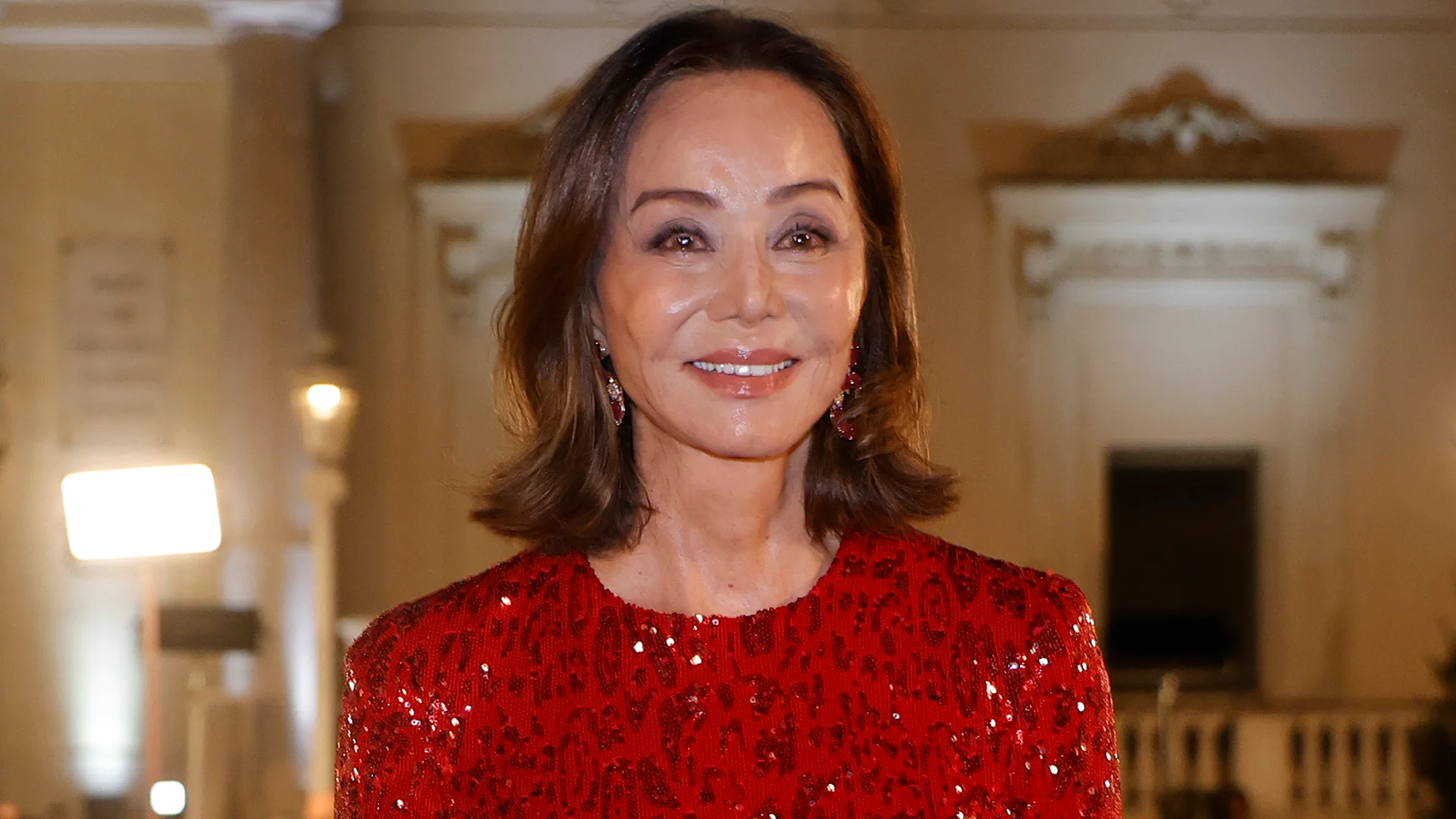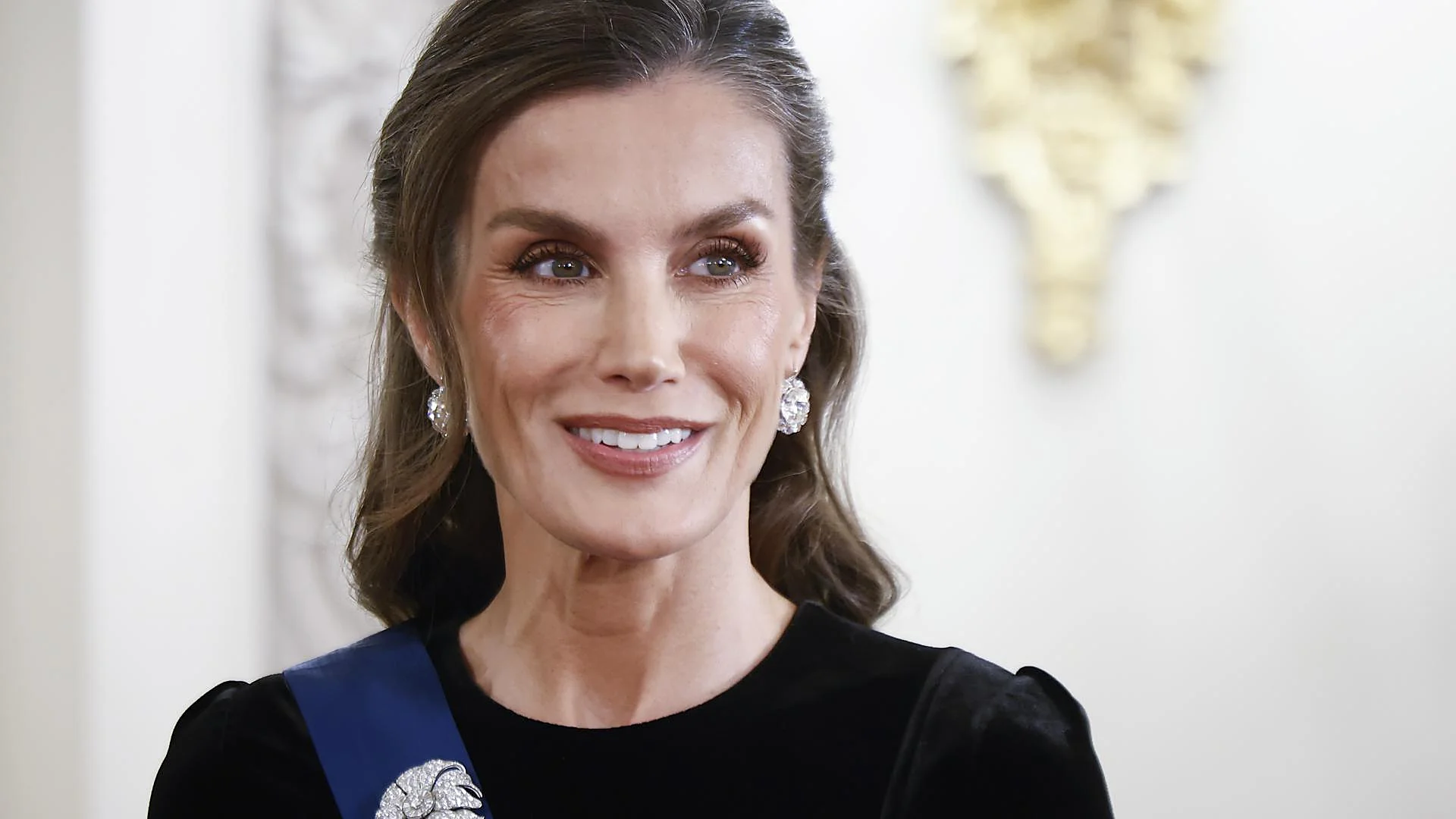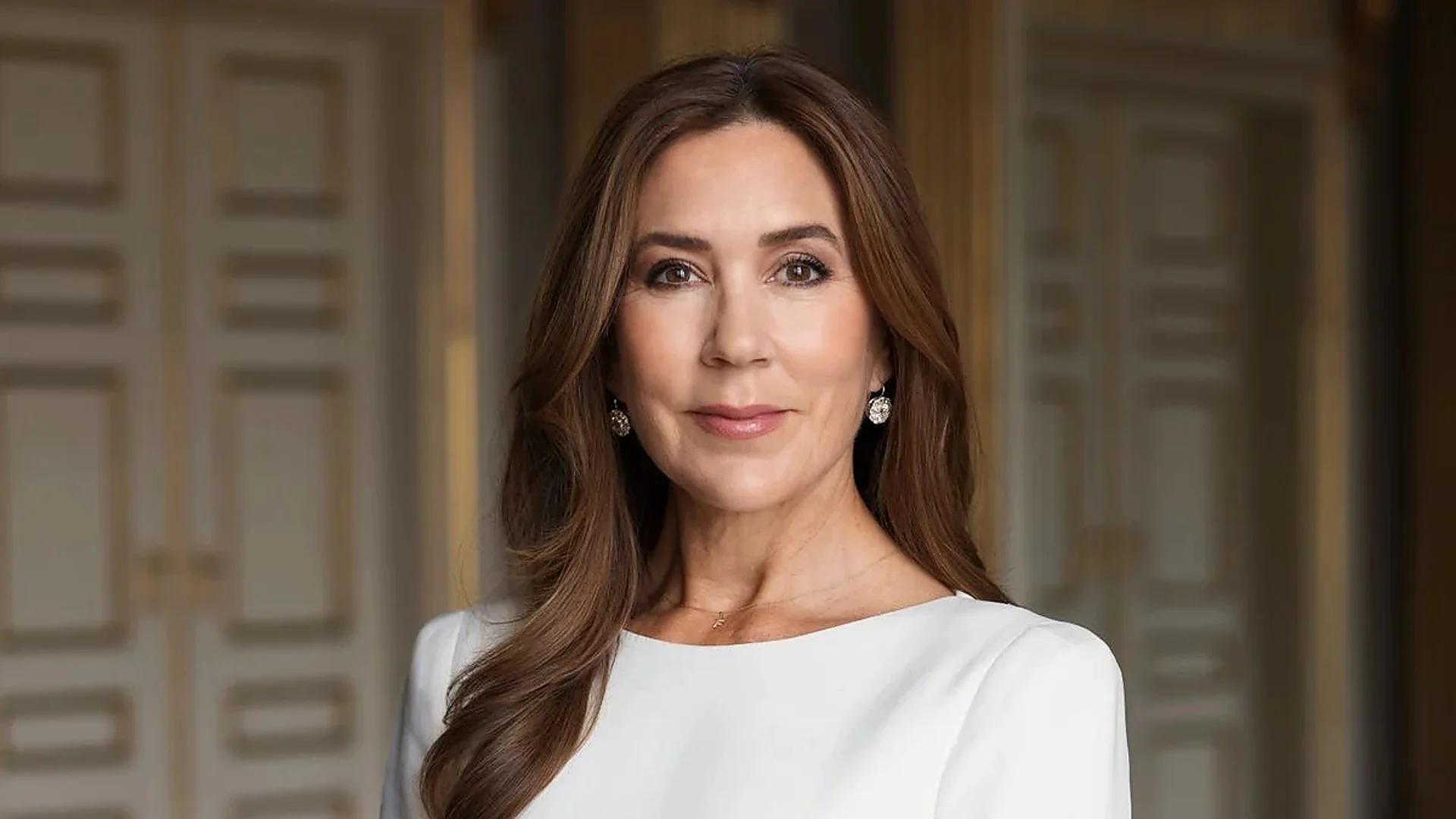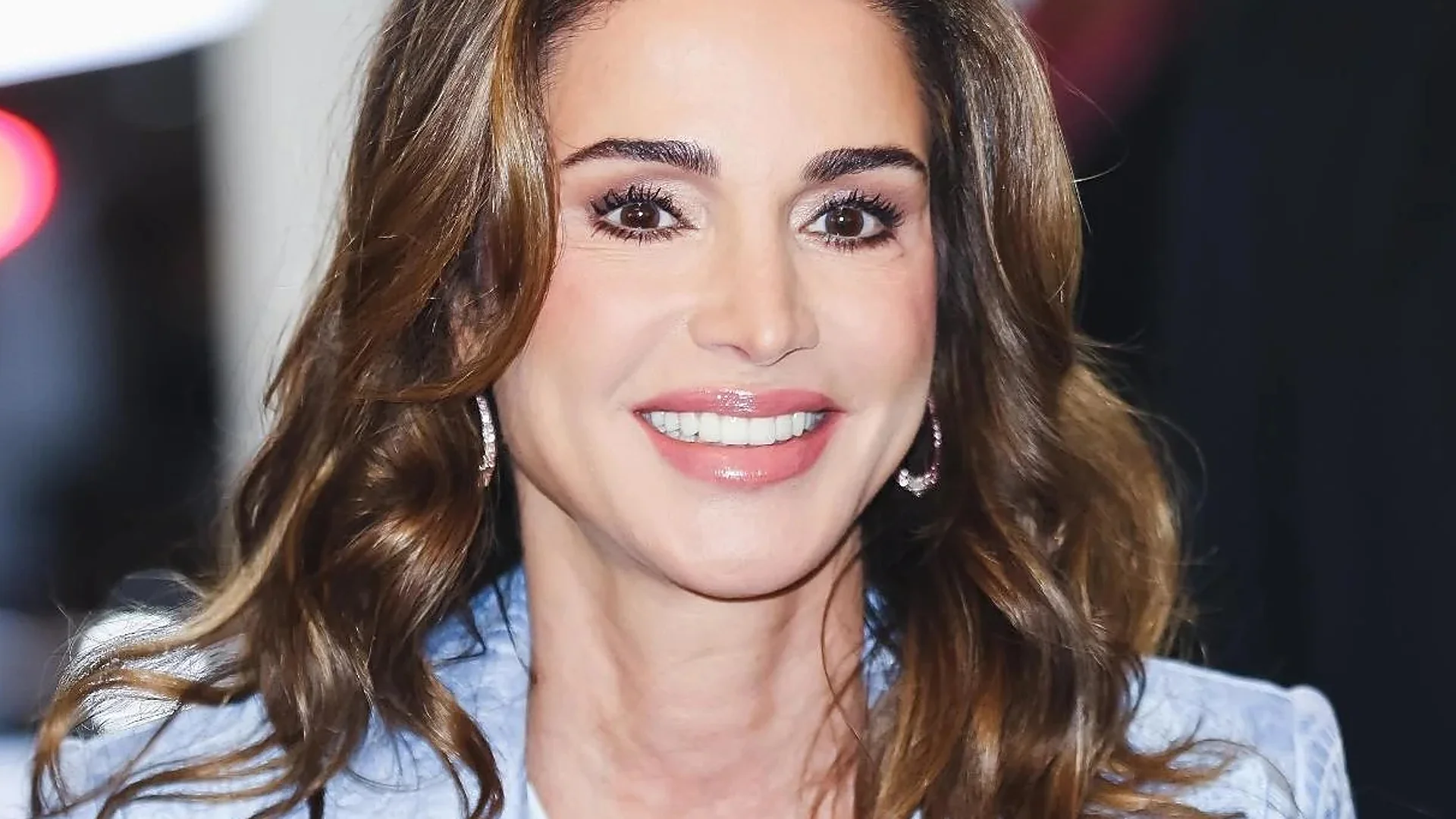
She is the queen consort of Jordan, as the wife of King Abdullah II, an international advocate for education and the rights of children and women, and one of the members of royalty with the largest social media followings worldwide. At 56, Queen Rania of Jordan is also a figure who elicits a wide range of reactions. Internationally she is admired as a reformist queen with a forward-looking vision. Within Jordan itself, her Palestinian origin and her prominent international presence have at times stirred some suspicion, though this has changed considerably since the Gaza war began in 2023.
Her origins are not those that most people associate with a queen. She was born in Kuwait, as the daughter of a Palestinian doctor, and grew up in a family that was forced to leave the country where she had built her life before she turned twenty-one. Since her marriage in 1993 to then-Prince Abdullah bin Al Hussein, Rania of Jordan has been the most visible figure of Arab royalty internationally in her generation.
The media has repeatedly compared her to Jacqueline Kennedy and Diana, Princess of Wales, highlighting her combination of style, photogenic appeal, and commitment to social causes that go beyond royal duties. In addition to having eleven million followers on her very active Instagram account, Rania of Jordan has appeared on the cover of Time magazine and was named the most stylish woman of 2003 by the British magazine Hello!
Although Rania was not born Jordanian nor of blue blood, during the 27 years she has spent as queen consort, she has developed a significant institutional role in education and child welfare and in support of women’s rights. She has become a grandmother four times; she has written a children’s book that has reached number one on sales; she has spoken at the World Economic Forum; she has addressed the United Nations and has given interviews to heads of state. And she describes herself on her Instagram account as “a mother and a wife with a truly great daily job.”
Queen Rania of Jordan: Humble Origins and Ascension to the Throne
Although she is now known as an elegant queen who leads a luxurious lifestyle, Rania had humble origins in Kuwait. She was born on August 31, 1970, the daughter of Palestinian parents: her father was Dr. Faisal Sedki Al-Yassin, and her mother, Ilham Yassin. In 1991 she moved to Amman, the capital of Jordan, where her parents had relocated after fleeing Kuwait with thousands of Palestinians following the start of the Gulf War. Her family ultimately settled in a home in Tulkarm, in the West Bank, near the border with Israel.
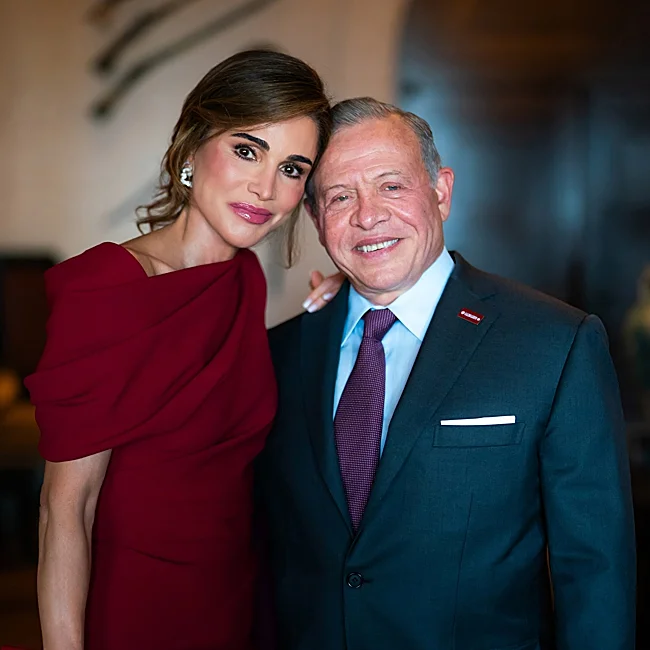
Rania with her husband, King Abdullah II of Jordan.
Queen Rania pursued her studies first at the New English School in Kuwait City and later at the American University in Cairo, where she earned a degree in Business Administration in 1991. At the start of her professional career she worked at Citibank, before later taking a position in the marketing department at Apple. She met her future husband at a dinner in 1993, and the couple became engaged just two months later.
Her sumptuous wedding ceremony took place at Zahran Palace in Amman, the Jordanian capital. That day was declared a national holiday. The tradition dictated that a royal-bride should wear jewels from her own family on her wedding day, but Rania did not come from a noble family with an impressive collection of jewels at her disposal, so she did not follow the tradition. Instead of the expected tiara, she wore a jeweled headband attached to her bridal veil, which intertwined with her intricate hairstyle.
Rania of Jordan with her husband, their children, his daughter-in-law and son-in-law.
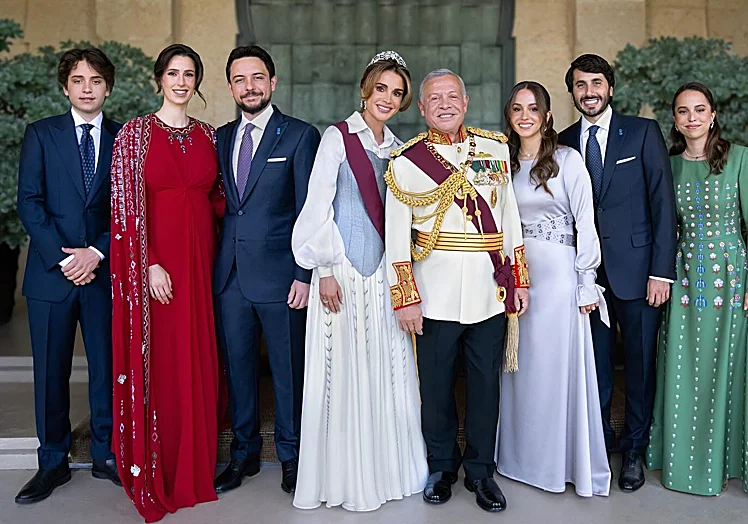
When she married Prince Abdullah, Rania did not know that one day she would become the Queen of Jordan. Her husband’s uncle, Prince Hassan, had indeed been next in line to the throne for decades. But in 1999, on his deathbed, King Hussein displaced him from the line of succession and replaced him with his son. Rania and Abdullah have four children: in addition to the crown prince Hussein, there are Princess Iman, Princess Salma, and Prince Hashem, aged 19.
The Palestinian Legacy and the Gaza War
Converted into a prominent advocate of intercultural dialogue, fighting the stereotypes associated with Arab countries and Muslim citizens has become one of her most personal crusades. She has also ardently defended progressive positions, such as gender equality. But Rania has always been cautious about publicly highlighting her roots. Palestinians constitute a significant portion of Jordan’s population, and the relationship between Jordan’s Palestinian community and its Hashemite rulers has a long and complex political history.
But that changed in October 2023, when the Gaza war began after Hamas’s attack on Israel. Since then, Queen Rania of Jordan has been one of the royal voices most prominent worldwide in calling for a ceasefire and drawing attention to the civilian victims in Gaza. She has posted videos and given statements to major media outlets consistently, challenging what she described as a double standard applied to Palestinian suffering compared with other conflicts.