Paris Fashion Week stands as a monumental event on the global fashion panorama. This year, the presentation of the Spring-Summer 2027 season takes place from September 28 to October 6, with shows by major historic houses such as Chanel, Dior, Hermès or Louis Vuitton, along with international brands and emerging designers. In total there will be more than a hundred acts during the nine days of official programming in the self-proclaimed world capital of fashion, but to understand its true reach we must go back to the mid-19th century and meet the father of haute couture: Charles Frederick Worth.
Paris established itself as the capital of fashion in the 19th century, largely thanks to the pioneering work of designers like Worth, who revolutionized the industry by founding the House Worth in 1858. His innovative approach included sewing labels with the brand into the garments, which elevated the status of design and brand image. Known as ‘the Napoleon of designers,’ the British-born designer also introduced the use of live models to showcase his creations, transforming how clothing was marketed and captivating clients in a more personal way.
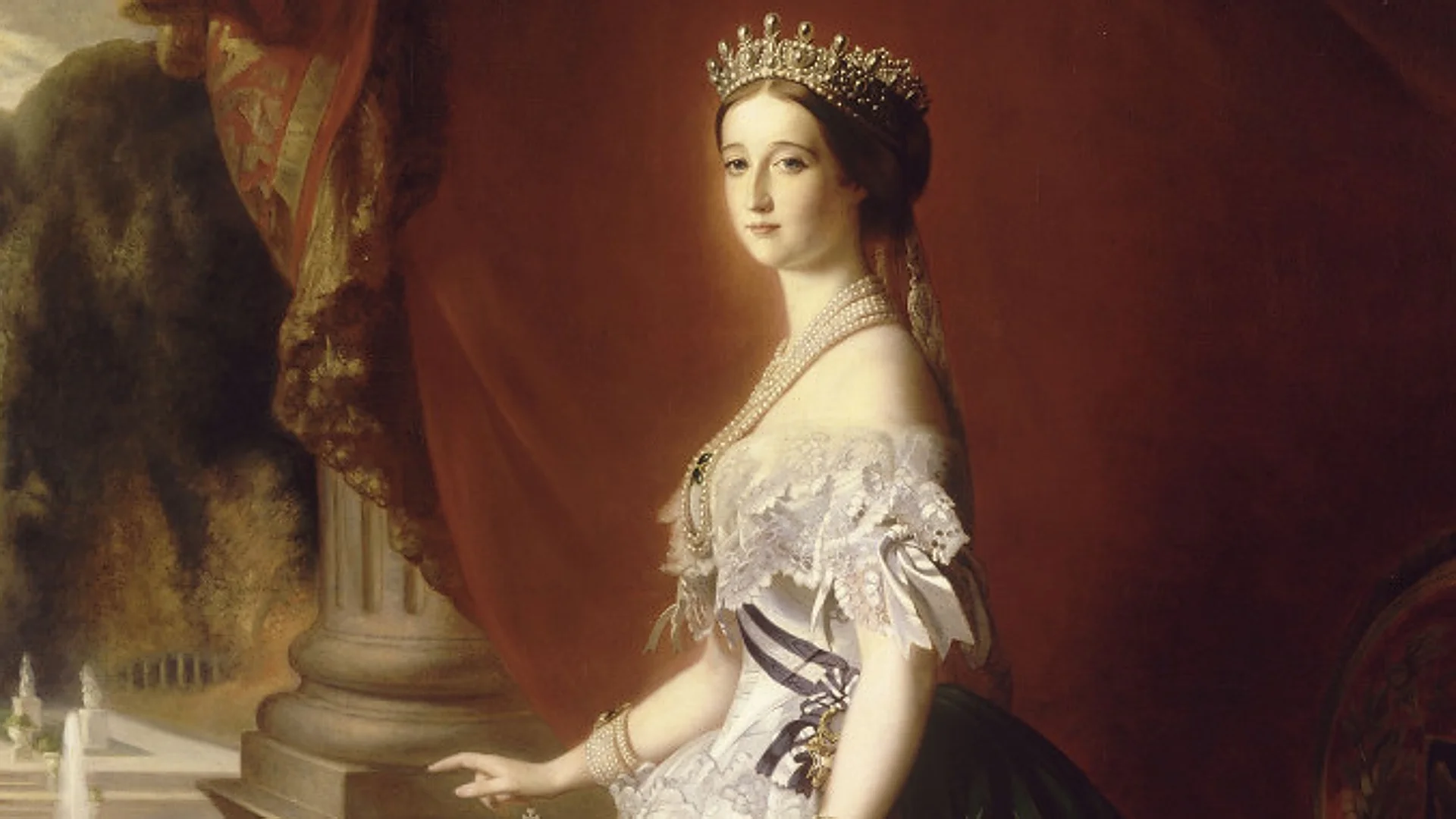
One of those clients was the Spanish Eugenia de Montijo, wife of Emperor Napoleon III. Empress Eugenia was enchanted with the dresses that the brilliant young Englishman had created for her, and Worth quickly became the court’s premier couturier. He even crafted a huge and luxurious batch of 250 dresses for the empress to wear during the inauguration of the Suez Canal in 1869.
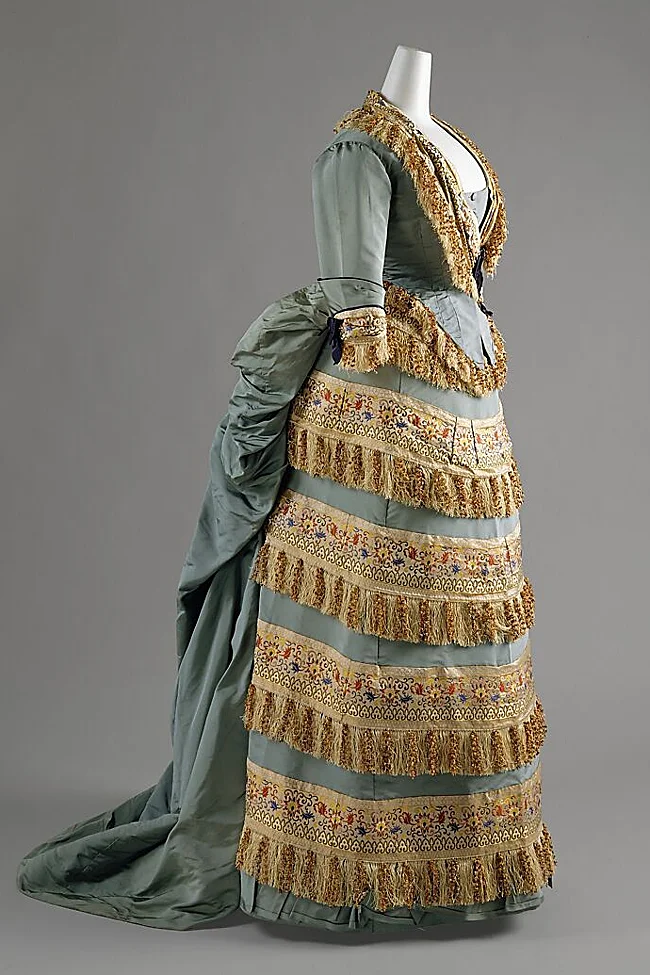
One of Charles Frederick Worth’s designs.
Eugenia de Montijo and Charles Frederick Worth proved to be the perfect pairing in the early days of haute couture. As pioneers of iconic duos like Audrey Hepburn and Hubert de Givenchy or Madonna and Jean-Paul Gaultier, together they were early trendsetters and true nineteenth-century influencers.
Later, in the 1920s and 1930s, Coco Chanel established the standards that would shape the industry. She perfected private presentations in her legendary salons on Rue Cambon, with models walking just a few inches away from clients and the most selective fashion editors. And if Coco Chanel laid the foundations of modern haute couture, Yves Saint Laurent democratized the system and transformed the runways into the large-scale media events that characterize today’s Paris Fashion Week.
The Haute Couture Committee: The bosses of it all
The Haute Couture Committee is currently in charge of managing the world’s most important catwalk. It continues the legacy of the Chambre Syndicale de la Haute Couture, founded in 1911 and promoted by Charles Frederick Worth in 1868. The Haute Couture Committee is the regulatory body that gathers fashion houses that hold Haute Couture accreditation and meet the criteria related to artisanal mastery, customization, calendars of collections, and the know-how of their ateliers.
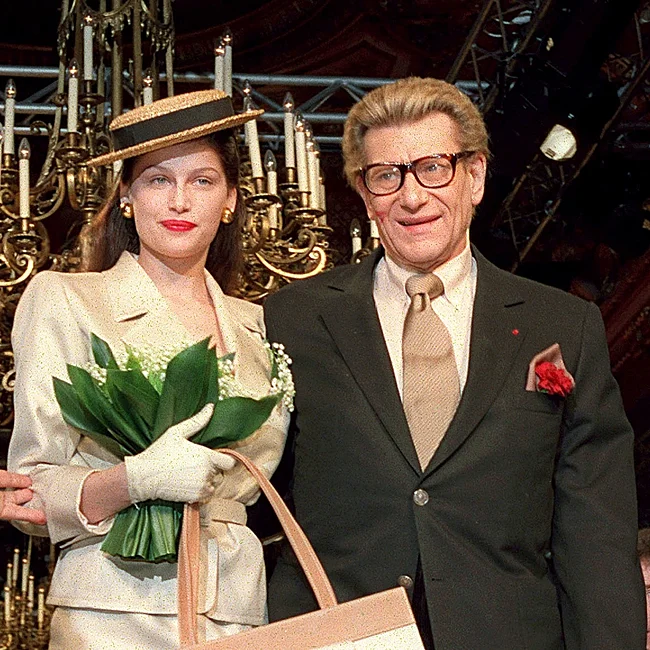
Yves Saint Laurent with Laetitia Casta at Paris Fashion Week.
In 1921, the French press founded the Association for the Protection of Seasonal Artistic Industries in order to protect haute couture designs from copies. To guarantee designers’ copyrights, their creations were photographed on a model or a mannequin to catalog the design. By the end of World War II, new rules were established to regulate and define haute couture houses. For example, a maison had to present to the Paris press at least 35 models and have a staff of at least 20 employees.
Under those new guidelines began the reign of Christian Dior, who in 1947 presented his revolutionary New Look collection, which transformed postwar fashion. The collection was characterized by cinched waists and voluminous skirts, creating an hourglass silhouette that symbolized the return to femininity and luxury. This marked a stark contrast with the practical and austere styles of the wartime era.
The tribute to Giorgio Armani in Paris.
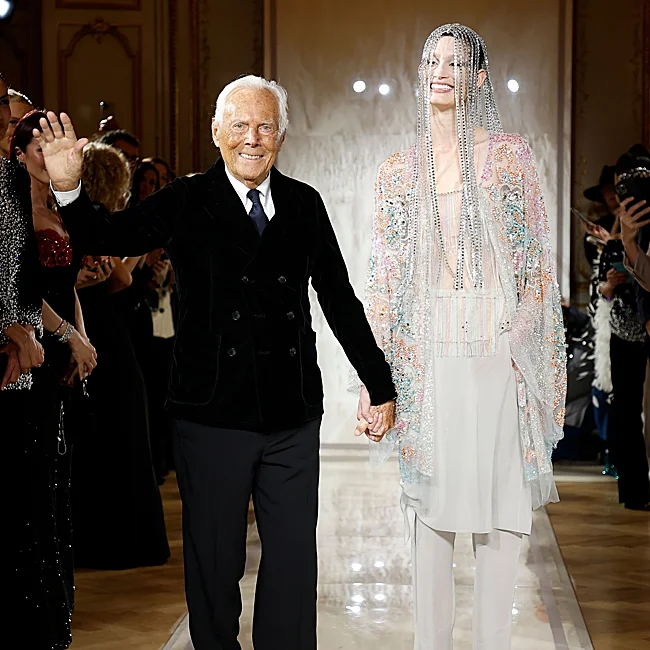
Paris Fashion Week has evolved in recent years toward a hyper-theatrical global spectacle, marked by viral moments on social media and a generational turnover in the creative leadership of the major luxury houses. Memorable moments include John Galliano’s show for Maison Margiela in 2024 or the tribute to Giorgio Armani’s 90th anniversary in 2025.
The Momentous Battle of Versailles
The first officially recognized Paris Fashion Week was held in October 1973. The event was a charity gala held at the Palace of Versailles to raise funds for its restoration, since the French government had declared that it could not bear the cost of the works. It was overseen by Eleanor Lambert, the creator of the MET Gala, in collaboration with Gérald Van der Kemp, then curator of Versailles.
Attending the event were designers from both the United States and Paris, including Anne Klein, Oscar de la Renta, Hubert de Givenchy, and Yves Saint Laurent. And celebrities such as Grace Kelly, Andy Warhol, Elizabeth Taylor, and Jane Birkin. Each of the French designers organized their own show around themes as disparate as a space rocket, a pumpkin carriage, or a rhinoceros pulling a caravan. The Americans, due to errors in unit conversion, held a single show together under the common Paris theme.
In addition to being the first time that African American models walked on a French runway, the event received wide media coverage thanks to the prestige of the participating designers and the rivalry between the two sides of the Atlantic. So much so that it is known by the nickname The Battle of Versailles, and in the end, it was the Americans who rose as winners.