Open-plan kitchens are the dream of many and the despair of some. A magazine-worthy home solution that invites togetherness, allowing you to enjoy an aperitif while you’re cooking, keep an eye on the children while you make dinner, or eat while watching TV. Not to mention that it adds space, increasing the sense of more room in the living room or dining area, and achieves more light, avoiding it from being confined between walls.
«Obviously having an open kitchen makes communication between people easier, that’s undeniable, and nowadays, with so much time spent away from home, it’s a point in its favor. But it also offers other important advantages, such as the brightness you gain from the absence of walls; or the change in size that joining spaces can bring, thereby greatly expanding the visual field and making the perception completely different,» says interior designer Marta Castellano-Mas.
However, all these advantages fade when facing day-to-day life: odors spread throughout the house, noise prevents you from watching television while the hood blasts at full volume and, as hard as you try, keeping things organized becomes difficult and your countertop always seems to be ‘taken’ by cups, small appliances and a endless array of things you don’t know how they got there.
For this reason, experts point toward a new way of conceiving the kitchen. A middle-ground solution that unites the advantages of both options (open or closed), avoiding, as much as possible, their drawbacks. “When in doubt about opening or not, I always advise, if the morphology of the space allows it, to install some kind of closure that at specific moments lets us separate the kitchen from the living room. Another delicate point of linking these two zones is that the kitchen is usually a messier space, and this is undeniable, which forces us to be much more organized or else its aesthetics can affect the other environment,” notes Castellano-Mas.
In Tune with Today’s Lifestyle
This concept not only looks good aesthetically, but it adapts better, and with fewer complications, to the lifestyle today, so you don’t have to clear away the dinner dishes every time the doorbell rings. “In my opinion, neither open nor closed. The ideal is to design solutions that allow us to open or close the kitchen to the living room as needed. I like to propose large glass walls that give a greater sense of space and visual communication, but that at the same time allow us to physically separate the space when needed due to odors or privacy,” says interior designer Sara Torrijos.
Another advantage of this alternative is its ability to make better use of space, which makes it a perfect solution in small apartments, “you can also experiment a lot with the different designs and materials of these glass partitions, turning them not only into a fundamental architectural element, but also decorative,” Torrijos asserts.
Sliding doors adapt to the moment.

A Large Glass Sliding Door
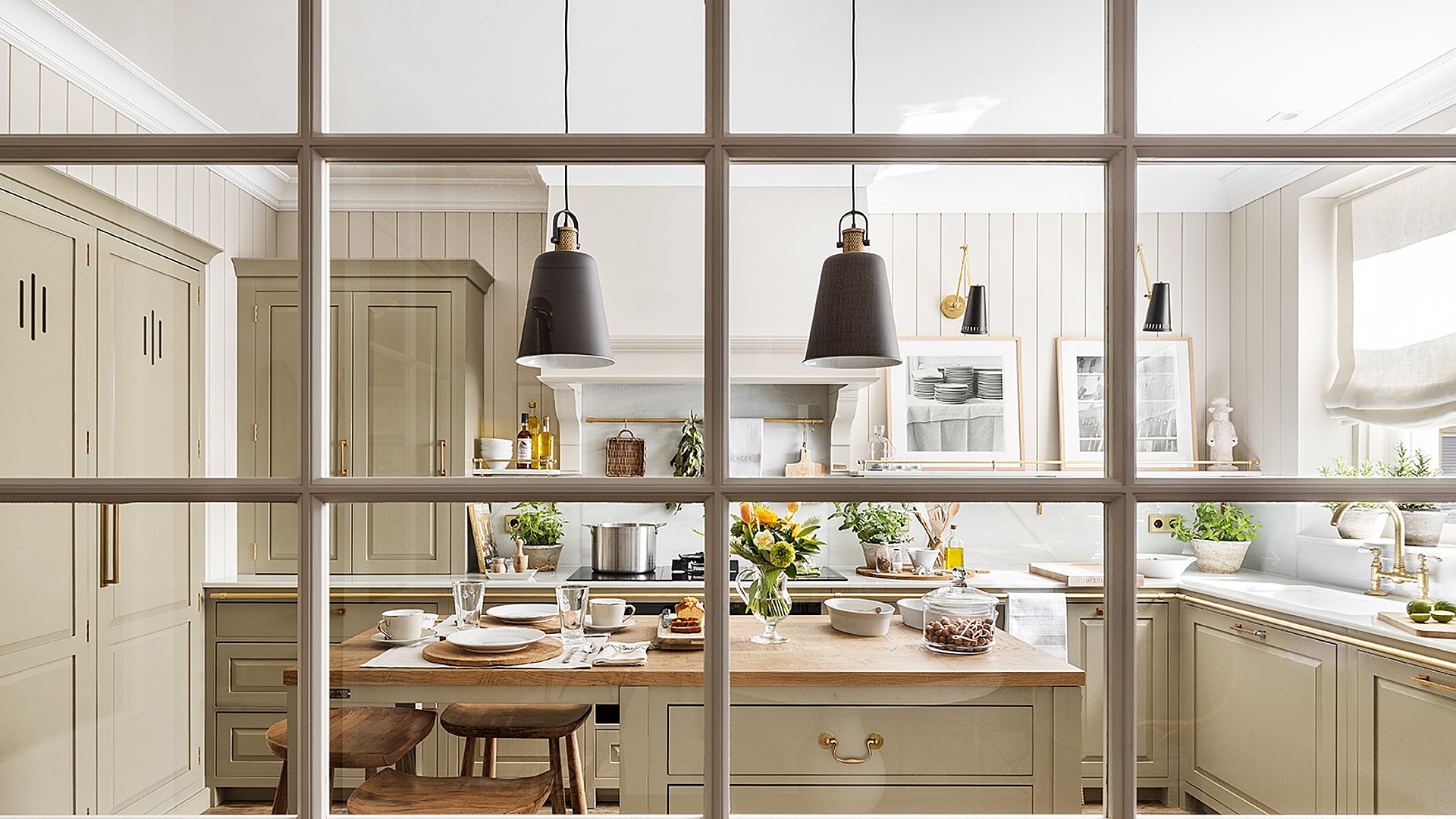
The semi-open options make the kitchen a protagonist in home life, without intruding on everything, like the perfect neighbor. In Pia Capdevila Interiorismo’s project, the large sliding door with muntins allows communication when desired and closes off odors and bothersome noises.
This solution facilitates communication between the kitchen and the home.
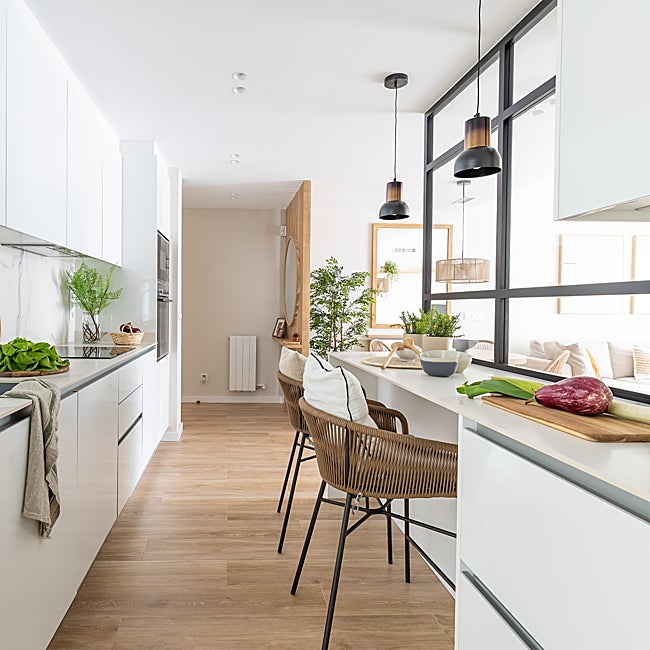
Half-glazed partition with muntins
Together, yet not mixed, that could define the relationship between the kitchen and the rest of the house in this proposal by interior designer Laura Martínez. The driver of this arrangement is a breakfast bar with a glass panel framed in black. A solution that facilitates visual connection and allows the passage of light from one room to another.
This solution is as practical as it is decorative.
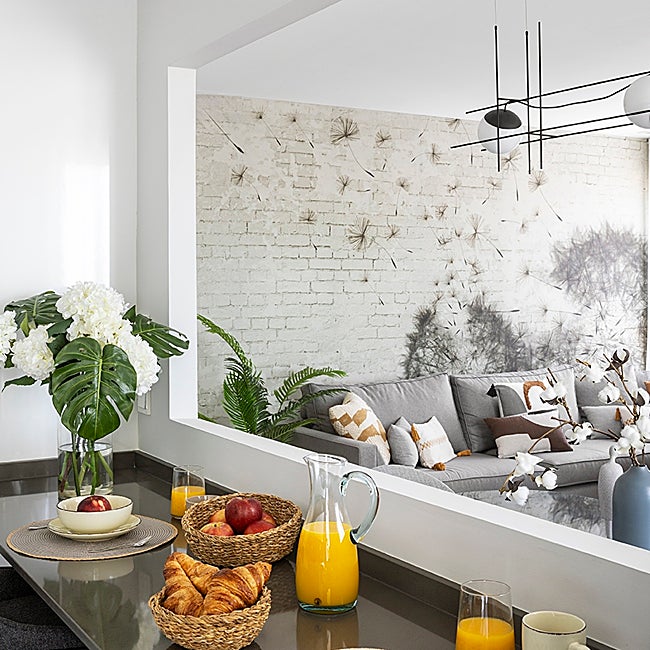
A pass-through
Very practical in daily life, it bets on openness without losing privacy. In this proposal by interior designer Alberto Torres, the broad breakfast bar and stools function as a pass-through and reinforce the connection with the dining room. Thus, the kitchen becomes integrated into the home’s social life, but with certain caveats.
Using furniture to separate also works.
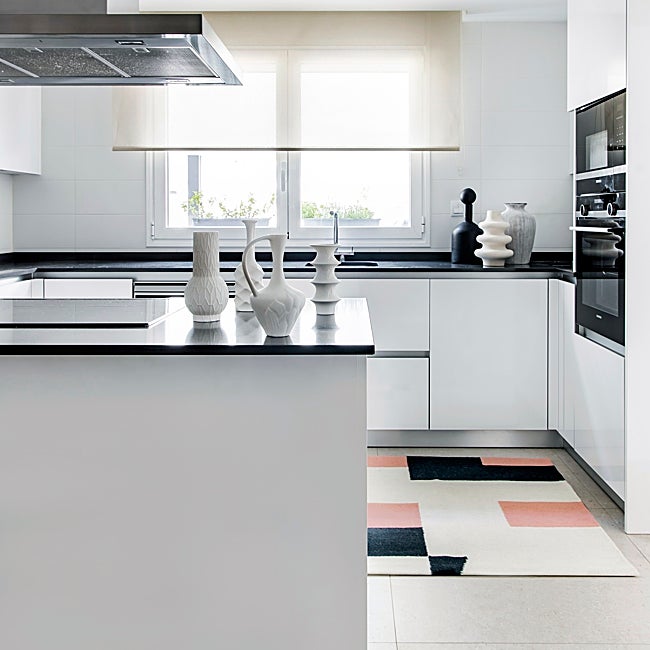
Furniture as a Boundary Element
A way to define without walls while keeping visual connection, but also a certain autonomy, is using furniture as a border between the two spaces. As in this proposal by interior designer Sara Torrijos. For it to work practically, it must also work aesthetically. That is why the furniture must be up to the task. The detail of the rug helps to differentiate zones, while also adding a stylish touch.
Arches are one of the 2026 trends.
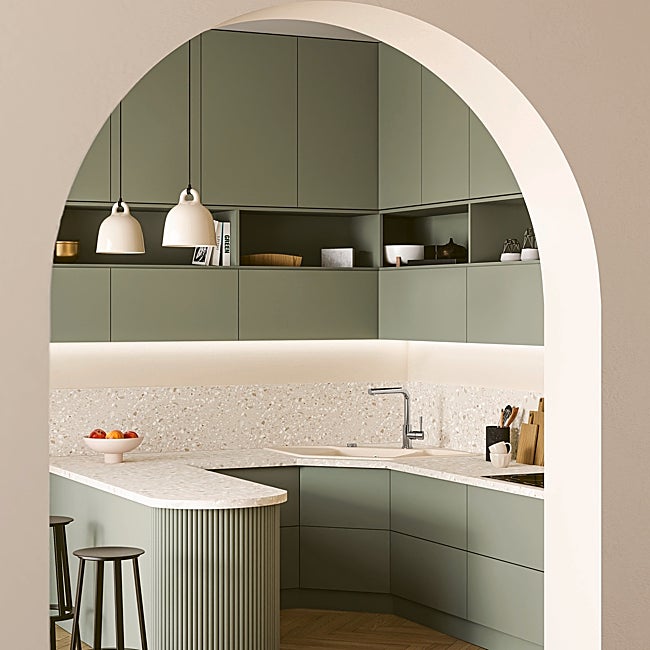
An Arch Instead of a Door
Arches have returned to the home, and not only the classic ones, as a highly decorative solution to separate two rooms without obstructing the entry of light. Perfect with the trend of curved and organic shapes that is sweeping 2026, they are a good alternative in the living room, but also at the entry to the kitchen.